
When a project timeline isn’t built from a clear, consistent, and repeatable sequence or process, it becomes exponentially harder (and less efficient) to get things done.
In construction, this leads to common situations like:
- Delays in one phase spilling into the next
- Subcontractors arriving before the site is ready
- Material deliveries turning up out of order
- Clients asking why progress has slowed
- Updates becoming increasingly harder to track because changes and communications remain hidden in and scattered across notes, texts, and spreadsheets
A well-structured construction timeline can guard against these issues. It provides a clear and reliable view of what needs to happen and when, allowing each phase to move forward with fewer disruptions and significantly less operational strain.
In this guide, we show you how to create robust yet flexible construction timelines that fit the fast pace and evolving demands of residential builds — and how intelligent scheduling software can save you the stress of budget blowouts and project delays.
What is a Construction Project Timeline in Residential Builds?
In simple terms, a construction project timeline presents an easy-to-read schedule that guides the specific tasks and milestones needed to complete a custom home construction project.
For small residential builders and remodelers, this timeline differs significantly from those used in commercial construction. Specifically:
- Commercial projects often run on long, multi-year sequences with large teams and formal compliance checkpoints.
- Residential work demands tighter coordination across smaller crews, faster decision cycles, and schedules that shift quickly as trades move in and out.
A well-crafted timeline ensures everyone on your team, from subs to general contractors, meets deadlines by having the essential timing of each project phase at their fingertips.
Once effective construction project timelines are routinely implemented, the planning, coordination, and tracking of progress becomes predictable, allowing builders like you to only bid and take on the jobs you know will grow your construction business.
When timelines are structured well, the benefits become apparent quickly: more precise coordination, smoother handoffs, fewer delays, and more predictable job costs.
Benefits of Creating a Construction Timeline
A construction schedule can ensure smooth communication, coordination, and efficient tracking of punch list items. This organized approach makes it easier to address issues when they arise, keeping the project on track.
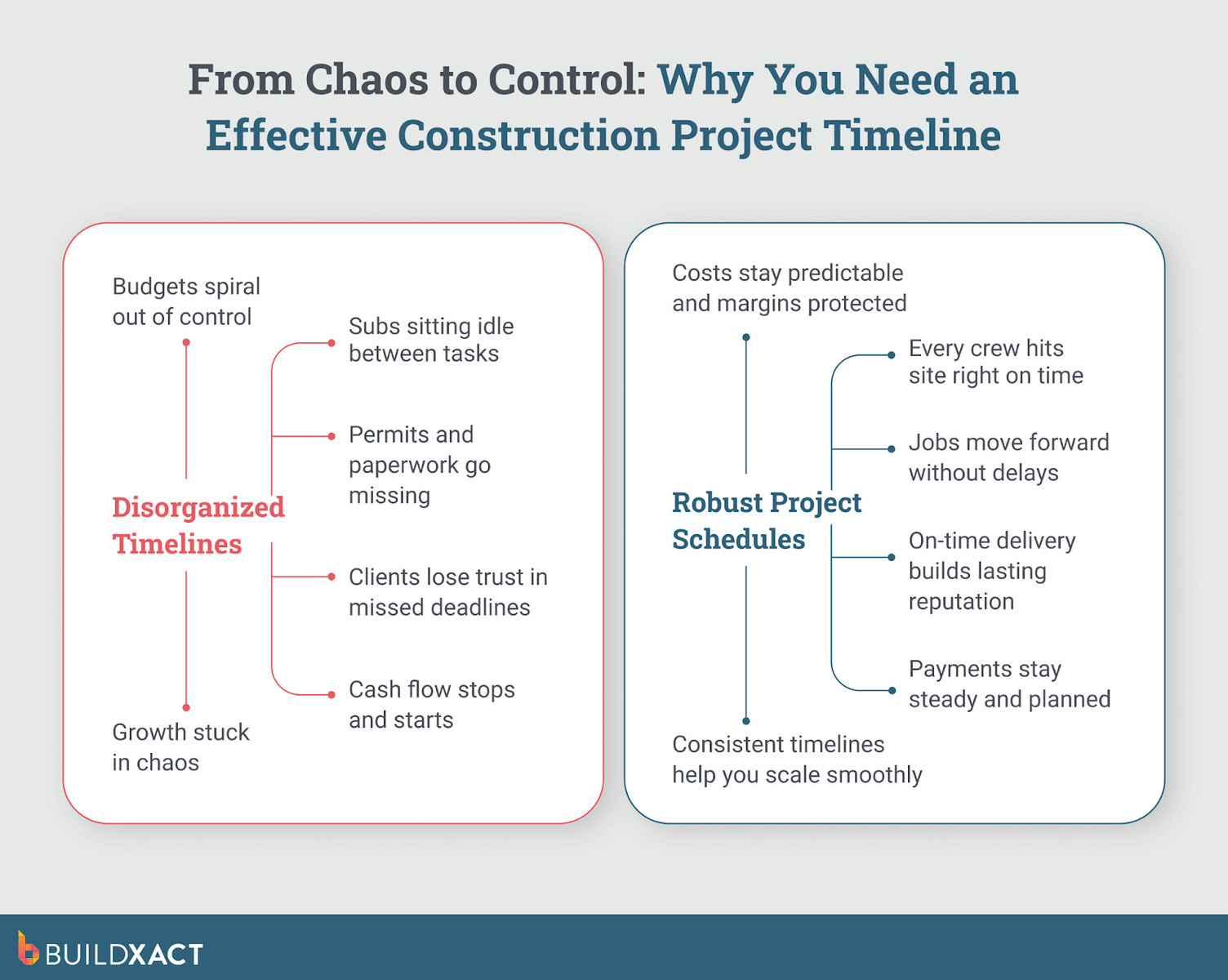
Here are a few more ways that a well-structured construction timeline can reduce risk and delays and improve efficiency in your residential builds.
Stronger cost control and steadier cash flow
When schedules slip, spending becomes uneven and labor costs climb as crews wait for materials or lose productive days. For example, a late vanity delivery for a bathroom remodeling project can then hold up plumbers and tilers — which could also result in overtime.
A construction schedule helps builders stay on top of costs by keeping material deliveries in sync with your subs. With fewer dark days on site, projects remain within budget and avoid the expensive catch-up work that eats into margins. Straightforward, transparent, sequencing also helps you, as a builder, maintain control over a consistent, healthy cash flow.
Reliable subcontractor coordination
Trade coordination breaks down quickly when timing is unclear, leaving subcontractors idle or overlapping and pushing jobs off schedule. Consider the example of a framing project on a small extension that ran a day late. This delay means electricians can’t rough-in as planned, but with a coordinated schedule, you can adjust early, ensuring no one loses the day.
A construction schedule guides you on when to bring in specialized help, confirming the right people are on-site at the right time — especially for jobs like electrical, plumbing, HVAC, and drywall. Tighter sequencing reduces wasted hours and keeps every trade moving without conflict or confusion.
Fewer delays from permits, inspections, and project documents
Missed approvals or misplaced paperwork can stall a build and frustrate homeowners expecting steady progress.
Let’s continue with our above framing example: forgetting to schedule a framing inspection can delay siding and roofing work for days. However, when you build inspections into the timeline, you can anticipate (and avoid) these blockers.
A construction schedule tracks permits and inspections, ensuring all necessary approvals are secured on time. This allows you to plan for and purchase materials, as well as manage documents, thereby reducing delays and last-minute rushes.
Better communication and higher client satisfaction
A well-structured timeline creates predictability, strengthens communication, and demonstrates steady progress to homeowners.
This might look like sharing weekly updates tied to the schedule for a whole-home renovation project. These timely updates, which are clearly connected to a build’s proposed plan, reassure clients that milestones are being met and maintain high confidence throughout the project.
When referral time rolls around, your clients won’t have any hesitation in raving about the quality of your work and your approach to it.
Creates a repeatable structure for growth
As a business grows, inconsistent project timing makes delegation difficult and increases reliance on “everything in my head” planning.
Standardized timelines create a repeatable structure that makes it easier to hand off tasks and maintain control as workload increases. With more transparent processes, new team members ramp up faster, and projects run more consistently.
Let’s consider the example of a builder taking on three concurrent additions. If they rely on the same baseline timeline template for each job, they can ensure consistent sequencing, which reduces the risk of oversight — and that’s especially crucial as the business grows and the team expands.
These benefits make it clear why construction timelines play a vital role in the smooth running of a project. However, as every builder knows, jobs don’t always run according to plan, which is why you need to build your timelines with the unexpected in mind.
Factors That Impact a New Construction Timeline
A new construction timeline helps you plan for both day-to-day tasks and worst-case scenarios. But even the best-planned schedule can be disrupted by factors outside your control.
Permits, regulations, and local building codes, for example, often slow progress when approvals take longer than expected or compliance issues are revealed late.
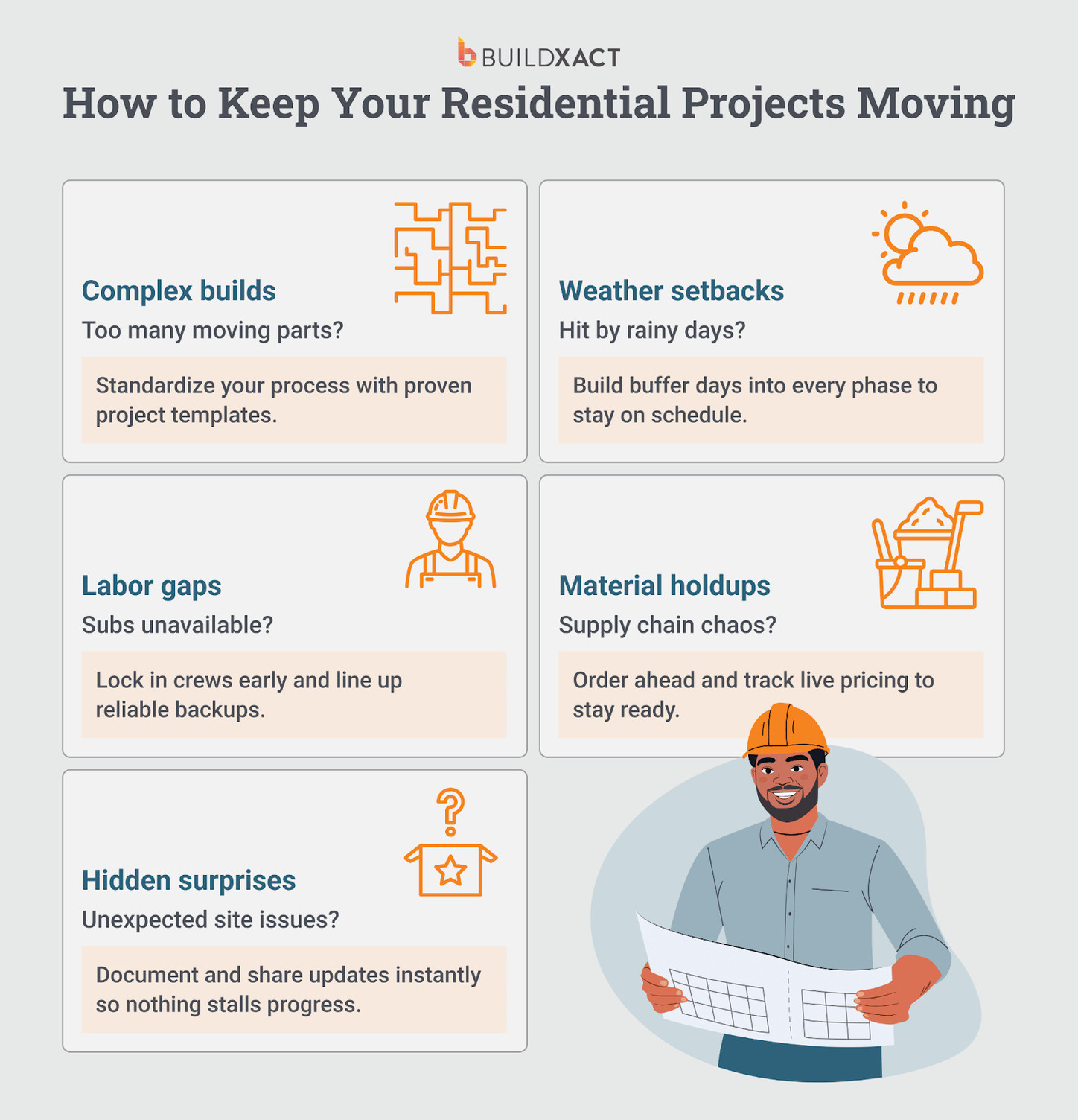
Below are the major factors that could impact your residential construction timeline — and how to protect your projects from unnecessary delays.
Complexity of the project
The scale and complexity of a project significantly influence the time it takes to complete.
Larger or more intricate builds — such as multi-storey custom homes or additions with structural changes — require more trades, more sequencing, and more inspections than a straightforward single-family build. Even minor complications, such as integrating new framing into an existing structure, can add days when unexpected issues arise on site.
How to safeguard:
Building a project plan specifically at scale is essential, and having the ability to save those plans from your most successful projects helps you plan future jobs of similar size and scope. With Buildxact, you can save schedule templates, reuse phase structures, and adjust durations based on past performance, giving you more accurate estimates and fewer surprises.
“The increased complexity of construction projects necessitates the use of scheduling software to simplify timetables, coordinate resources, and guarantee milestones are delivered on time.”
— Construction Scheduling Software Market Report, Verified Market Research
Site and weather conditions
The old saying “Mother Nature always bats last” applies to every residential build. Weather remains one of the most common causes of timeline disruption; extreme heat, heavy rain, high winds, or early-season snow can halt framing, roofing, or exterior work for days. Site-specific challenges, such as poor soil conditions or limited access, can also create similar delays.
How to safeguard:
Having a record of past projects helps you estimate appropriate buffer time for each phase. The ability to capture real-time conditions and update timelines immediately — such as with Buildxact’s Onsite construction app — can also help you keep subcontractors informed.
Availability of materials and labor
Builders everywhere face the same challenge: securing reliable labor and sourcing materials at predictable prices. Shortages in skilled trades and fluctuating material availability can pause progress for days or weeks, especially when lead times change without warning. When demand outpaces supply, timelines slip fast.
How to safeguard:
Integration with live dealer pricing reduces the risk of surprises by giving you clearer visibility into material availability and costs. With a tool like Buildxact, you can generate purchase orders directly from your schedule, so you can order earlier, stay ahead of supply issues, and minimize downtime caused by missing materials or last-minute scrambling for labor.
“Construction scheduling technologies have enabled improved labor planning and personnel allocation, resulting in less idle time and increased productivity on construction sites.”
— Construction Scheduling Software Market Report, Verified Market Research
Other unforeseen obstacles
Hidden structural issues, unmarked utilities, neighborhood restrictions, and client-driven changes can all throw a timeline off course. These delays are common in residential construction because existing homes rarely align perfectly with the plans, and stakeholder decisions often evolve during the build.
How to safeguard:
You need a system for documenting these events clearly and immediately, through dedicated features like Buildxact’s centralized communication, daily logs, and variation tracking. When unexpected issues arise, you can log the change, adjust the schedule, issue updated costs, and keep the homeowner informed — all in one place. This prevents confusion and keeps your timeline under control even when plans shift.
Now that you’re aware of the challenges and risks that can impact your construction timelines, let’s explore how to build a complete project plan that stands up to the demands of even the most complex residential build.
How to Create a Construction Project Plan Template
Whether you’re a seasoned construction manager, project manager, or just beginning a career in the industry, a realistic construction project plan template is your guiding light. It can help save time, reduce errors, and improve project organization.
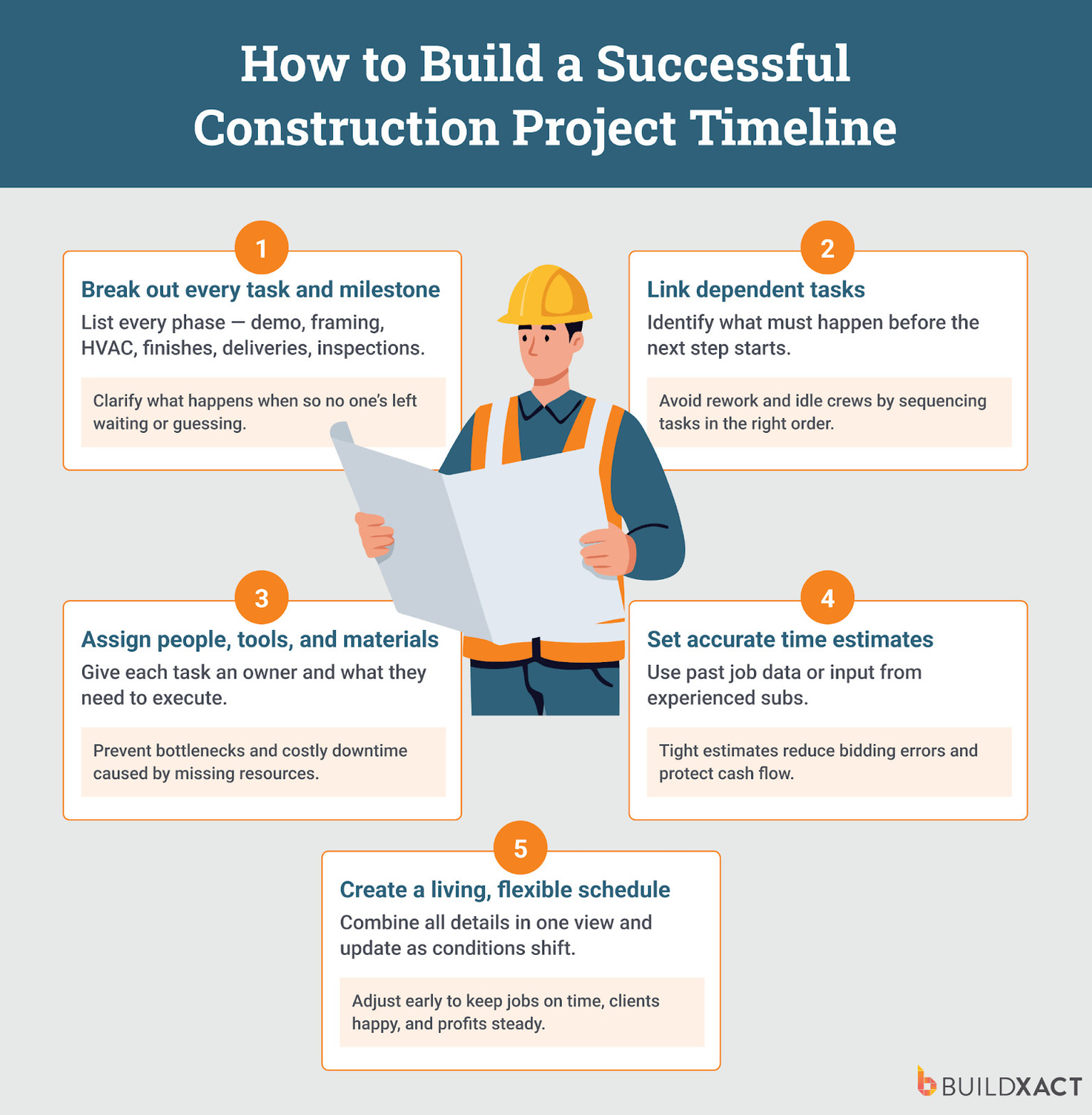
Here are some high-level steps to help you create a successful construction project plan template for future projects, large or small:
1. Break out construction tasks and milestones
Clearly setting out every element of your project at the start prevents the confusion and idle time that lead to cost overruns and job schedule drift.
How to do it: List every task, phase, and critical milestone for your construction project plan in chronological order, such as groundbreaking dates, framing, electrical, HVAC, and finishing.
Tip: Include material deliveries and subcontractor timelines to avoid overlap.
2. Add dependencies between related tasks
Building in task dependencies will help keep work flowing logically and avoid costly and disruptive bottlenecks.
How to do it: Identify which tasks depend on others and establish these relationships. In other words, connect the dots. For instance, plumbing is installed before electrical work, and both occur before drywall is installed.
Tip: Use visual tools like Gantt charts to map dependencies clearly.
3. Assign resources to the scheduled work
Allocating the correct resources to each task avoids the headache of subcontractor overlap and ensures steady progress to maintain profitability.
How to do it: Assign the right people (in-house or subs), equipment and materials to each scheduled task. Make sure you have a transparent way to reach these teams to keep everyone on the same page about daily progress.
Tip: Confirm resource availability before scheduling to prevent downtime.
4. Estimate how long tasks take
Well-considered timelines improve your bidding accuracy and cash flow forecasting by basing job schedules on actual data.
How to do it: Refer to data from previous jobs and seek input from team members and experienced contractors. You can also work with a project manager with estimating experience.
Tip: Add contingency days to absorb unforeseen delays.
5. Create a (realistic) schedule
An achievable schedule builds client confidence and prevents blown timelines that damage both your margins and your reputation.
How to do it: Factor in all the information you’ve gathered so far, combining tasks, dependencies, and durations into one coordinated construction timeline.
Tip: Review your schedule regularly and adjust as conditions or priorities change.
To structure your project timelines for success, it’s essential to understand the distinct phases that every construction project contains.
✅ Free download: Construction timeline template (with real examples)
We’ve put together a construction timeline template you can use as a jumping-off point — outlining each phase, from site prep to handover.
👉 [Download the Construction Timeline Template]
It’s a helpful reference, but as you’ll see, spreadsheets fall short once real projects begin to move and change.
Why a Spreadsheet Timeline Falls Down On the Job
A spreadsheet timeline works well for simple, static projects — but residential construction requires tools and processes that accommodate and even enable variations and change. Timelines shift. Weather disrupts pours. Subs need shuffling around. Material prices fluctuate weekly.
And trying to get a construction project to the finish line in the face of these common and recurring issues is the worst time to have your operations fall short.
Every update relies on you. Every dependency update is manual. Every delay triggers a domino effect you have to track by hand.
That lag is exactly what causes:
- Missed handoffs between trades
- Out-of-date timelines circulating between team members
- Budget drift caused by outdated material and labor pricing
- Builders reacting to issues instead of preventing them
This is where construction scheduling software has an immediate, measurable impact, changing the game entirely.
Buildxact picks up where your spreadsheet leaves off
Instead of manually updating a static file, Buildxact integrates the scheduling work that typically eats hours each week through:
- AI-powered scheduling that seamlessly updates timelines as estimates, quantities, or project conditions change.
- One-click schedules generated directly from your estimate — no retyping tasks, stages, or durations.
- Automated notifications to subcontractors and clients when dates move.
- Live supplier price list integration to ensure that material updates flow through your estimates, schedules, and budget in real-time.
- Cost and schedule alignment that prevents overruns before they happen.
With automated construction timeline scheduling, real-time pricing, and connected workflows, you get the visibility and control a manual template simply can’t deliver — without the complexity of commercial-grade software.
The Six Phases of a Construction Project Lifecycle
A typical construction project lifecycle consists of six key phases, running from idea, planning, and gathering a team through to project completion.
Whether you’re a developer, custom builder, or project manager, these six phases can serve as a roadmap for navigating your building project plan.
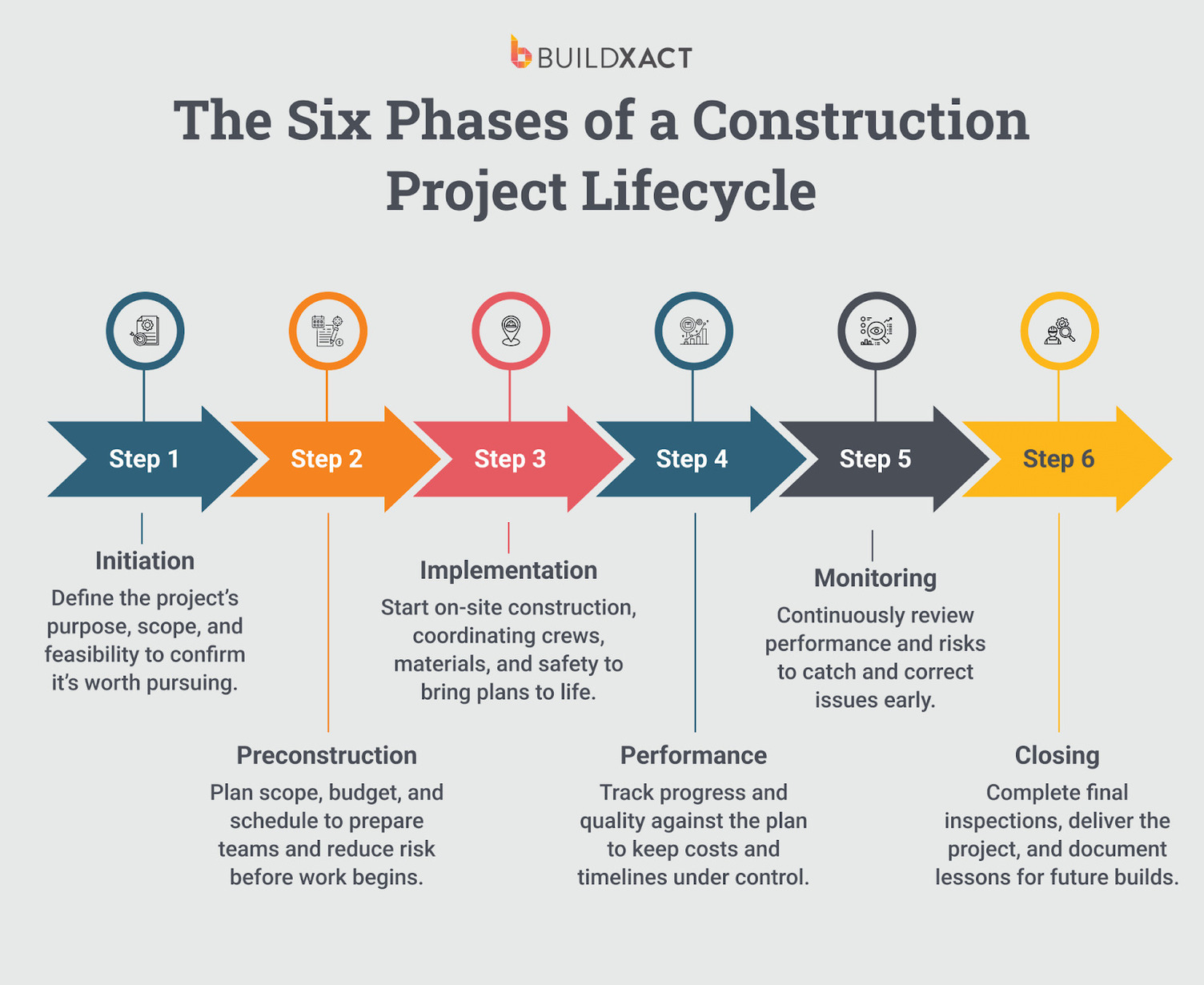
1. Initiation
During initiation, you confirm whether the project is viable, clarify its purpose, and define the objectives that guide all subsequent decisions.
This early alignment is essential because it prevents wasted effort, unresolved assumptions, and scope confusion later in the build. By establishing direction upfront, you ensure that the project proceeds only once everyone agrees on what success looks like.
What’s involved?
- Feasibility study and early cost outlook
- Stakeholder input and site considerations
- Project charter and scope definition
- Approvals to proceed
2. Preconstruction
Preconstruction turns intent into a structured plan. This is where you develop a detailed construction project plan, outlining tasks, timelines, budget, and resource allocation, so the work can run smoothly once trades arrive.
Strong preconstruction is critical because it minimizes risk, reduces the chance of cost overruns, and ensures every team member understands their responsibilities. When this phase is thorough, the entire project benefits from more precise coordination and fewer downstream disruptions.
What’s involved?
- Estimating and takeoffs
- Scheduling and sequencing
- Procurement planning and supplier coordination
- Design review and constructability checks
- Permitting and approvals
- Team assignments and communication setup
3. Implementation
Also known as the groundbreaking, implementation is where construction begins and your planning efforts materialize on site. The goal in this phase is to execute the work safely, efficiently, and in the correct order.
Its importance lies in the coordination required: materials, subcontractors, and equipment must be synchronized so progress stays steady. Effective implementation keeps momentum and avoids costly downtime.
What’s involved?
- Site setup and mobilization
- Construction activities and trade coordination
- Material delivery and resource deployment
- Safety checks and compliance
- Communication between site and office
4. Performance
The performance phase focuses on confirming that construction is unfolding as planned. You track progress with daily logs, measure against the plan, and make necessary adjustments.
This stage is crucial for maintaining quality, controlling costs, and addressing issues promptly. Strong performance management minimizes rework while maintaining quality and profitability.
What’s involved:
- Progress tracking and daily updates
- Inspections and quality verification
- Reporting and documentation
- Budget reviews and cost alignment
- Corrective actions when deviations appear
5. Monitoring
Monitoring runs continuously to ensure the project stays aligned with its objectives, timeline, and budget. The aim is to detect issues early and act before they become disruptions.
This phase is critical because even minor deviations can have a ripple effect on later stages if left unchecked. Consistent monitoring strengthens predictability and allows proactive rather than reactive management.
What’s involved?
- KPI tracking (schedule, cost, productivity)
- Regular schedule reviews
- Cost and cash-flow monitoring
- Change management
- Ongoing risk assessment
6. Closing
Closing ensures that everything built aligns with the agreed-upon scope and that the project is formally completed. The goal is to ensure all objectives are met, document the outcome, and hand over the finished work to the client.
This phase is essential because it confirms compliance and validates quality, while also providing an opportunity to evaluate lessons learned during the project. A strong closeout also reinforces trust with clients by demonstrating professionalism through the final details.
What’s involved?
- Final inspection and quality sign-off
- Documentation and as-built records
- Client handover and walkthrough
- Contract and payment closure
- Post-project review and lessons learned
Determine other needed phases
Each construction job varies wildly. These six phases are high-level and offer baseline information. You might realize that six phases aren’t enough (or too much), or that some overlap.
Consider the job’s complexity and whether any unique challenges require additional time. For example, a feasibility study or an environmental impact assessment may be necessary for larger projects, which should be included in your construction project plan template.
Example of a construction timeline for a residential project
The length of a construction project varies depending on factors such as size, materials, permitting, and other variables. The image below shows a typical example of how a construction project timeline might look for a residential construction project.
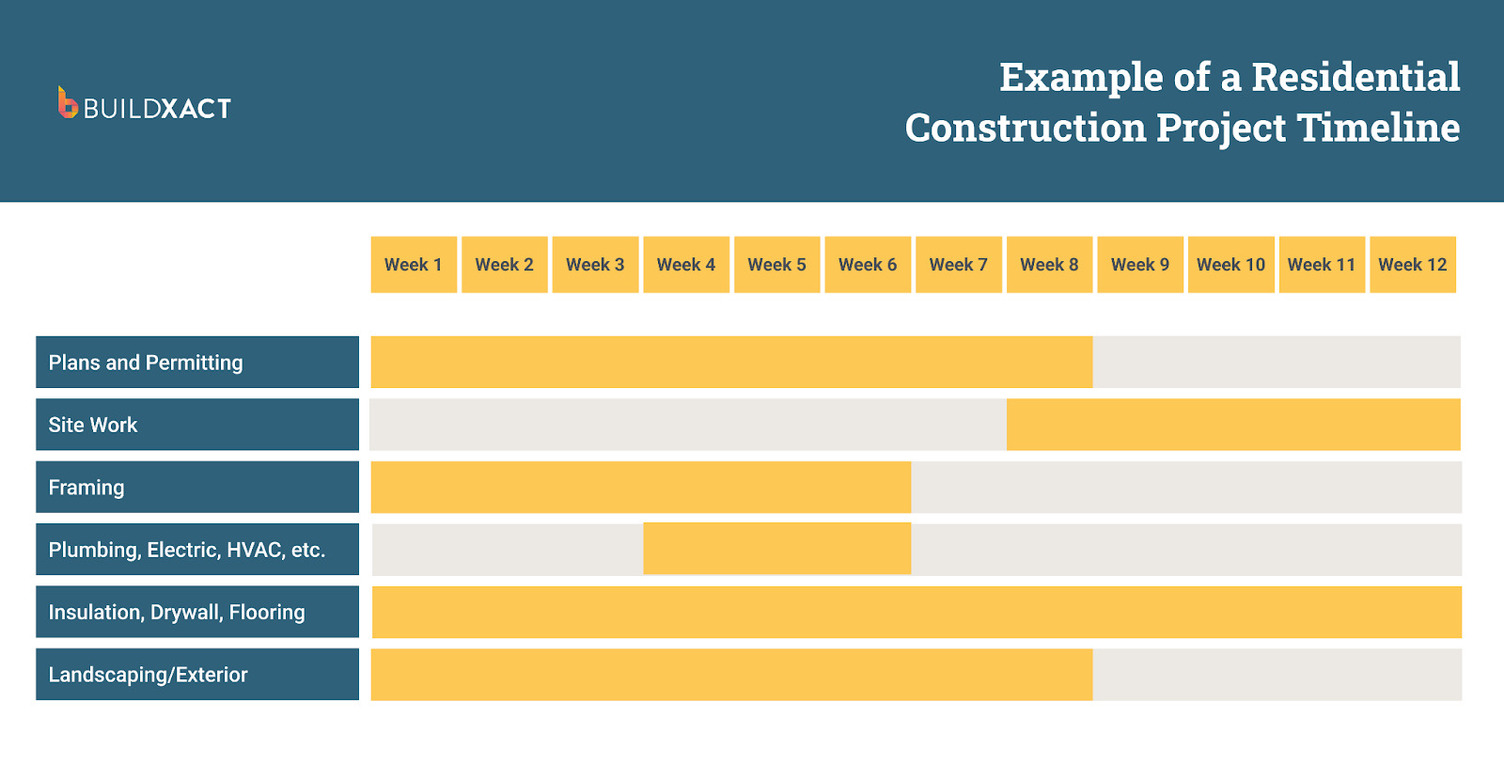
While construction timelines provide a robust basis for keeping projects on track, modern scheduling software strengthens that foundation by reflecting changes immediately and giving builders an accurate view of how each adjustment affects the path forward.
How Intelligent Construction Scheduling Software Keeps Budgets and Timelines Protected
Digital scheduling tools strengthen construction timelines by keeping plans adaptable as conditions shift. Builders gain clearer visibility into the work ahead, making it easier to prevent delays and protect budget stability throughout the project.
“Embracing digital transformation can help firms overcome inefficiencies and labor constraints, improving project delivery and operational performance”.
— 2026 Engineering and Construction Industry Outlook, Deloitte
Build schedules that update as projects change
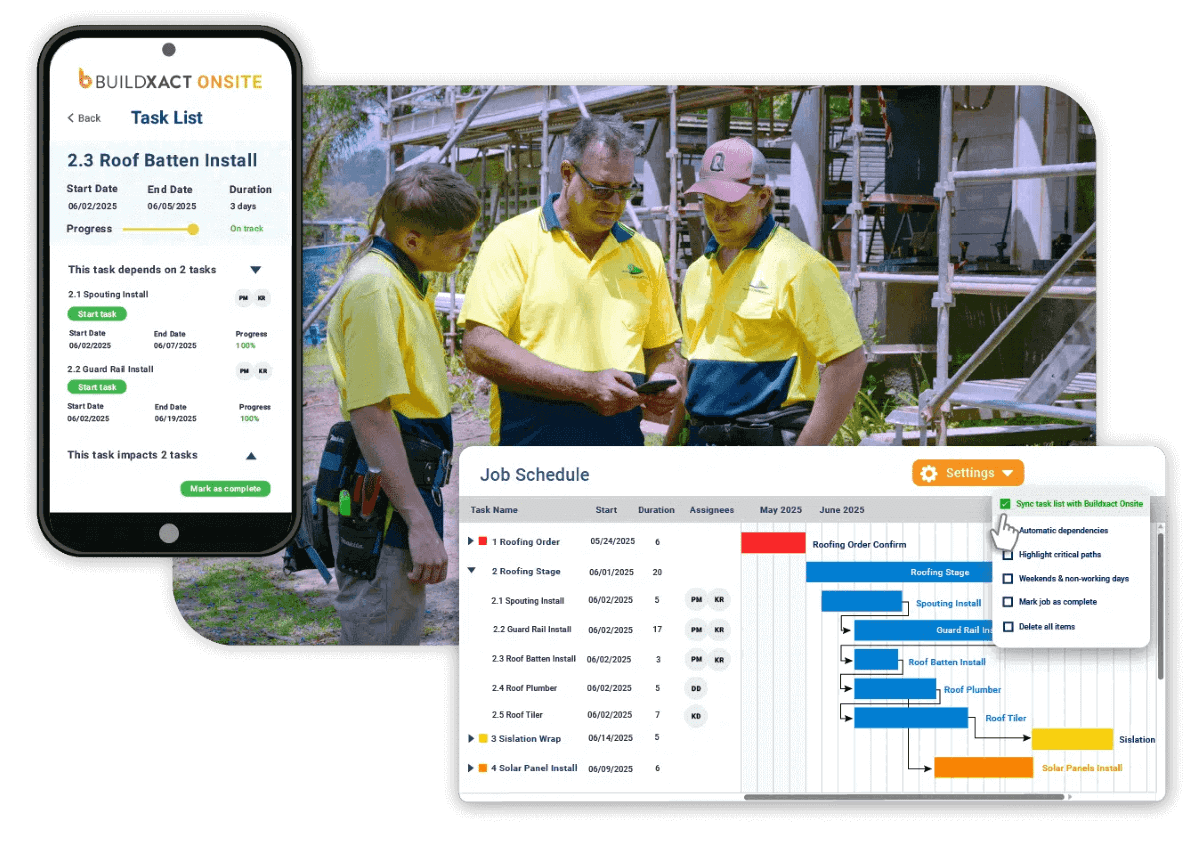
When tasks shift, intelligent scheduling tools keep every activity, material delivery, and dependency aligned, ensuring timelines remain accurate. For example, if framing runs long or weather delays exterior work, automated adjustments — such as Buildxact’s schedule sync feature — update the entire sequence so progress doesn’t fall out of step.
Keep costs and timelines connected
Linking estimating and scheduling keeps real-time accuracy across both, preventing gaps between planned and actual costs. Integrated tools like Buildxact keep estimating and scheduling processes unified in a single platform, so an updated duration instantly reflects in the project’s financial view.
Stay on top of subcontractor progress
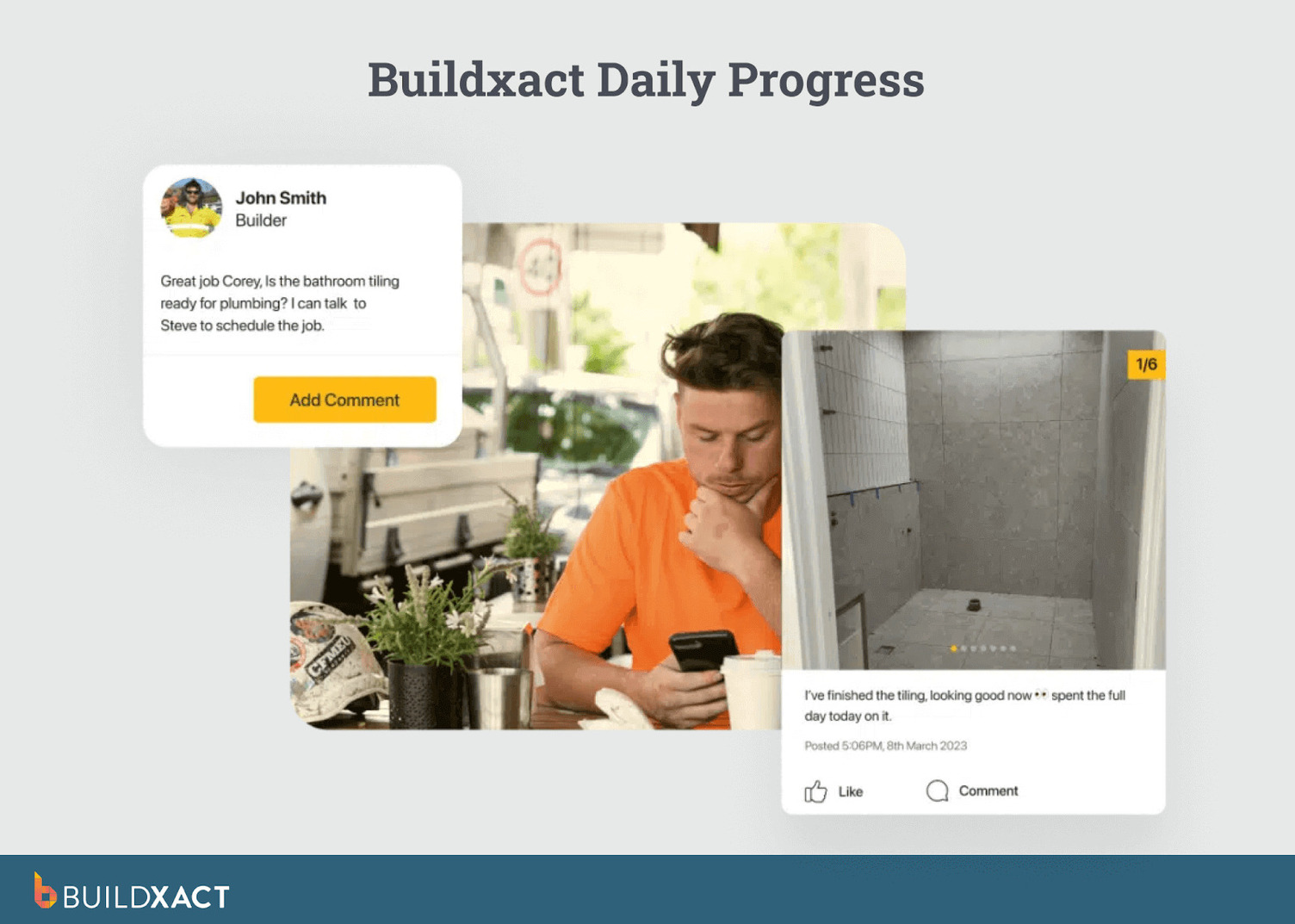
Clear visibility into completed work and upcoming tasks keeps every trade moving and reduces idle time. Features like Buildxact’s shared progress updates allow you to easily see if carpentry is on pace or if the electrician needs a schedule adjustment to prevent delays from accumulating.
Keep everyone on the same page
Real-time updates and accessible schedules keep crews, subs, and office staff aligned without constant phone calls. A mobile construction app like Onsite lets you share updates and track progress with instant notifications, so subcontractors aren’t left waiting around if timings change.
Stay ahead of critical tasks
Inspections, permits, and key deadlines often slip when builders rely solely on memory or manual notes. Features such as automated milestone reminders ensure important steps are booked early, avoiding costly last-minute scrambles.
See every job at a glance
Color-coded Gantt charts like Buildxact’s Gantt chart timeline view make it easy to understand what’s happening and when, even across multiple projects. A clear visual that highlights active, upcoming, and delayed tasks helps builders spot bottlenecks quickly and adjust before they affect the schedule.
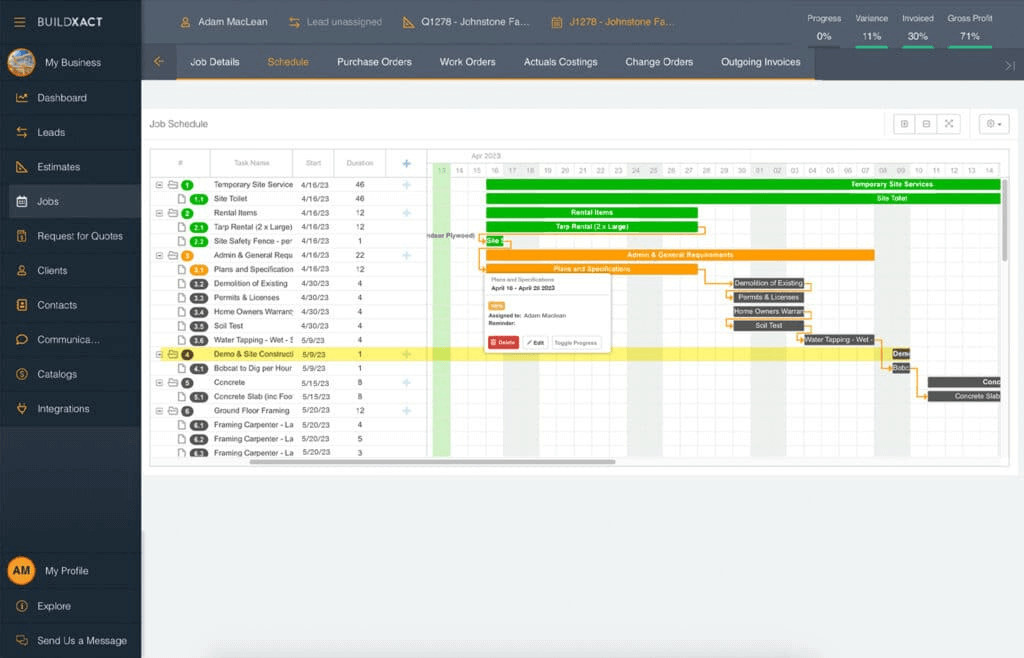
Modern scheduling software designed for residential construction gives builders a stable foundation for managing construction timelines. When every shift is captured and communicated, builders spend less time reacting and more time getting the work done on schedule.
Protect Your Margins With Modern Construction Scheduling Software
An effective construction timeline is the backbone of predictable delivery, but maintaining that structure is challenging when plans shift daily, and information is disseminated across multiple tools.
Modern construction scheduling software eliminates that friction by centralizing updates, enhancing control over sequencing, and providing a dependable way to keep work moving without the budget pressure caused by delays.
Buildxact strengthens that foundation with simple-to-use scheduling tools designed for the pace and complexity of small residential construction, allowing you to manage your project timelines with less administrative effort.
Book a demo or start a free trial to begin building efficiency into your construction business today.