
The second a new quote request lands in your inbox, the clock starts ticking – and the builder who delivers a detailed, professional quote first has an instant advantage over the competition.
But when every quote has to be built from scratch, it’s almost impossible to be the fastest bidder, let alone the winning one.
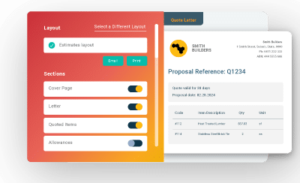
For small home builders already dealing with admin overwhelm, quoting needs to run like a system rather than a one-off task. A strong construction quote template, like Buildxact’s professional online templates, can help you streamline your quoting process, so you can bid faster while ensuring your costs stay accurate.
In this article, we’ll share the advantages of using a construction quote template, what a professional quote should include, and how to use construction management software to produce professional, precise bids in a fraction of the time.
The Importance of Getting Your Construction Bid Right
The foundation of a successful home construction project lies with a detailed construction quote. By outlining the project scope, specifications, costs, and timeline, a clear construction quote reduces the risk of payment delays and unfortunate disagreements.
Here’s how an accurate and comprehensive construction quote at the start can mean a smoother project once work begins:
- Clarifies what the job includes: Defines the scope of work clearly so clients understand exactly what’s included in the price.
- Protects your margins: Ensures labor, materials, overheads, and allowances are fully accounted for before work begins.
- Reduces back-and-forth with clients: Answers common questions upfront to avoid delays and repeated revisions during the approval process.
- Makes your pricing easier to justify: Provides a detailed cost breakdown that helps clients understand how the final price was calculated.
- Limits disputes during the build: Creates a documented reference point for costs, inclusions, exclusions, and expectations throughout the project.
However, properly defining the scope, specifications, and costs of a construction project requires a detailed itemization of labor costs and material charges. For custom home builders, finding the time to do this administrative work can be a challenge.
That’s why smart builders use construction management software with built-in construction quote templates to bid more work and win more contracts.
Advantages of Using a Construction Quote Template
A powerful feature of modern cloud-based construction management software is the ability to quickly and easily create construction quote templates.
These templates offer a detailed breakdown that you can use over and over again. Using simple software, you can create a building quote template for all the different home construction projects you perform.
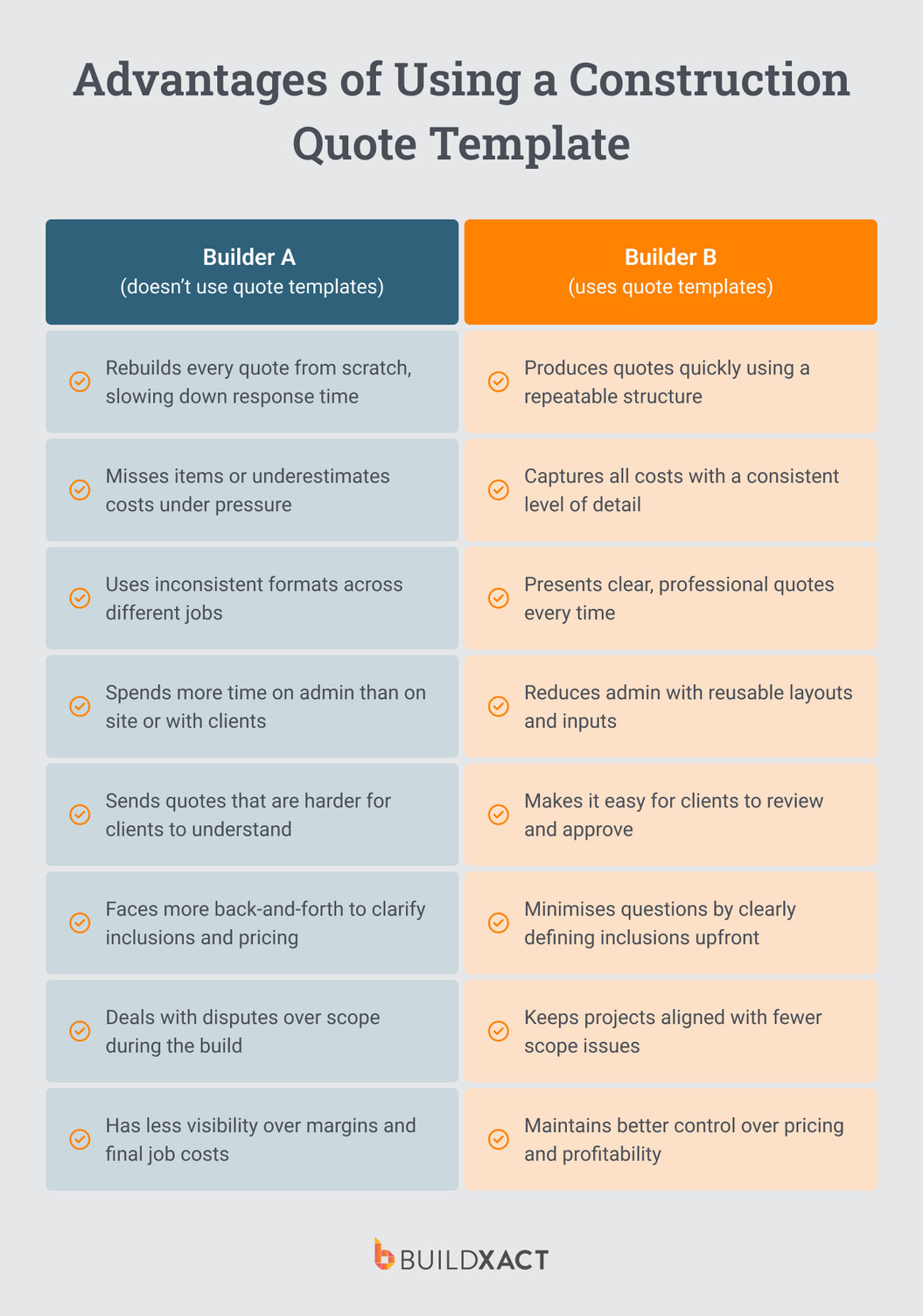
Speeds up quote turnaround
Construction quote templates help you build quotes faster by reusing the same proven structure across jobs. Instead of starting from scratch every time, you can quickly update quantities, costs, and project details to send professional quotes without the admin bottleneck.
Keeps every quote consistent
Using the same quote template across projects keeps your pricing and inclusions consistent from job to job. This creates a more professional client experience and makes it easier for your team to follow the same quoting process every time.
Reduces missed items
Prebuilt sections help you account for labor, materials, subcontractor costs, allowances, and other project expenses. This reduces the risk of missed costs that can lead to underquoting, margin pressure, and change orders during the build.
Simplifies cost breakdowns
Clear quote templates make it easier to organize pricing into logical sections that clients can actually follow. Breaking costs down properly improves transparency, supports internal budget tracking, and helps avoid confusion about where project costs are coming from.
Supports faster client approvals
Well-structured quotes are easier for clients to review and understand. When every project detail is presented clearly, clients can make decisions faster, reducing delays between quoting, approval, and starting the project.
As well as speeding up your quoting processes, modern construction management software connects quoting with the rest of your workflow – so tasks like estimating, ordering, and scheduling are integrated.
What Does a Professional Construction Quote Template Include?
Every builder dreads the prospect of change orders. A comprehensive construction quote helps you avoid the time-consuming and stressful documentation of these orders, with all project details and inclusions neatly clarified before the work begins.
Client details
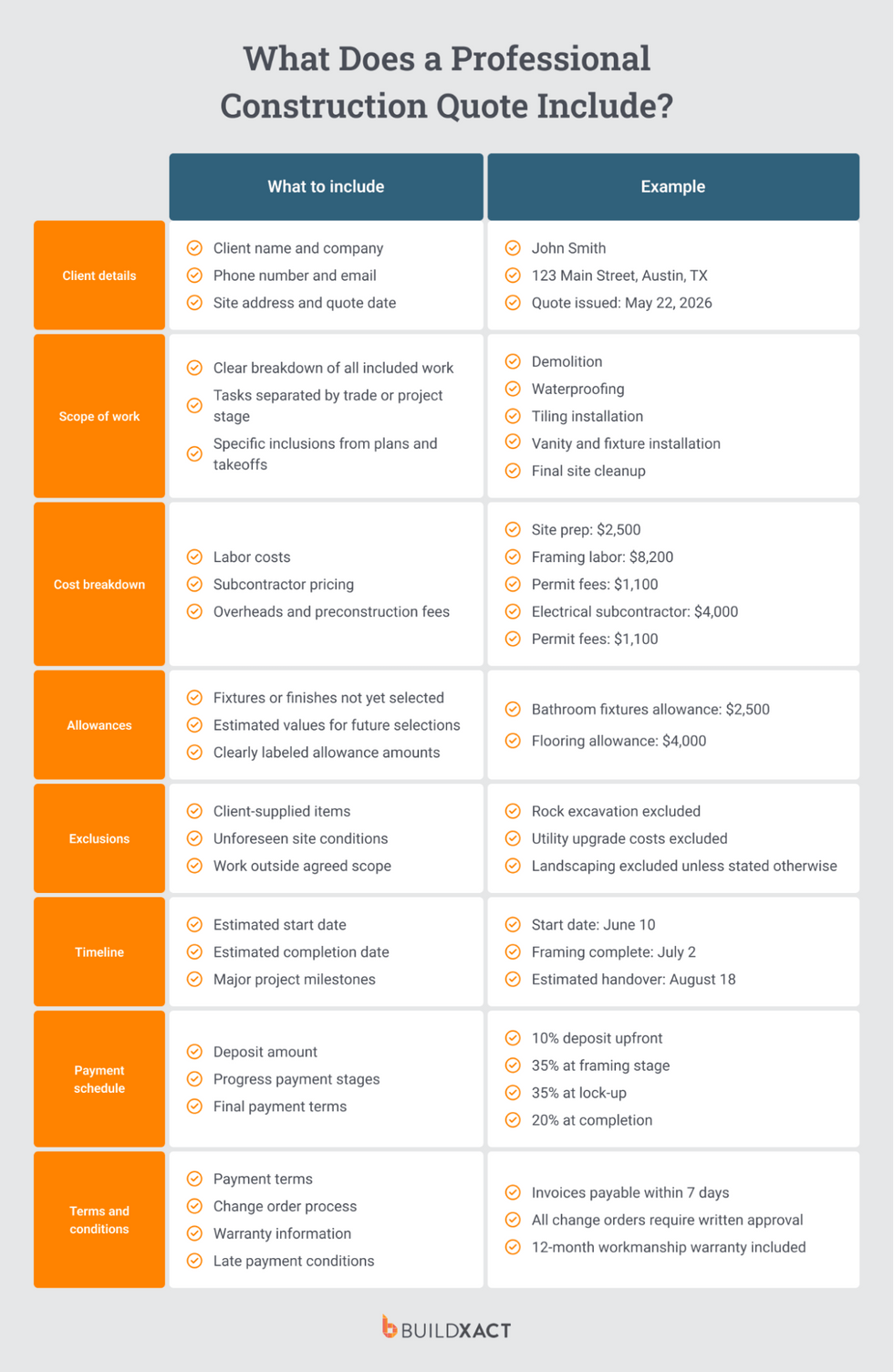
Start with the basics: who the quote is for and where the work will happen. Include the client’s name, phone number, email address, site address, and quote date.
This keeps communication organized and reduces the risk of quoting the wrong project or using incorrect billing details.
Tip: Always double-check the site address against the plans before sending the quote. Small admin mistakes can create major scheduling and delivery issues later.
Scope of work
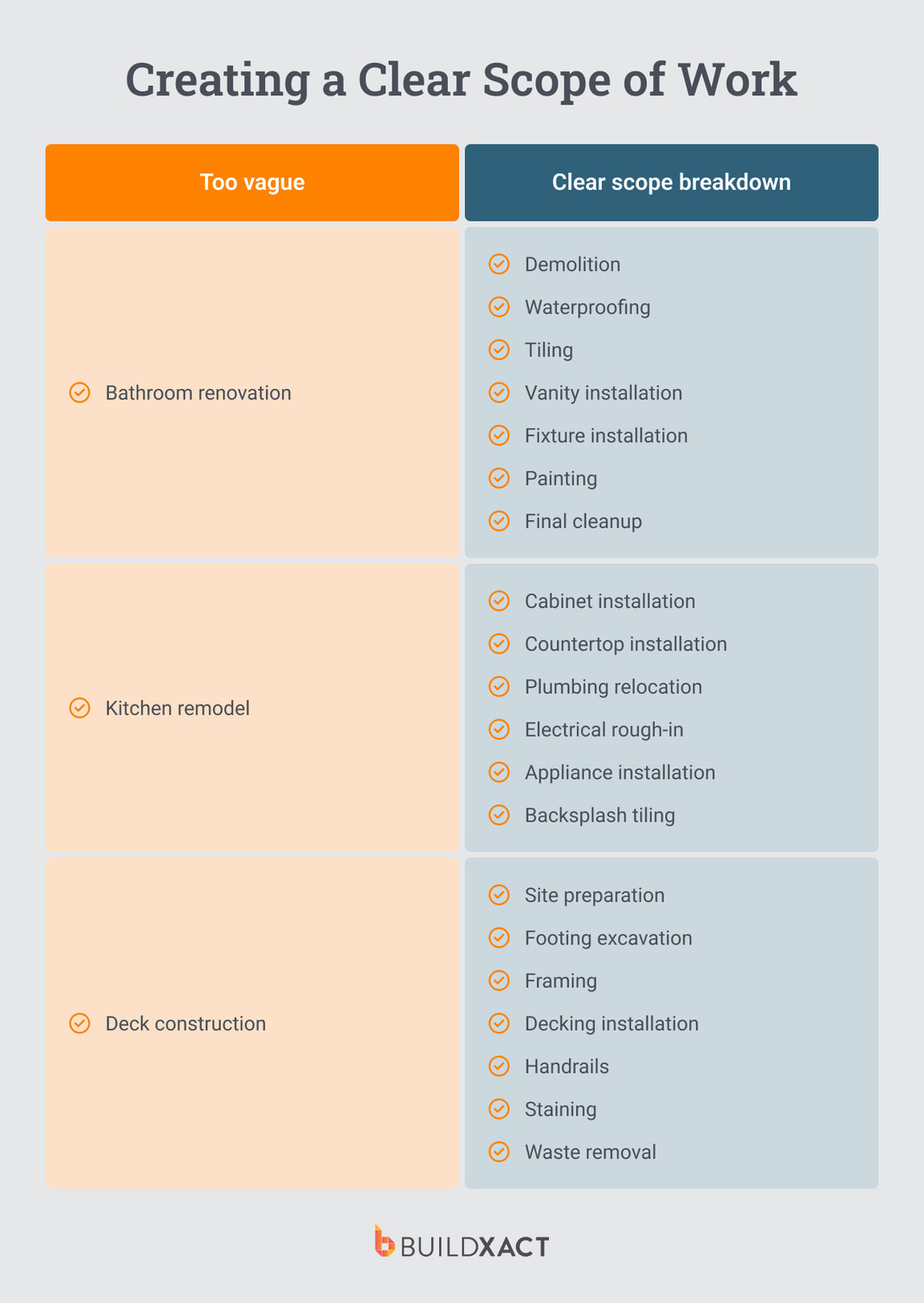
The scope of work is one of the most important parts of any construction quote. This section should clearly explain exactly what work is included, broken down by tasks, stages, or trades. Work directly from plans, specifications, and takeoffs so nothing important gets missed.
Be specific with inclusions instead of relying on assumptions or vague descriptions. Clear scope details help clients understand what they’re paying for and reduce disputes, confusion, and unexpected change orders during the build.
Tip: If something isn’t included in the quote, state it clearly upfront instead of assuming the client understands it’s excluded.
Cost breakdown
A professional quote should clearly break down all project costs, including:
- Labor
- Materials
- Subcontractors
- Overheads
- Miscellaneous expenses
Organized cost breakdowns make quotes easier for clients to review while helping builders track margins and spot missing costs before the job begins.
Preconstruction costs should be included where relevant. These are fees and charges that occur before construction begins, such as surveys, building permits, site preparation, utility installs, and business fees. Because these expenses can add up quickly, they should be listed clearly rather than hidden in broader pricing.
Material costs should be based on accurate takeoffs and current dealer pricing wherever possible. Digital takeoff tools make these calculations much quicker and more accurate than using traditional pen and paper, reducing costly errors and helping protect margins.
Labor and subcontractor costs should be broken out clearly by project phase, such as site work, framing, electrical, or landscaping. Before finalizing the bid, review totals carefully to confirm pricing, markup, and overheads have all been accounted for correctly. The best construction management software allows you to break out these costs in separate line items and also include overhead costs associated with maintaining your payroll.
Allowances
Allowances cover items that haven’t been fully selected or specified at the quoting stage, such as fixtures, finishes, appliances, or fittings. Include realistic estimated values based on current dealer pricing or similar past projects.
Every allowance should be clearly labeled so clients understand the final cost may change depending on their selections later.
Tip: Unrealistically low allowances often lead to disputes later when clients realize their selections exceed the quoted budget.
Exclusions
Exclusions explain what is not covered by the quote. This can include client-supplied materials, unforeseen site conditions, utility upgrades, or work outside the agreed scope.
Clear exclusions reduce assumptions and help prevent disagreements later when unexpected costs or requests arise during construction.
Tip: Use plain language in exclusions. Clients should be able to quickly understand what is and isn’t covered without needing clarification.
Timeline
Include estimated start and completion dates based on your current workload, trade availability, sequencing, and material lead times.
For larger projects, it can also help to include major milestones such as demolition, framing, or final handover. Clear timelines like this help manage expectations before work begins.
Tip: Leave room for delays caused by weather, inspections, or material lead times instead of creating timelines that are too aggressive.
Payment schedule
Break payments into distinct stages linked to project progress or milestones. This might include deposit payments, framing completion, the lock-up stage, or the final handover.
A structured payment schedule improves cash flow management, keeps billing organized, and helps clients understand when payments are expected during the build.
Tip: Align payment stages with completed work so cash flow stays healthy throughout the project.
Terms and conditions
Terms and conditions explain how the project will be managed from a contractual and financial perspective.
Include payment terms, late payment conditions, warranties, change order procedures, dispute processes, and other legal requirements relevant to the project.
Tip: Use standard contract wording wherever possible and update it only where project-specific conditions apply.
How Construction Quoting Software Can Help Small Home Builders
Modern construction quoting software helps residential builders create faster, more accurate quotes while keeping costs, takeoffs, and client communication connected in one system.
Instead of rebuilding every estimate manually, builders can streamline the entire quoting process from takeoff to client approval.
Faster estimating and takeoffs
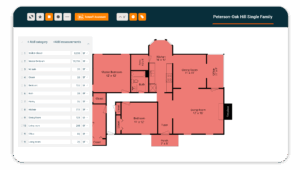
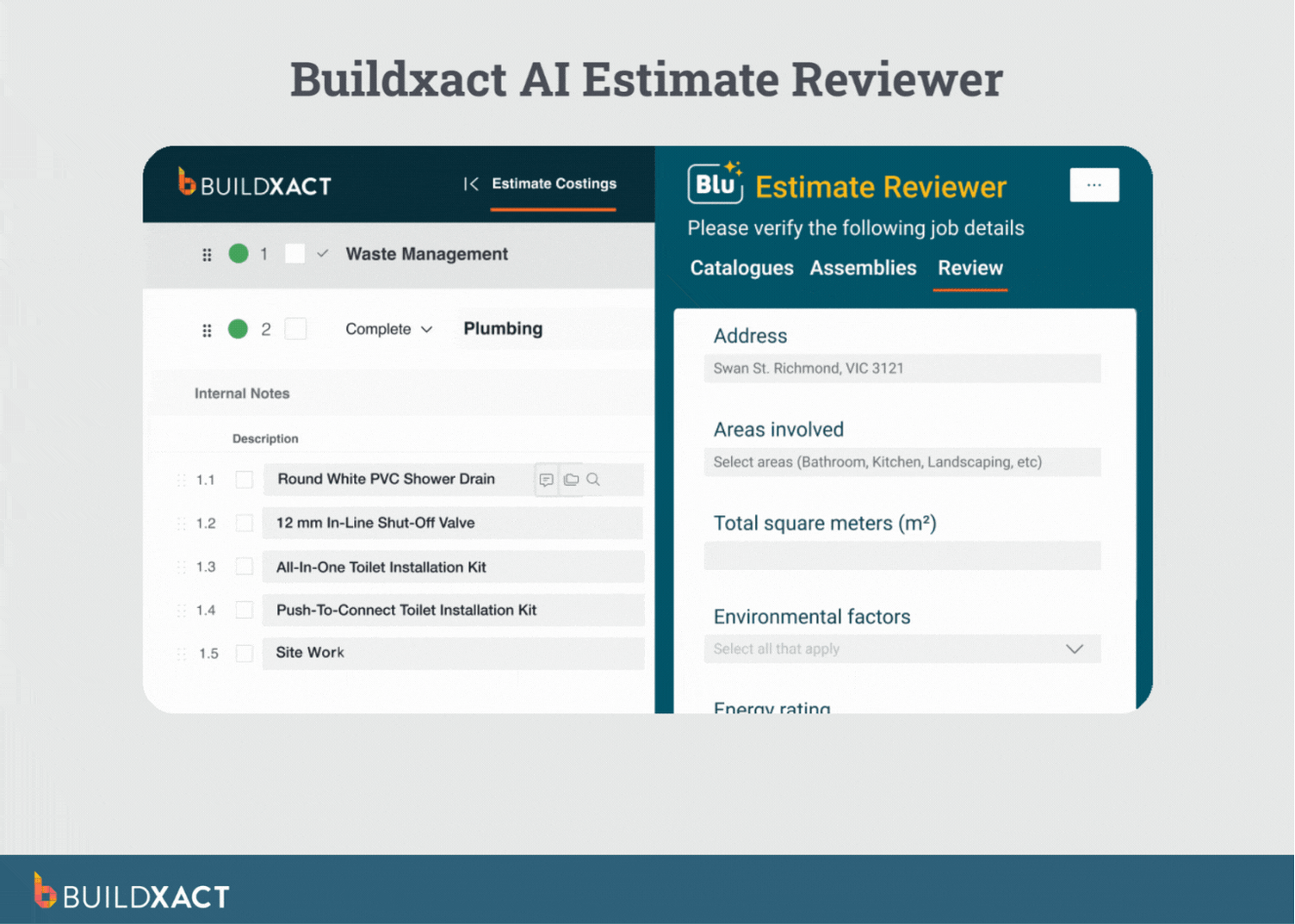
Manual measurements and spreadsheet calculations take time and increase the risk of mistakes. Construction quoting software speeds up the process with digital takeoffs, reusable templates, and automated calculations that help builders produce accurate estimates faster.
AI-assisted tools like Buildxact’s Blu AI Construction Assistant can also help review estimates, measure plans, and build quotes using repeatable assemblies for common project types.
More accurate pricing
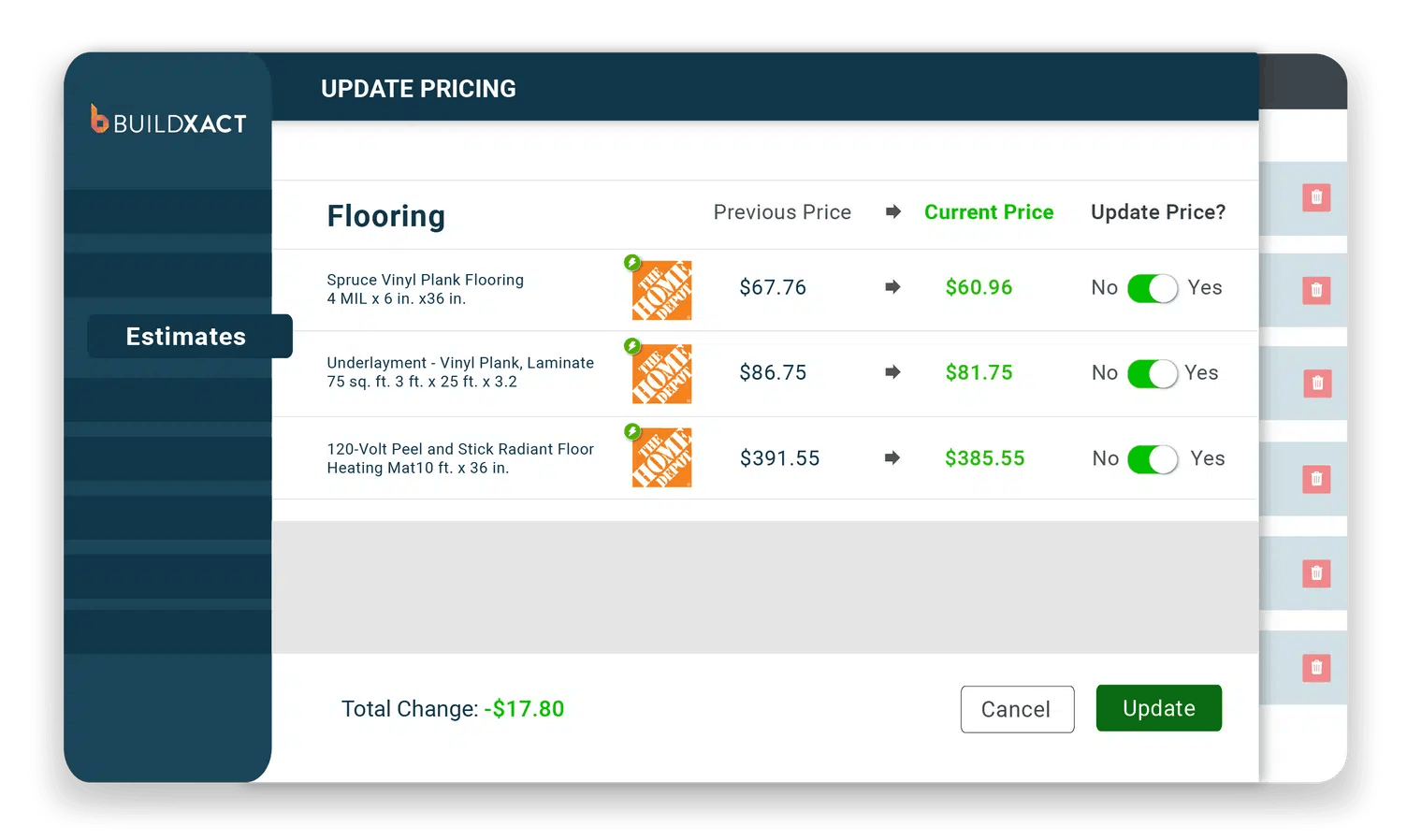
Material prices and labor costs can change quickly, especially across longer projects. Construction quoting software helps builders work from current pricing instead of outdated figures stored in old spreadsheets.
Live dealer pricing integrations, connected cost libraries, and saved assemblies make it easier to build quotes that reflect real project costs while protecting margins.
Professional client proposals
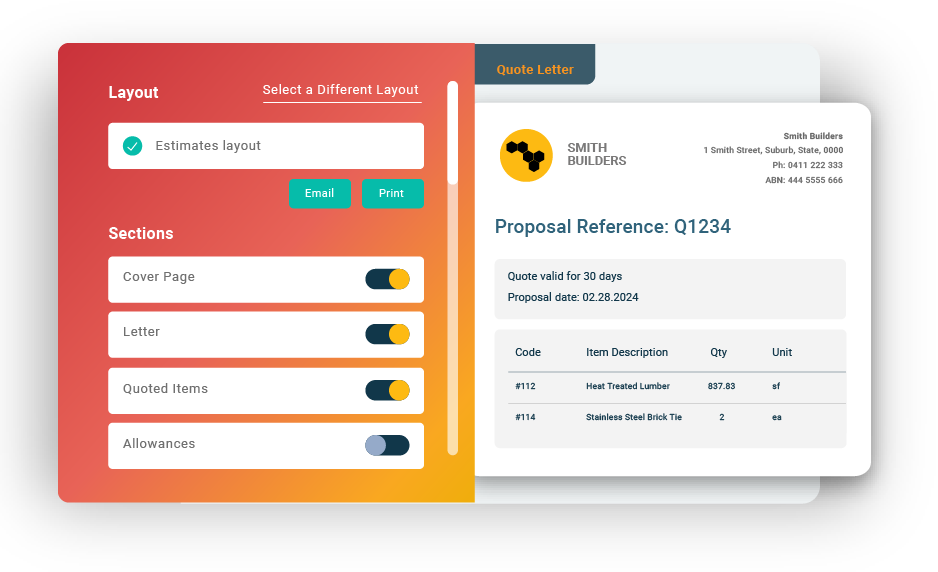
Clear, professional proposals help builders stand out when homeowners compare multiple bids. Construction quoting software makes it easier to generate organized quotes with detailed inclusions, specifications, images, pricing breakdowns, and supporting documents.
Features like Buildxact’s digital approvals and centralized client portal simplify selections, document sharing, and sign-offs.
Better quote consistency
As quoting volume increases, consistency becomes harder to maintain manually. Construction quoting software helps standardize pricing structures, templates, scopes of work, and common project tasks across every quote.
This reduces missed items, improves internal processes, and creates more predictable margins from job to job.
Connected workflows across the project
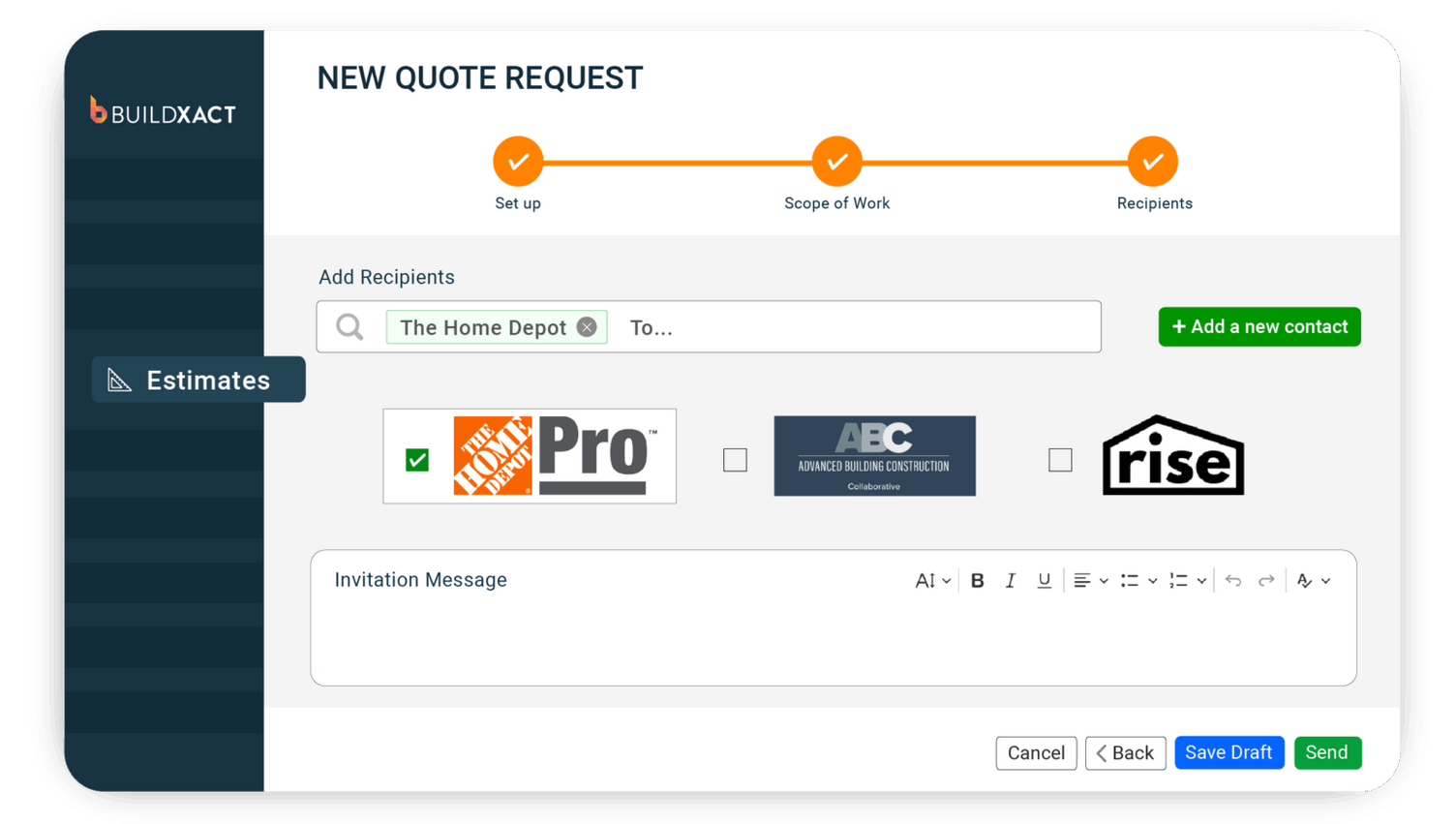
Modern quoting software does more than generate estimates. Platforms like Buildxact connect quoting with scheduling, ordering, budgeting, subcontractor RFQs, and job management.
Instead of re-entering information across multiple systems, builders can move from estimate to active project with greater accuracy, visibility, and control.
Create Professional Quotes Five Times Faster With Buildxact
Quoting delays, pricing errors, and disconnected spreadsheets all stand in the way of winning the best jobs. The right construction quoting software gives small home builders a faster, more reliable way to create accurate bids without adding more admin to the day.
With Buildxact, you get tools designed to streamline your existing residential workflows. From AI-assisted takeoffs and reusable quote templates to live dealer pricing and connected estimating workflows, Buildxact helps you produce professional quotes in a fraction of the time while keeping your margins protected.
Interested in seeing for yourself how Buildxact quoting templates can improve your business? Register here for a 14-day free trial or book a demo to see how Buildxact can help your business grow.