

Construction cost overruns occur when a project’s actual costs exceed its original budget, reducing planned profit margins. To prevent cost overruns, residential builders should start with accurate estimates and realistic budgets, then monitor costs throughout the job. Key strategies include using current material pricing, allowing for unexpected expenses, managing change orders before work begins and regularly comparing actual costs against estimates.
You priced the job carefully, agreed on a budget with the client and got your crews on-site. But as work gets underway, material costs come in higher than expected, a few items were missed in the estimate and extra work starts eating into your planned margin.
When you’re running several residential jobs at once, keeping on top of every expense can be a challenge. And by the time you realize a project is going over budget, you may have limited options to recover those costs.
So how can you stop cost overruns from cutting into your profits? Let’s look at the common causes of construction cost overruns and seven practical ways to prevent them throughout the job.
Key Takeaways
- Cost overruns reduce planned profit margins: Missed estimate items, rising material costs, delays and unapproved changes can push residential projects beyond their original budgets.
- Prevention starts before construction: Accurate estimates, detailed scopes, current supplier pricing and realistic contingencies help reduce unexpected costs.
- Change orders need to be managed carefully: Price and approve additional work before it begins to avoid absorbing costs that should be billed to the client.
- Ongoing cost tracking helps catch overruns early: Regularly comparing estimated, committed and actual costs gives builders time to address issues before they eat further into margins.
- Past job costs can improve future estimates: Reviewing where projects went over budget helps builders make better allowances and avoid repeating costly mistakes.
How Construction Cost Overruns Affect Your Profit Margins
Even a relatively small cost overrun can have a big impact on your profit margin, particularly when you’re working with tight margins to begin with.
For example, say you’ve quoted $300,000 for a residential build. Here’s how the numbers could work out:
- Contract price: $300,000
- Estimated job costs: $255,000
- Expected profit: $45,000 (15% margin)
Now say unexpected material, labor and subcontractor costs add another $15,000 to the job.
- Final job costs: $270,000
- Actual profit: $30,000 (10% margin)
That $15,000 overrun has wiped out a third of your expected profit.
When you’re running three or four jobs at once, similar overruns across those projects can take a significant chunk out of your overall earnings.
Spotting rising costs early gives you more options to manage spending before the job wraps up.
What Causes Construction Cost Overruns?
Cost overruns can happen at almost any stage of a residential build, and the reasons aren’t always obvious. Some problems stem from inaccurate numbers before the work even starts, while others develop as the project progresses.
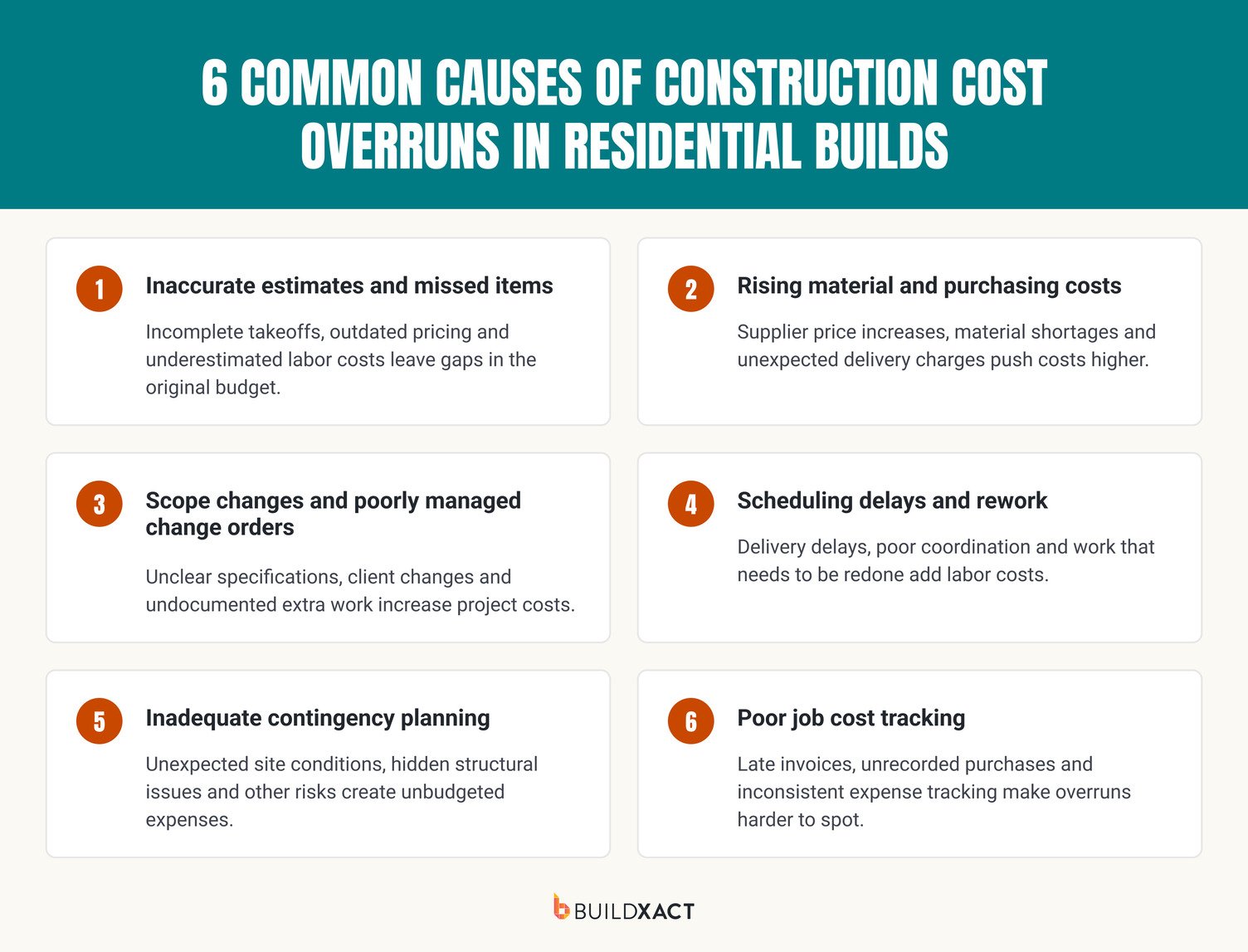
Understanding where things tend to go wrong is the first step toward keeping your jobs on budget. Here are six common causes to watch out for.
Inaccurate estimates and missed line items
An estimate is only as reliable as the information behind it. Incomplete material takeoffs can leave out quantities or entire items, while incorrect labor allowances underestimate the hours needed to complete the work. These gaps may only become apparent when materials are ordered or crews start work on-site.
Material price increases and purchasing issues
The price you allow for materials when quoting a job isn’t always what you’ll pay when ordering them. Supplier price increases, stock shortages and substitutions can all affect purchasing costs. Additional freight charges or minimum order requirements can also push the final bill higher than expected.
Scope changes and poorly managed change orders
A client decides to upgrade their kitchen finishes or add extra electrical outlets halfway through the build. These changes affect material quantities, labor requirements and potentially the schedule. When the additional work isn’t properly documented and priced, the builder can end up covering costs that weren’t included in the original contract.
Scheduling delays and rework
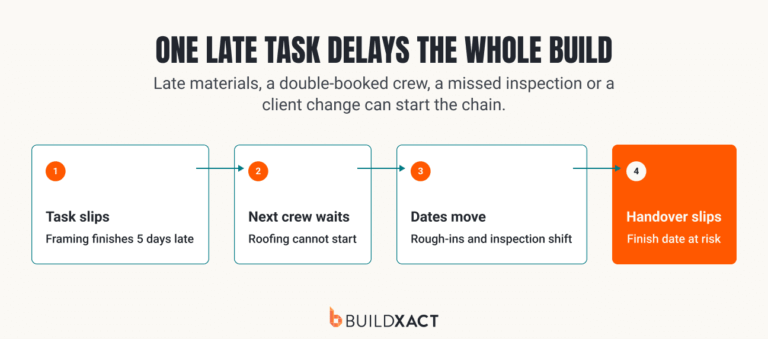
Construction schedules depend on materials, crews and subcontractors being available when needed. A delayed delivery can leave workers waiting or force subcontractors to reschedule. Mistakes that require completed work to be torn out and redone create further costs, particularly when other parts of the job depend on that work being finished.
Inadequate contingency planning
Renovations and remodeling jobs can reveal problems that weren’t visible during the initial inspection. Hidden water damage, structural defects or outdated wiring may require additional work once walls or floors are opened up. Without enough contingency in the budget, these discoveries can quickly put the job over its original cost allowance.
Poor job cost tracking
A job’s financial position can look better than it really is when costs haven’t been recorded. Supplier invoices may arrive weeks after materials are delivered, while smaller purchases or subcontractor charges can sit outside the main cost records. This makes it difficult to know how much has already been spent or committed.
Most builders will encounter some of these issues sooner or later. The important thing is having processes in place to reduce the risks and deal with problems before costs get out of hand.
How to Prevent Construction Cost Overruns: 7 Tips for Residential Builders
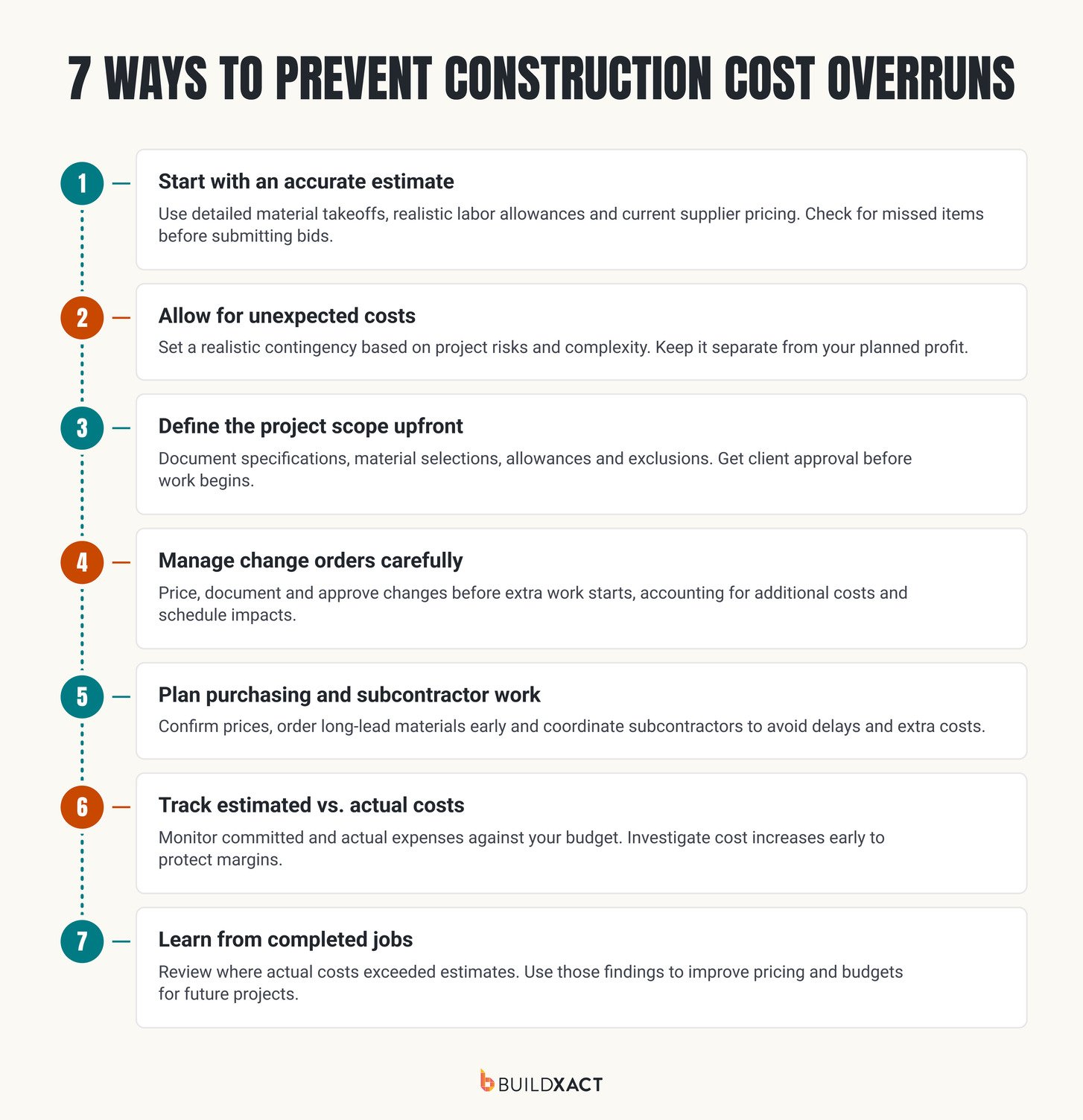
Preventing cost overruns starts with the decisions you make before work begins and continues through every stage of the job. Here are seven practical ways to reduce unexpected costs and keep your residential projects on budget.
1. Start with an accurate, detailed estimate
Before submitting a bid, review your takeoffs for missing quantities, check labor allowances against similar jobs and confirm that material prices are current. Pay particular attention to items that can easily slip through, such as fixings, waste disposal, delivery charges and subcontractor scope gaps.
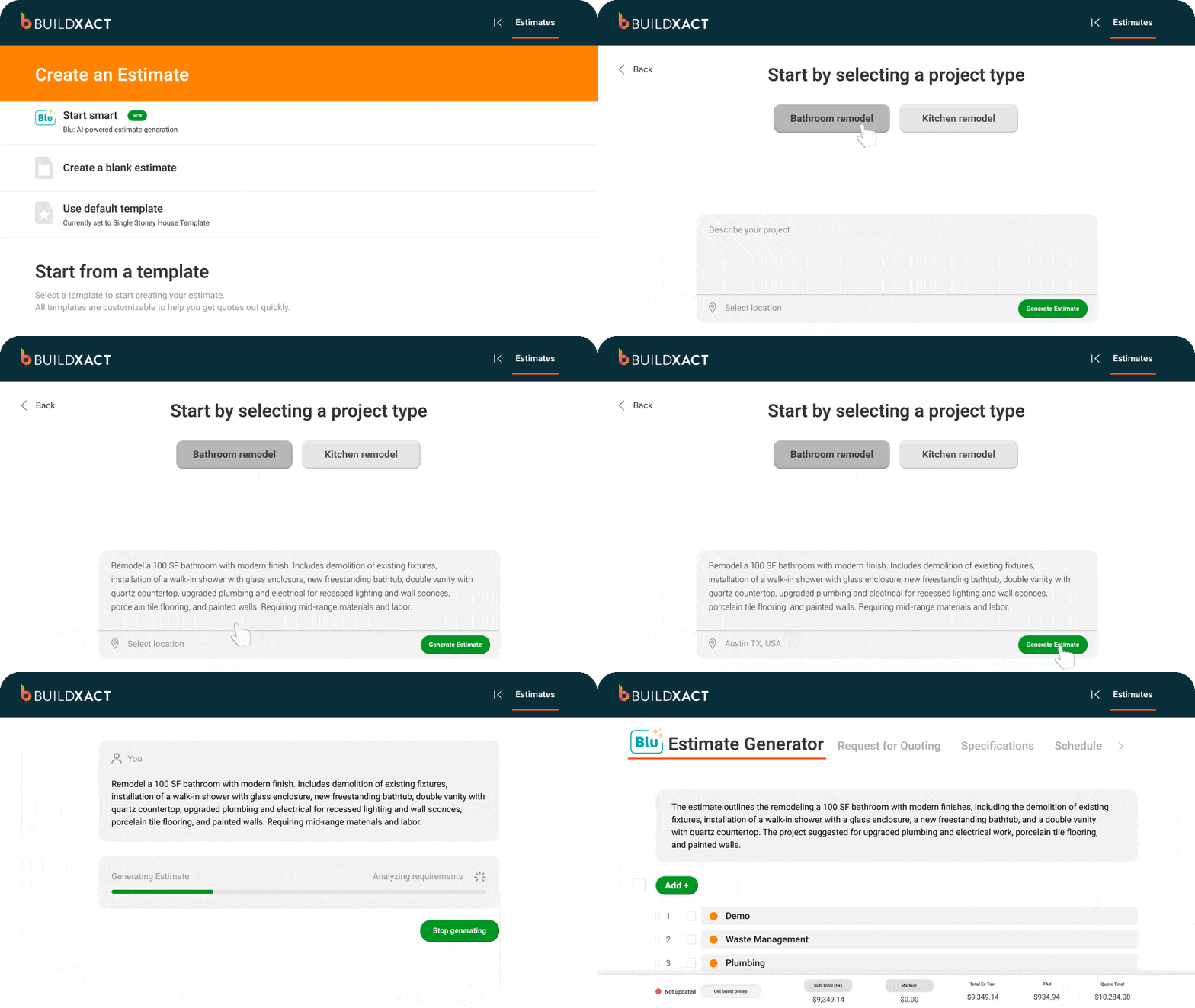
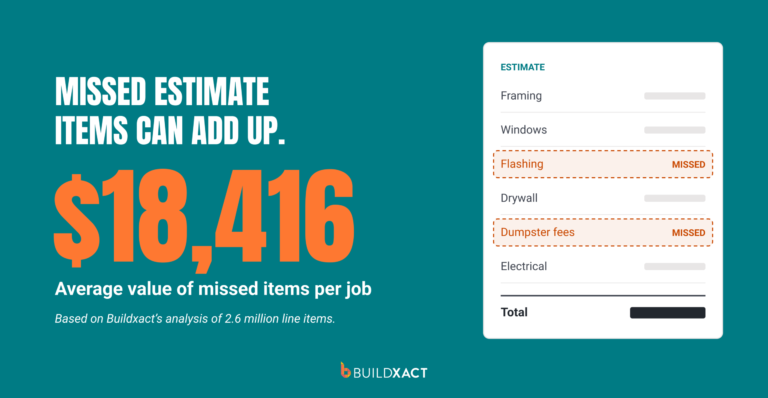
Buildxact’s analysis of 2.6 million estimate line items found an average of $18,416 in missed items per job. Tools like Buildxact’s Blu AI Estimate Reviewer can help flag potential omissions and pricing gaps, giving you another opportunity to catch costly mistakes before the estimate goes out.
2. Build a realistic budget with room for unexpected costs
Set your contingency based on how much uncertainty remains in the job. Consider the completeness of the plans, outstanding client decisions and any costs that can’t be confirmed before work begins. Allowances should reflect the risks of the individual project rather than applying the same percentage to every job.
Keep contingency separate from your planned profit and track how much you’ve used. As the job progresses, review whether the remaining allowance is enough to cover outstanding risks without reducing your expected margin.
3. Define the project scope before work begins
Unresolved client selections and vague allowances can create problems once purchasing and construction are underway. Confirm specifications, material choices and exclusions before locking in the contract price, particularly for higher-cost items such as cabinetry, fixtures and finishes.
For selections that haven’t been finalized, document the allowance and what happens if the client chooses a more expensive option. Keep approved specifications and selections accessible to your crews and subcontractors so everyone is working from the same scope.
4. Control changes before they affect your costs
Every change needs to be assessed for its full cost, including any additional labor, materials, subcontractor work, and scheduling impacts. Check how the revised scope affects your expected margin before agreeing on a price with the client.
Get written approval before extra work starts, then update the job budget and billing records to reflect the change. Buildxact data show an average of $24,092 in tracked change orders per job, making it particularly important to account for additional work as it occurs.
5. Plan purchasing and subcontractor work carefully
Before placing orders, check that supplier quotes are still valid and confirm final prices, delivery charges and availability. Review subcontractor quotes for exclusions or assumptions that could result in additional charges, and confirm who’s responsible for supplying materials, equipment and site preparation.
Across multiple jobs, purchasing and scheduling decisions can affect more than one project. Coordinate deliveries and subcontractor availability against your active schedules, and check for potential conflicts before committing crews or ordering materials.
6. Track estimated vs. actual costs throughout the job
Review job costs weekly, comparing your original allowances with what you’ve spent, what you’ve committed to spend, and what you expect the remaining work to cost. This gives you a more complete picture than looking at paid invoices alone.

When a cost item starts running over budget, check what’s driving the difference and update your forecast margin. Buildxact research found that builders who track margins report a 7% net profit, compared with 3% among those who don’t, underscoring the importance of monitoring job performance.
7. Review actual costs to improve future estimates
Once a job is complete, look at where actual costs differed from your original allowances. Pay particular attention to recurring patterns across similar projects, such as labor hours consistently exceeding estimates or subcontractor costs coming in higher than quoted.
Use those findings to update your estimating templates, labor rates and material allowances. For builders quoting multiple projects each month, using what previous jobs actually cost can make future pricing more reliable and help prevent the same overruns from happening again.
Even with careful planning, some jobs will still exceed their budgets. When that happens, understanding the full financial impact and taking action on the remaining work can help limit further losses.
What Should You Do When a Construction Job Goes Over Budget?
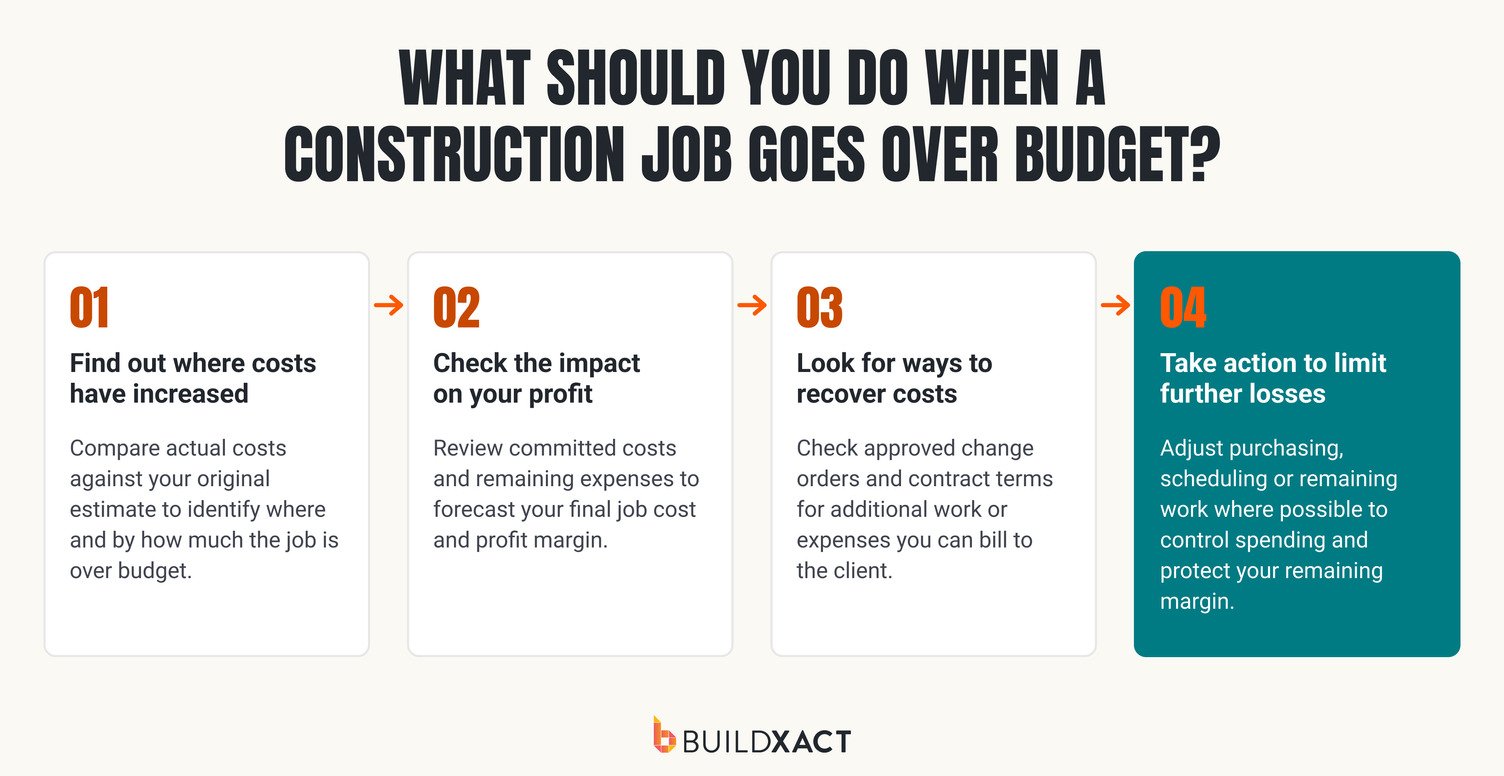
If a job is already over budget, the priority is to work out how much profit is at risk and where you can still make changes. Here’s how to assess the situation and limit the financial impact.
1. Work out how much the job is over budget
Identify which cost items have exceeded their allowances and by how much. Check whether the additional expenses are one-off costs or likely to continue, particularly if the affected work is still underway. This will help you understand whether the overrun is contained or could get worse.
2. Calculate your revised profit margin
Work out the likely final job cost, including expenses you’ve already incurred and the cost of completing the remaining work. Compare this with the contract value to calculate your revised expected profit and margin. This shows you how much profit you can still expect to make.
3. Identify costs you may be able to recover
Review your contract terms to establish whether any additional expenses can be charged to the client. Check for completed work that hasn’t been billed and outstanding change orders that need resolving. Only include recoverable amounts in your profit forecast once you’ve confirmed the client is responsible for paying them.
4. Take action to protect your remaining profit
Focus on upcoming expenses where you still have room to make changes. This could mean negotiating outstanding supplier orders, finding approved material alternatives or adjusting the sequence of remaining work to avoid unnecessary labor costs. Focus on changes that will make the biggest difference to your remaining profit without compromising quality or your contractual obligations.
Construction management software can make it easier to stay on top of these numbers, with your estimates, expenses and job costs connected in one place.
How Buildxact Helps Residential Builders Keep Costs Under Control
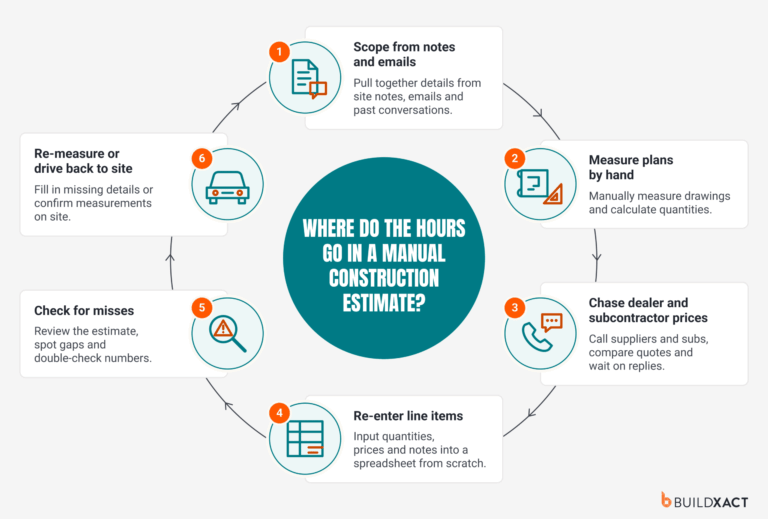
As your construction business grows, keeping costs under control can become increasingly time-consuming. Construction management software helps reduce the manual work involved in managing project finances, so you can spend less time on admin and more time running profitable jobs.
Here’s how Buildxact supports cost control throughout your projects:
AI-assisted takeoffs
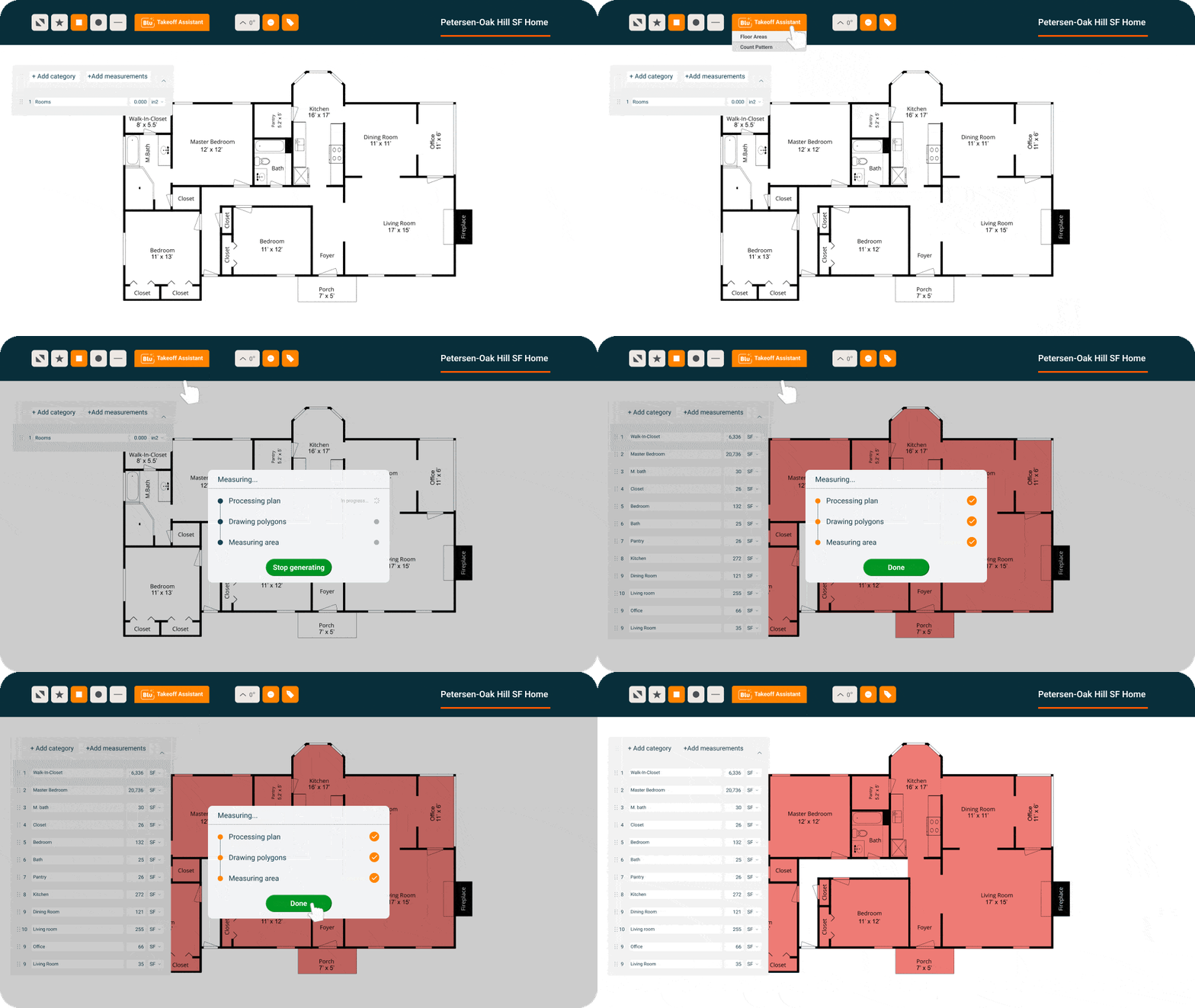
Blu AI Takeoff Assistant measures materials and quantities from uploaded plans, with the option to review and adjust results before using them in an estimate.
More accurate estimates
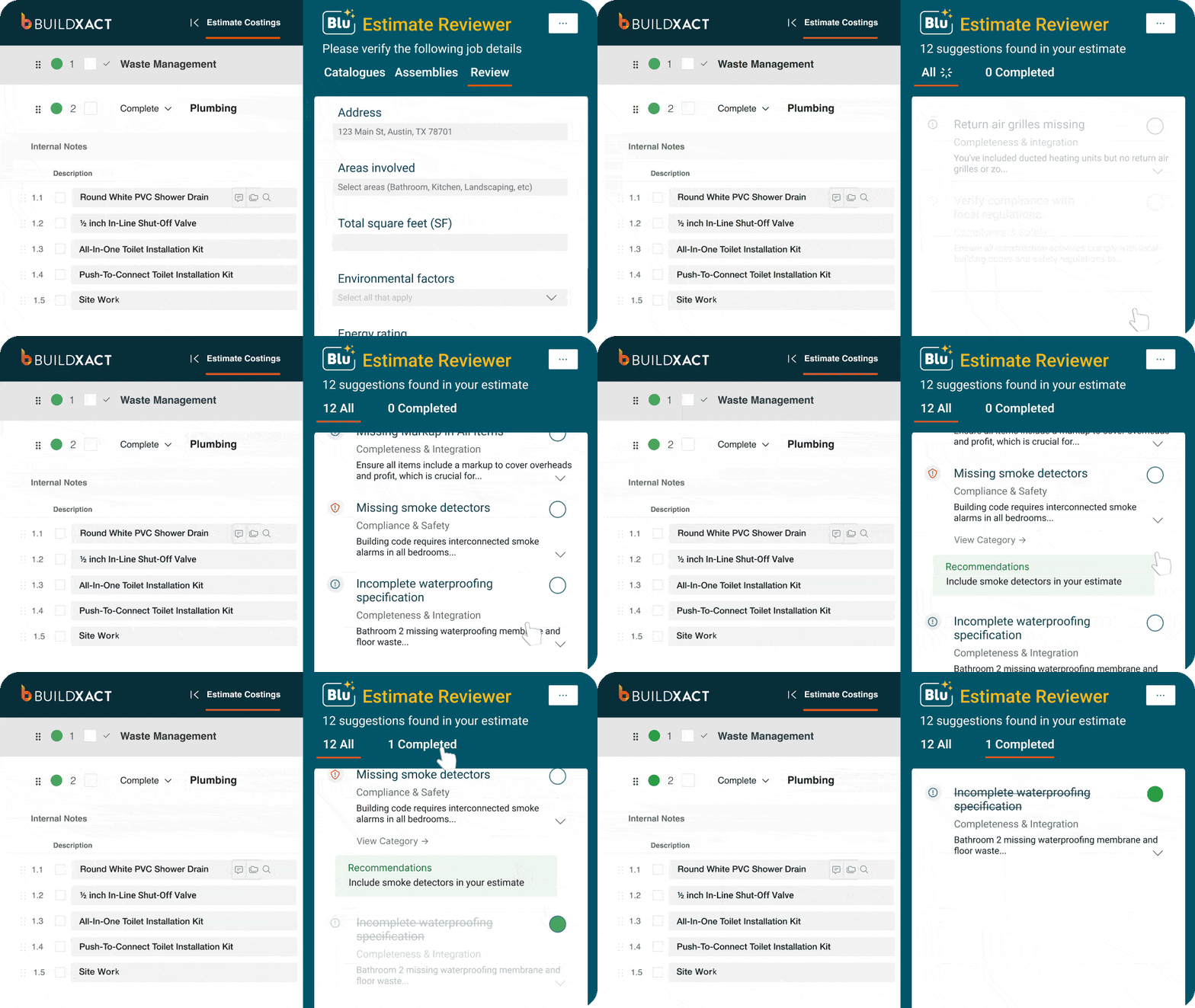
Blu AI Estimate Reviewer checks estimates for potential missed items and pricing gaps, helping you catch costly omissions before submitting a bid.
Up-to-date material pricing
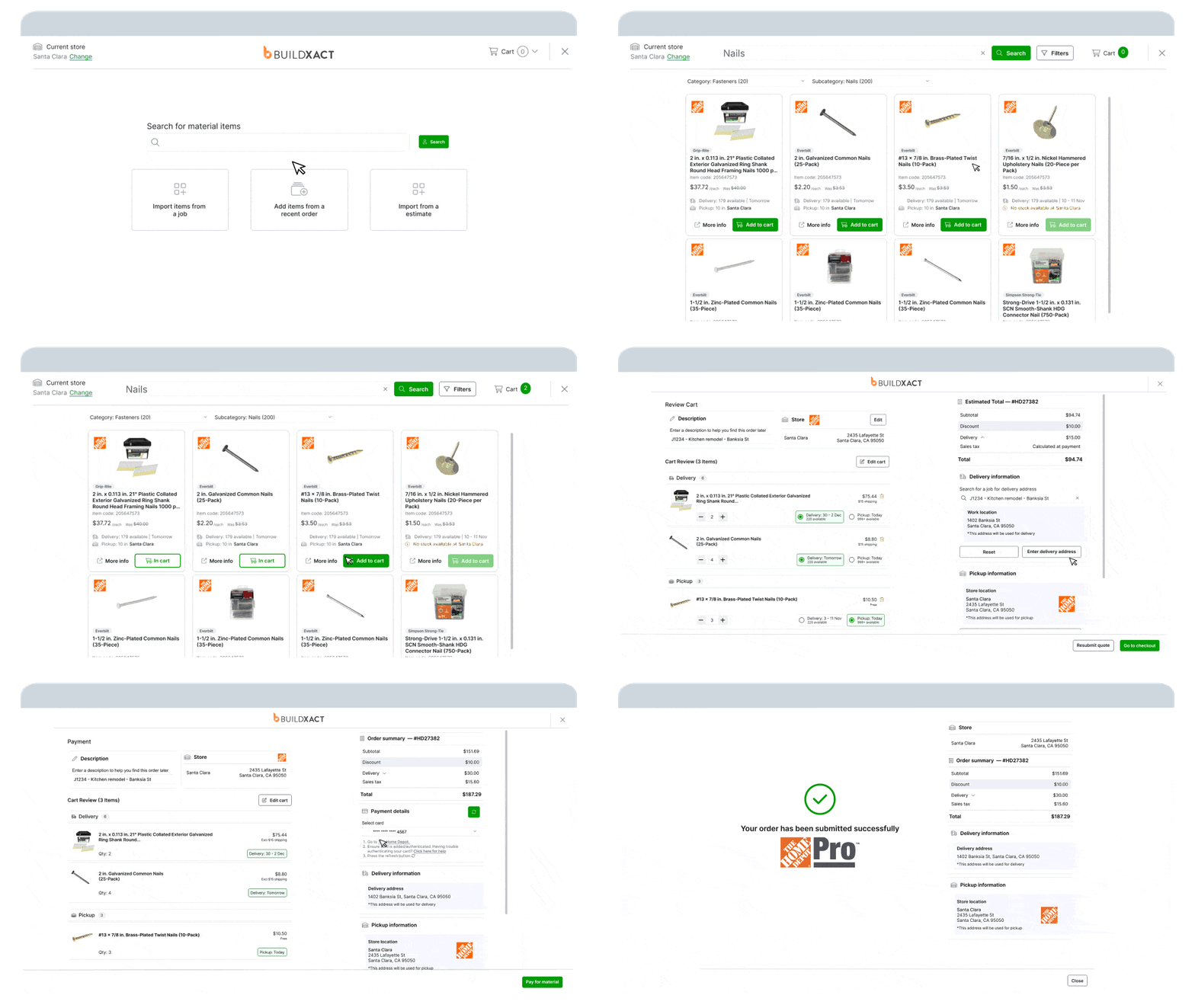
Buildxact’s Home Depot integration gives you access to current material pricing, helping you estimate using costs that reflect what you’ll pay.
Reusable estimating templates
Save frequently used items and assemblies in estimating templates to speed up quoting and maintain consistent allowances across jobs.
Connected purchasing
Create purchase orders from your estimates and track committed costs against the original budget before supplier invoices arrive.

Change order management
Price, document and track change orders, keeping approved additional work and its costs connected to the job.
Estimate-to-actual cost tracking
Compare estimated costs with actual spending throughout construction to spot overruns and see how they’re affecting your margins.

Connected project workflows
Manage takeoffs, estimates, purchasing, change orders and job costing in one platform, with project information carried through each stage.
For Joshua Bradley of BradWay Construction and Restoration, more accurate estimating has delivered impressive results. Since adopting Buildxact, his company has reduced estimating errors by more than 95% and cut estimating time by almost 80%. With reusable templates and live Home Depot pricing, BradWay has also more than doubled its sales without Joshua having to spend more time estimating.
With Buildxact, you can keep your job costs connected from the first takeoff through to the final invoice, with a better view of where your margins stand. Start for free and keep project costs under control as your business grows.
Construction Cost Overruns: FAQs
How do you calculate a construction cost overrun?
Subtract the original budget from the final project cost. For example, if you budgeted $250,000 for a residential build and spent $275,000, the cost overrun is $25,000, or 10% of the original budget. You can also calculate overruns for individual cost items to identify where spending exceeded your allowances.
How much contingency should you allow for a residential construction project?
A contingency of 5% to 10% is common for straightforward residential builds, while remodeling projects with greater uncertainty may need 15% to 25%. The right amount depends on site conditions, project complexity and how much of the scope is finalized. Keep contingency separate from your planned profit margin.
How can construction delays lead to cost overruns?
Delays can increase labor costs, extend equipment rentals and push subcontractor work beyond the original schedule. They may also mean paying higher material prices or additional storage and delivery fees. When one delayed activity holds up other work, the extra costs can quickly add up across the project.
Who is responsible for cost overruns in construction?
Responsibility depends on the contract terms and what caused the overrun. Under a fixed-price contract, builders generally absorb unexpected costs within the agreed scope. Clients may be responsible for approved changes or certain unforeseen conditions, depending on the contract. Cost-plus contracts typically allow eligible actual costs to be billed to the client.