
On paper, managing subcontractors sounds simple: book the trade, give them a date, move onward, and get the job done.
In reality, it’s a constant juggle. One trade forgets to confirm, a date shifts, a single change isn’t passed on, and suddenly the whole schedule starts wobbling.
It’s tempting to lay it all at subcontractors’ feet, but the real source of the struggle comes down to this: managing this role is a small job in itself, and it hasn’t kept pace with how busy and fast-paced residential building and remodeling projects have become.
In this guide, we break down where subcontractor management usually goes off track for residential builders and share practical solutions that make managing trades easier to control.
How Builders Typically Manage Subcontractors
Managing subcontractors is something you’re probably constantly juggling in between everything else. You’re booking trades, chasing confirmations, lining them up in the right order, and hoping everyone turns up when they’re supposed to.
At the same time, you’re trying to make sure each trade understands what they’re doing, when they’re doing it, and what’s changed since the last conversation.
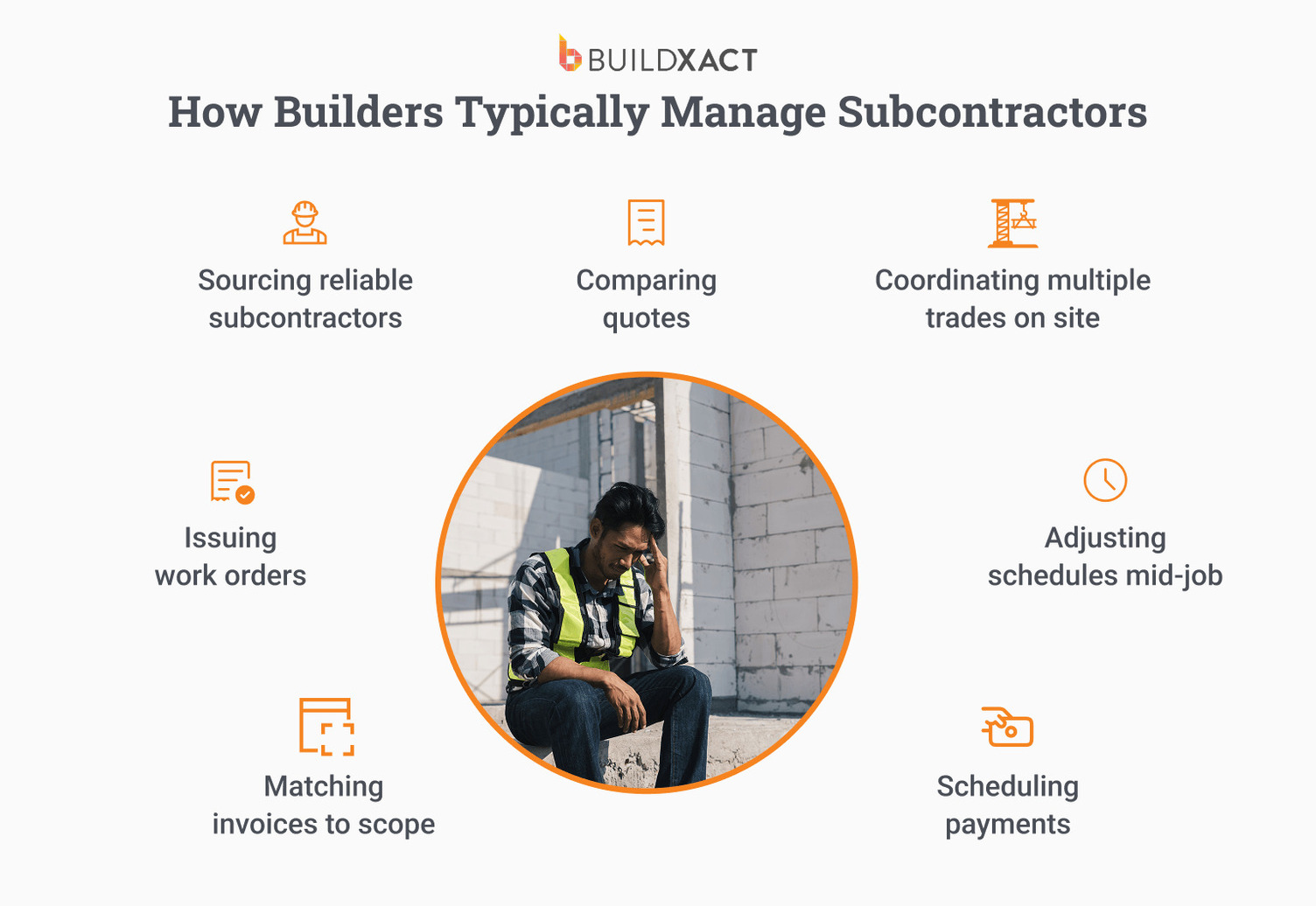
Most of this doesn’t happen in a neat system. Changes are discussed over the phone, and costs live in a spreadsheet somewhere. As soon as jobs overlap or things change on site (which they always do), it gets harder to keep track of who’s confirmed and what still needs following up.
That’s when small details start slipping, and managing subcontractors becomes way more stressful than it should be.
4 Common Subcontractor Management Mistakes Affecting Your Profits
If you’ve been building for a while, chances are you’ve done at least one of these (probably without thinking twice). These are the habits that can cause the most trouble.
#1: Relying on verbal agreements when things get busy
A quick chat on site or a phone call feels faster than writing things down. But when the job moves on, and questions come up later, there’s no clear reference to fall back on.
Everyone remembers the conversation differently, and suddenly you’re trying to piece together what was agreed weeks ago, usually when an invoice doesn’t match expectations.
#2: Treating long-term subcontractors as “informal”
When you’ve worked with the same trades for years, it’s easy to skip the details. You assume they know how you run jobs and what’s included.
But every job is different. Access changes, timelines shift, and scope evolves. Without resetting expectations each time, small misunderstandings build into bigger problems on-site.
#3: Not setting clear rules around variations and extras
If there’s no clear process for approving extras, subcontractors will often go ahead, assuming it’s fine. From their point of view, they’re helping keep the job moving. From yours, it leads to awkward conversations when unexpected costs surface later and weren’t included in the construction budget.
#4: Accepting incomplete or unclear invoices
When an invoice arrives with vague descriptions or lump sums, it’s tempting to approve it just to keep things moving. But unclear invoices make it harder to track costs accurately, especially when multiple jobs are running at once.
The (Avoidable) Costs of Poor Subcontractor Management
On a typical build, subcontractors account for roughly 40% of the work. That’s a big chunk of the job. When that much of the job sits outside your direct control, small management issues quickly turn into bigger problems.
Constant schedule pressure
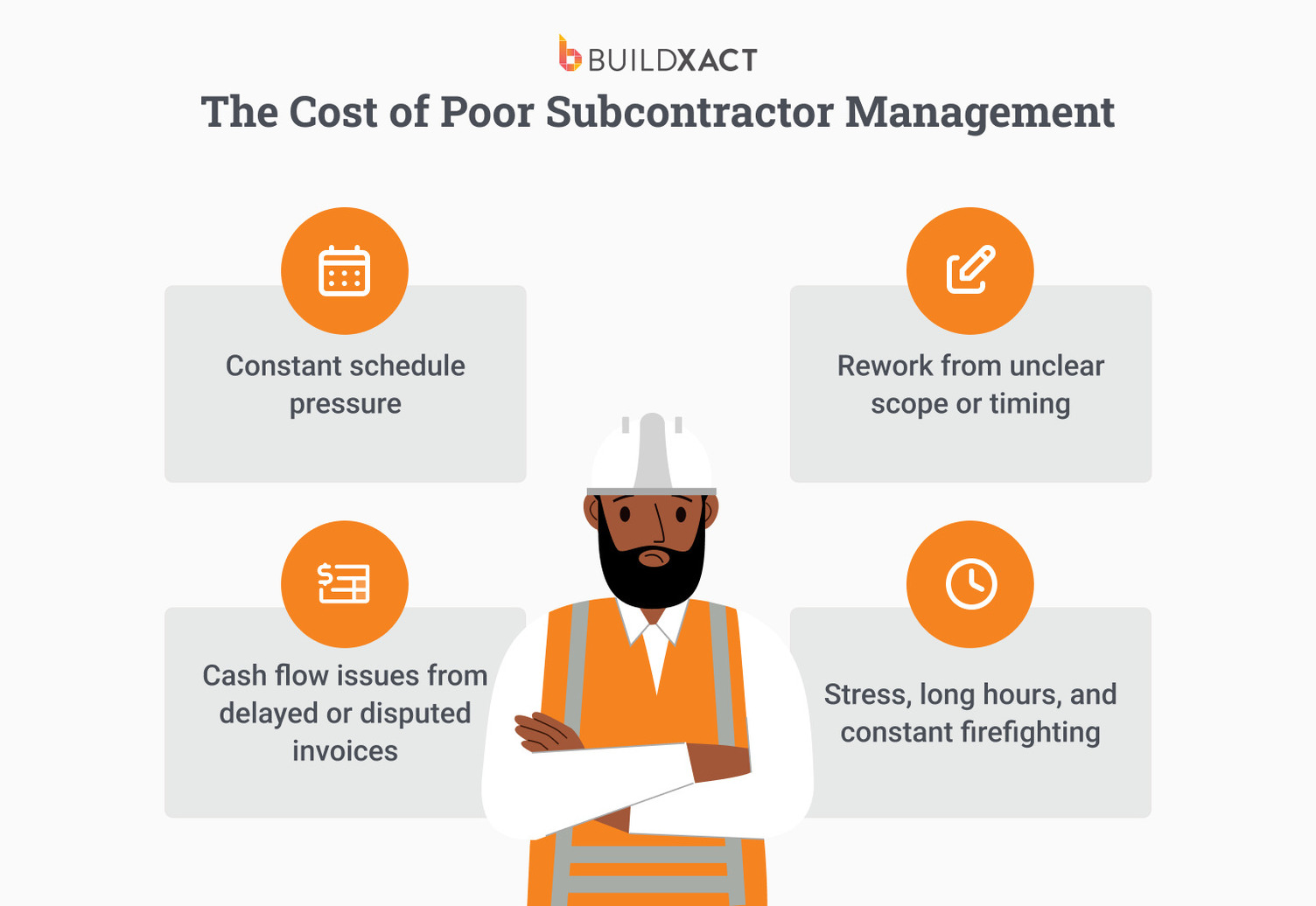
When subcontractor management isn’t tight, the schedule is always under pressure. Jobs overlap, trades get double-booked, and handovers don’t happen cleanly. One trade runs late, another turns up early, and suddenly you’re reshuffling the week on the fly.
What should be a planned schedule turns into last-minute scrambling, phone calls, and apologies, often across multiple jobs at once.
Rework from unclear scope or timing
When the scope isn’t clearly defined and shared, subcontractors miss the full picture when showing up on-site. They might work off outdated info or what was discussed weeks ago. That’s how you end up with the wrong fixtures installed or a trade saying, “That wasn’t included.”
Every time you have to fix one of these mistakes, you’re burning time and budget for something that shouldn’t have happened in the first place.
Cash flow issues from delayed or disputed invoices
Everything about your subcontractors might feel fine while the job’s moving, until you receive an invoice in your inbox. One’s higher than expected, and another includes work you don’t remember approving.
There’s no clear breakdown, just a total.
Suddenly, you’re replaying conversations in your head and scrolling through old messages, trying to work out what’s right. By then, the damage to cash flow is already done.
Stress, long hours, and constant troubleshooting
In the end, it all comes back to you. You’re the one chasing confirmations after hours and making decisions under pressure. When you’re always reacting, it’s hard to get ahead, and even harder to switch off at the end of the day.
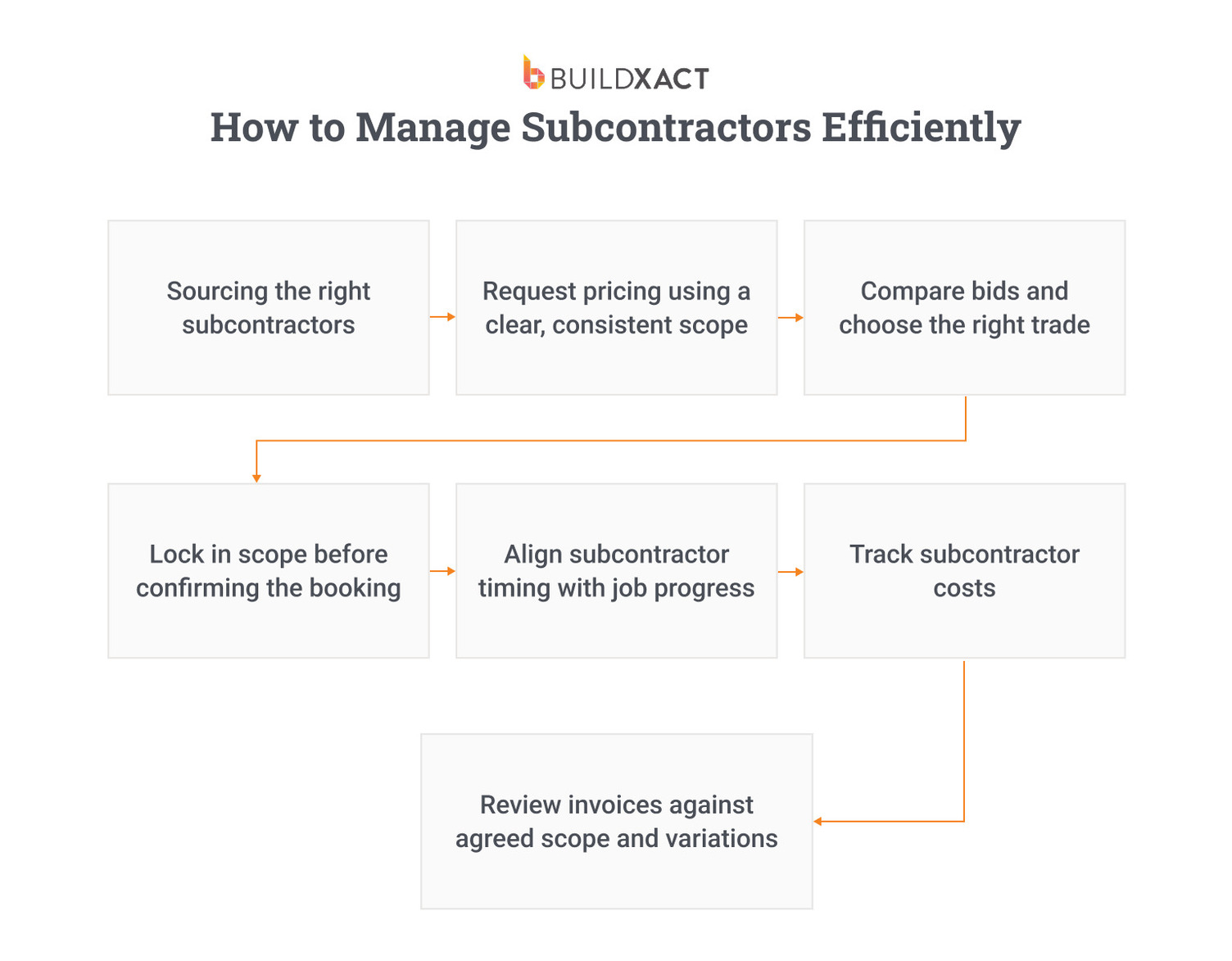
7 Steps to Managing Subcontractors More Efficiently
Most of the stress around subcontractors comes from not knowing what’s locked in and what isn’t. When everything’s tracked properly, jobs become predictable instead of reactive. That’s what turns subcontractor management from firefighting into routine.
1. Source the right subcontractors
Choose subcontractors based on job type, timing, and reliability, not just price. For example, a trade that’s great on small renovations might struggle on a full-scale residential build.
Be specific when you assess them:
- Have they done this type of job before?
- Can they realistically fit it into the timeframe?
- Do they turn up when they say they will, without having to chase?
In Buildxact, you can store subcontractor details centrally so you can see who you’ve used, on what jobs, and how they performed. That way, you’re not relying on memory or scrolling through old messages every time a new job starts.
2. Request pricing using a clear, consistent scope
Avoid asking for “a rough price.” That’s how estimates drift, and problems show up later. Instead, send subcontractors a clear scope that spells out exactly what you expect them to do.
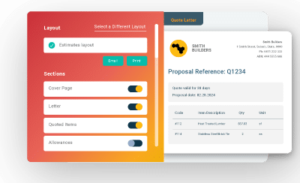
Use construction estimating software to create one estimate that’s your source of truth when requesting pricing. Subcontractor quotes should line up with what you’re selling to the client, as well as what is industry standard, instead of an interpretation of the job. When everyone is pricing the same scope, comparisons are easier, and there are fewer surprises.
3. Compare bids and choose the right trade
The cheapest subcontractor isn’t always the best option. Availability, timing, and reliability matter just as much as cost. A slightly higher price from a trade that can commit to the right dates is often cheaper in the long run than delays and rescheduling.
4. Lock in the scope before confirming the booking
Before you confirm a subcontractor, be clear on what’s included, what’s excluded, and any assumptions. This is where most problems start if it’s rushed.
Once scope and dates are agreed, build your schedule around those real commitments. Don’t assume “they’ll be fine”. Confirm it and lock it in.
5. Align subcontractor timing with job progress
When something shifts on site, subcontractor timing needs to shift with it. Working off outdated dates is how trades arrive on sit too early, too late, or not at all.
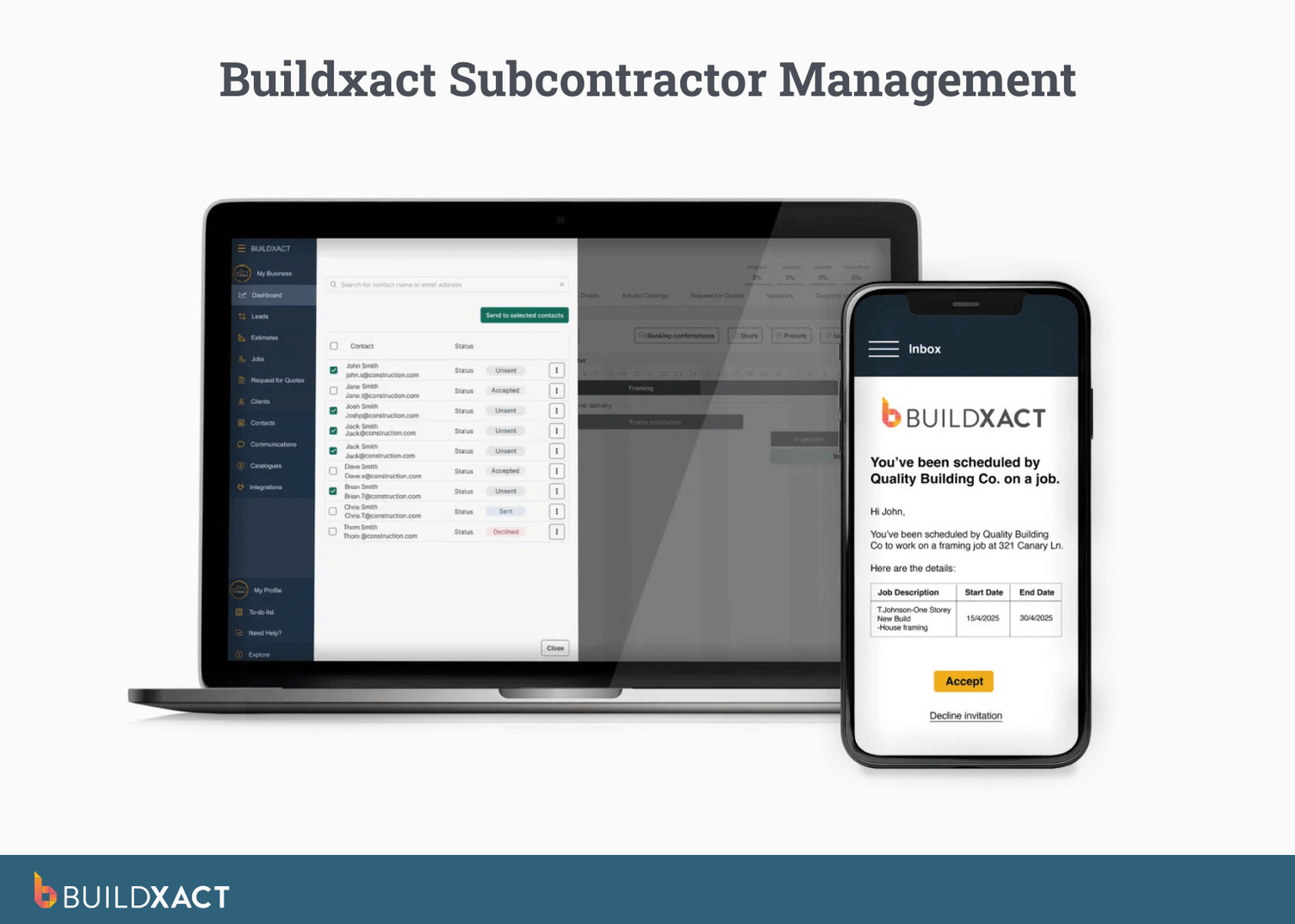
This is where software makes a real difference. Instead of updating one calendar, texting two trades, and hoping everyone got the message, you can update timing once. In Buildxact, schedules, scope, and costs are connected. When something changes, the knock-on effects are visible straight away, so you’re still in control.
6. Track subcontractor costs
Once a subcontractor starts, track their costs against the original estimate as the job progresses or when change orders happen, not just when invoices arrive. This keeps the job financially aligned while work is still underway and gives you early visibility if something starts drifting.
In Buildxact, subcontractor costs stay linked to the estimate, so you can see allowed vs actual costs in real time.
This way, job costing stops being a post-job autopsy and becomes a simple habit during the build. You finish the job knowing where the money went, not guessing afterward.
7. Review invoices against the approved scope and changes
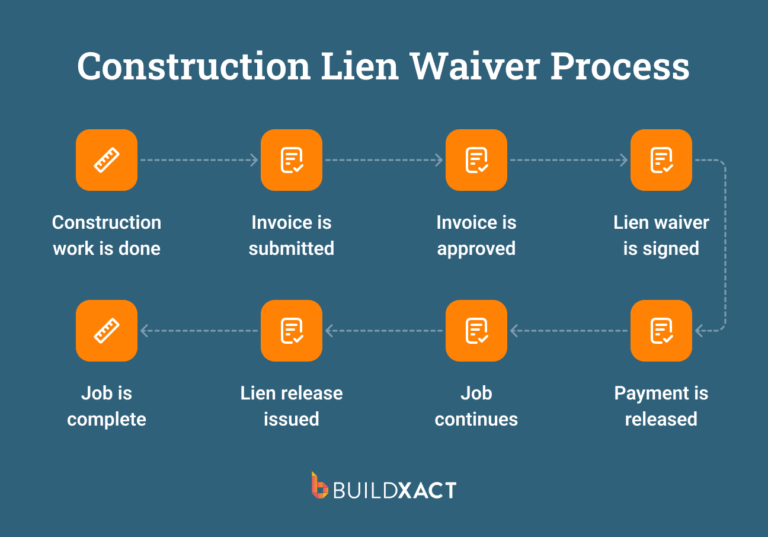
When invoices come in, check them against what’s already been agreed upon, including the original scope and any change orders. With the right software, that information is already tied to the job, so you’re not trying to work out what’s correct. It’s all right in front of you.
If something doesn’t line up, you can raise it straight away while the job is still fresh and everyone remembers what happened. That’s a much easier conversation than revisiting it months later.
Done properly, invoice review becomes a quick check, not a detective exercise. Fewer back-and-forths, fewer delays, and far less guesswork around costs.
Subcontractor Management Starts With Connected Systems
If subcontractor management feels like putting out a million fires at once, it doesn’t mean you lack control. It’s because you’re trying to manage subcontractors across disconnected systems.
There are only 24 hours in a day, and your time is better spent building and keeping clients happy, not arguing with Bob the plumber about whether that extra drain was included or why it’s suddenly on the invoice.
With Buildxact’s central construction management platform, you’ve got one clear version of the job. The date the subcontractor sees is the same date you’re working off, not a guess buried in a message thread.
Schedules flow directly from your estimate, scope integrates with work orders, and change orders initiated on projects automatically update across related costs. So, when a subcontractor or client calls to clarify, the answer isn’t “let me check”. It’s already there.
See what running a job with intelligent, residential-focused workflows does for your business’s bottom line. Try Buildxact free.