

When you’re running several jobs at once, cash flow gets harder to predict. One project needs a big material order, another has labor and subcontractor payments due and a third is waiting on the next client draw. The work may be profitable, but the timing of those costs and payments can still put pressure on the cash available to keep every job moving.
Managing construction cash flow as you grow means knowing what’s coming in, what’s going out and where a gap is likely to appear before it shows up.
This guide covers seven practical tips for residential builders and remodelers, from milestone billing and payment terms to change orders, forecasting and tracking actual costs against the estimate. The goal is a repeatable approach that gives you clearer visibility across your jobs as your business grows.
Key Takeaways
- A profitable job can still create cash pressure when project costs fall due before client payments arrive.
- Cash flow control starts with an accurate estimate that provides a reliable baseline for project costs.
- Align milestone and change-order billing with project costs to reduce the amount of work your business must fund.
- Forecast cash across all active jobs and track actual costs against the estimate to identify cash and margin risks early.
- Repeatable financial processes make it easier to maintain cash flow visibility and protect margins as project volume grows.
What is Construction Cash Flow?
Construction cash flow is the movement of money into and out of your construction projects over time. It reflects both how much money you receive and spend and, importantly, when those transactions happen.
Cash inflows typically include deposits, progress payments or client draws and change-order payments. Cash outflows include materials, labor, subcontractors and other project costs. This differs from profit, which is the amount left after costs are deducted from revenue.
Managing cash flow gets more complex as you take on more work. You have more client payments coming in, but also more material orders, payroll and subcontractor bills competing for the same cash.
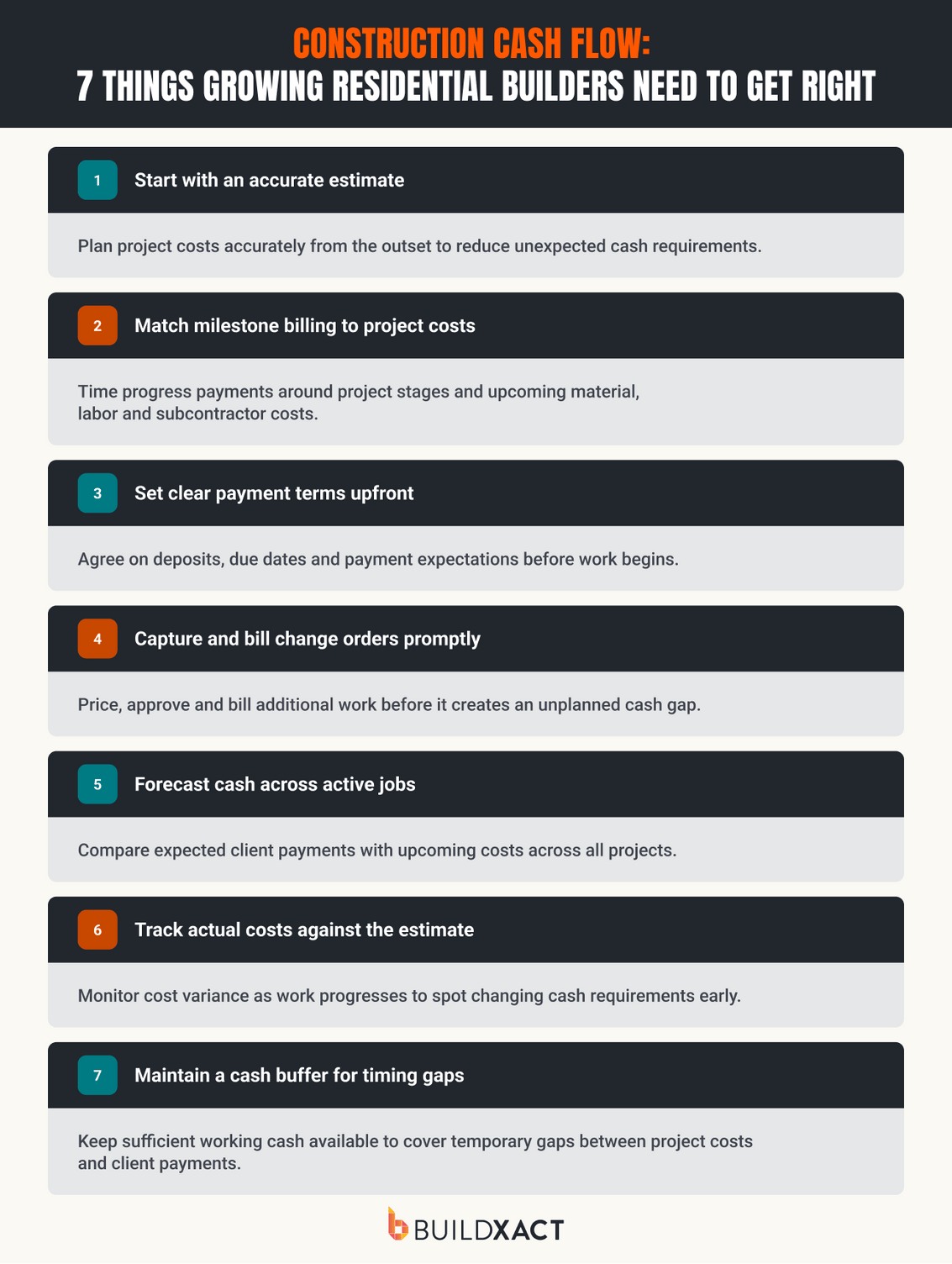
How to Manage Construction Cash Flow: 7 Tips For Residential Builders
The best way to stay on top of cash flow is to build it into the way you estimate, bill and track every job. These seven tips give you a practical process you can use across your projects as your project volume ramps up.
1. Start cash flow management at the estimate
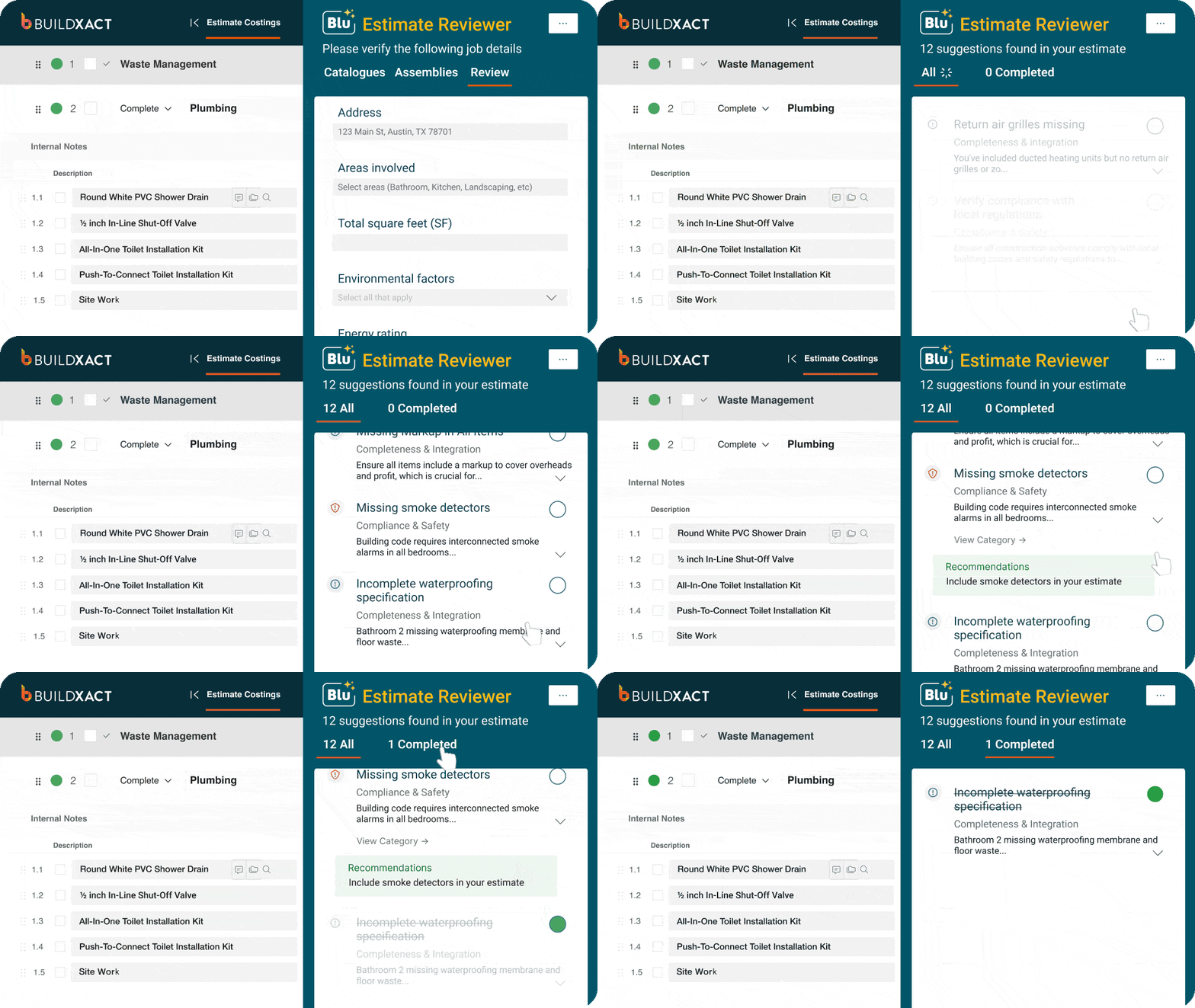
Reliable cash flow management starts with knowing what the job should cost. If your construction estimate misses part of the scope or uses outdated material pricing, you could need more cash to complete the work than you planned for.
That can put pressure on the job before you’ve had a chance to recover the extra cost. Buildxact data shows that builders miss an average of $18,416 in items per job, highlighting how quickly gaps in an estimate can add up.
Before you lock in a price, make sure the estimate covers:
- The full scope, including allowances and exclusions
- Accurate material quantities
- Current material, labor and subcontractor costs
- The markup needed to achieve your planned margin
Once the job starts, that estimate gives you a clear reference point for the costs ahead. When you’re running several jobs, having the same solid starting point for each one also makes it easier to plan how much cash the business will need in the weeks and months ahead.
2. Match milestone billing to project costs
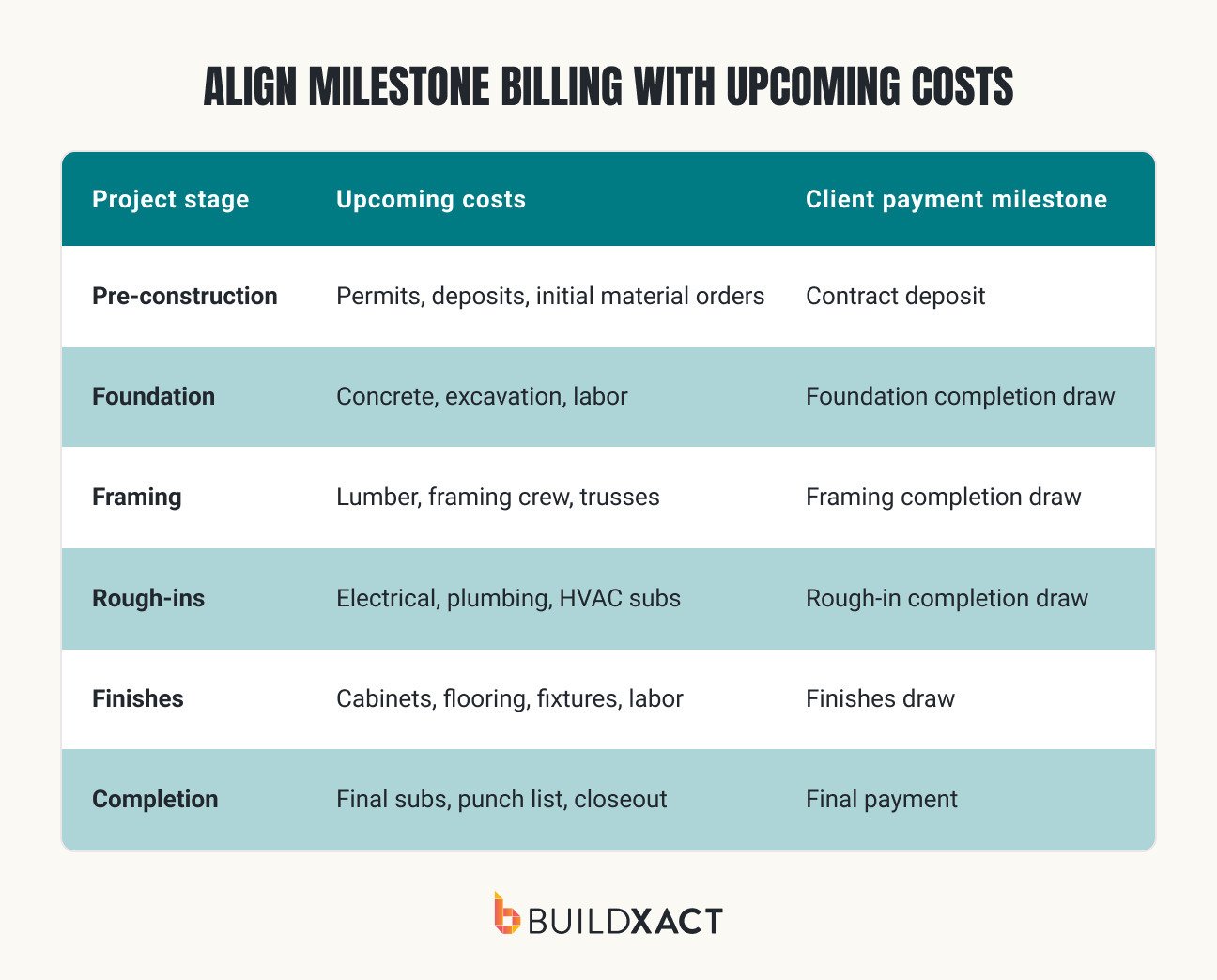
Plan progress payments around what you’ll need to spend to reach the next stage of the job.
If a major material order is coming up, the preceding draw should help cover those costs. This reduces how much of the job you have to fund from your own working cash while you wait for the next client payment.
Look at the expected costs for each stage when setting milestones rather than simply splitting the contract into equal percentages. You can then use the same approach on future jobs, adjusting the amounts and milestones to suit each build.
3. Set clear payment terms before work starts
Make sure the client knows exactly how and when they’ll need to pay before the job gets underway.
Clear payment terms and transparent communication around deposits and deadlines provide both sides with an agreed process and give you firmer dates to work with when planning upcoming expenses.

They also make late payments easier to identify and follow up. As your client list grows, consistent payment terms can help you avoid carrying jobs for longer than expected and paying unnecessary financing costs that cut into your margin.
4. Capture, approve and bill change orders promptly
Project changes can quickly throw off what you expected to spend on a job. An additional window or an upgraded finish could require buying more materials or booking extra labor.
If the extra work starts before it’s priced and approved, you may have to cover the additional costs before the client pays for them. Buildxact data shows an average of $24,092 in change orders tracked per job, so there can be a substantial amount of money at stake.
To avoid cash gaps, use the same process for every change order:
- Record exactly what is changing.
- Price the additional materials, labor and subcontractor work.
- Add your markup.
- Account for any change to the schedule.
- Get the client’s approval before starting the extra work.
- Add the approved amount to the job and bill it at the agreed time.
This prevents extra work from being absorbed into the original contract price. It also means your expected costs and payments can be updated as soon as the scope changes, so you know how the change affects the cash you’ll need for the job.
Across several jobs, a consistent process helps stop small unbilled extras from adding up and eating into the margins you originally priced.
5. Forecast cash across all active jobs
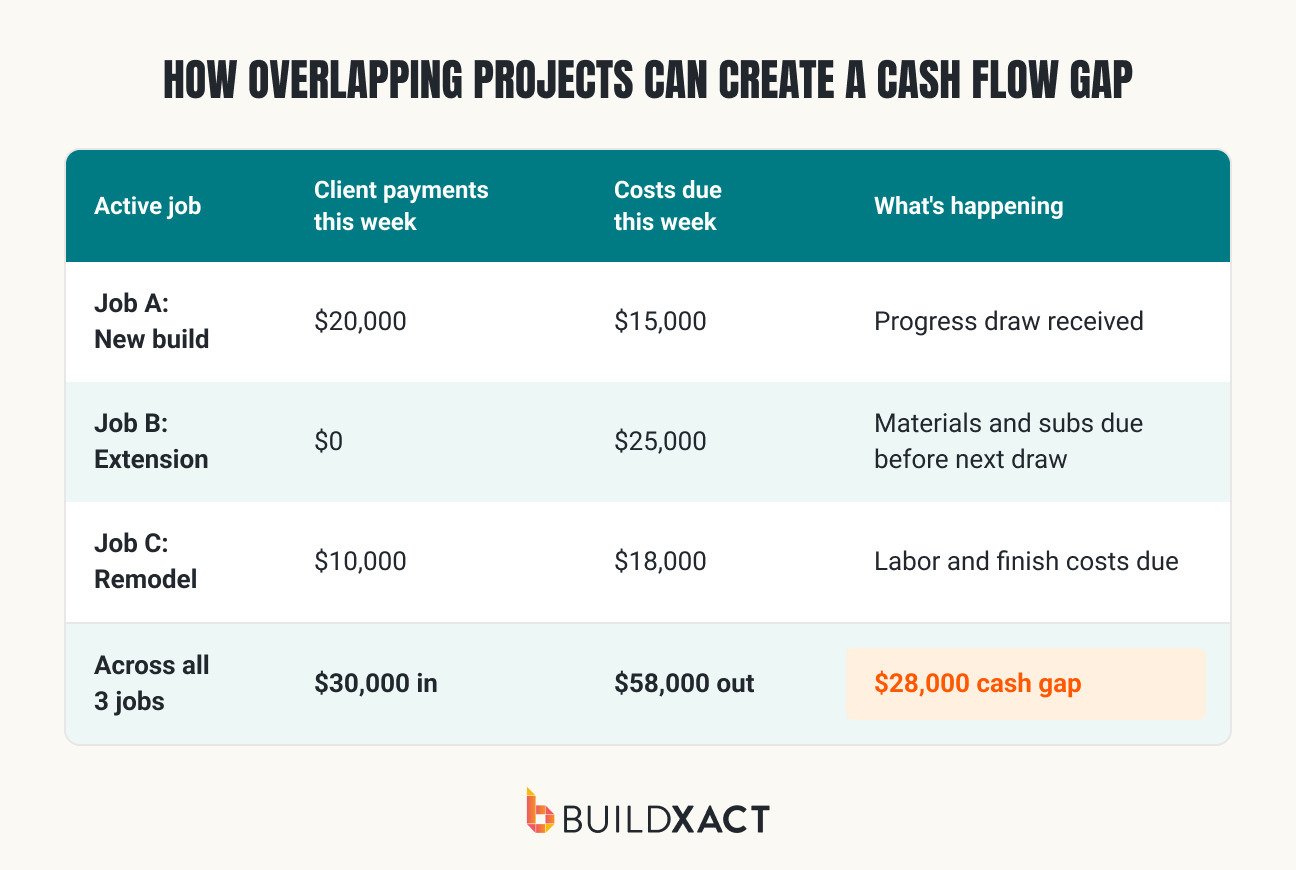
Forecasting each job separately won’t tell you whether the business has enough cash to cover everything due across your full workload. To see potential gaps coming, combine the expected payments and costs from all your active jobs.
Look ahead over the next few weeks and note:
- When deposits, progress payments and other client payments are expected
- When major material orders need to be paid
- Upcoming labor and subcontractor costs
- Any other significant job expenses already scheduled
Say you have three jobs underway. Over one week, you expect $72,000 in client payments across those projects, but $85,000 in costs are due. That leaves a $13,000 gap to cover, even if all three jobs are on track to make a profit.
Spotting that gap in advance gives you time to check upcoming progress payments, follow up on money already due and plan around major expenses before they hit.
Keep the forecast current as schedules and payment dates move. Before starting another job, add its early costs and expected payments too. You can then see whether you have enough cash to take on the new job while keeping your current ones moving.
6. Track actual costs against the estimate
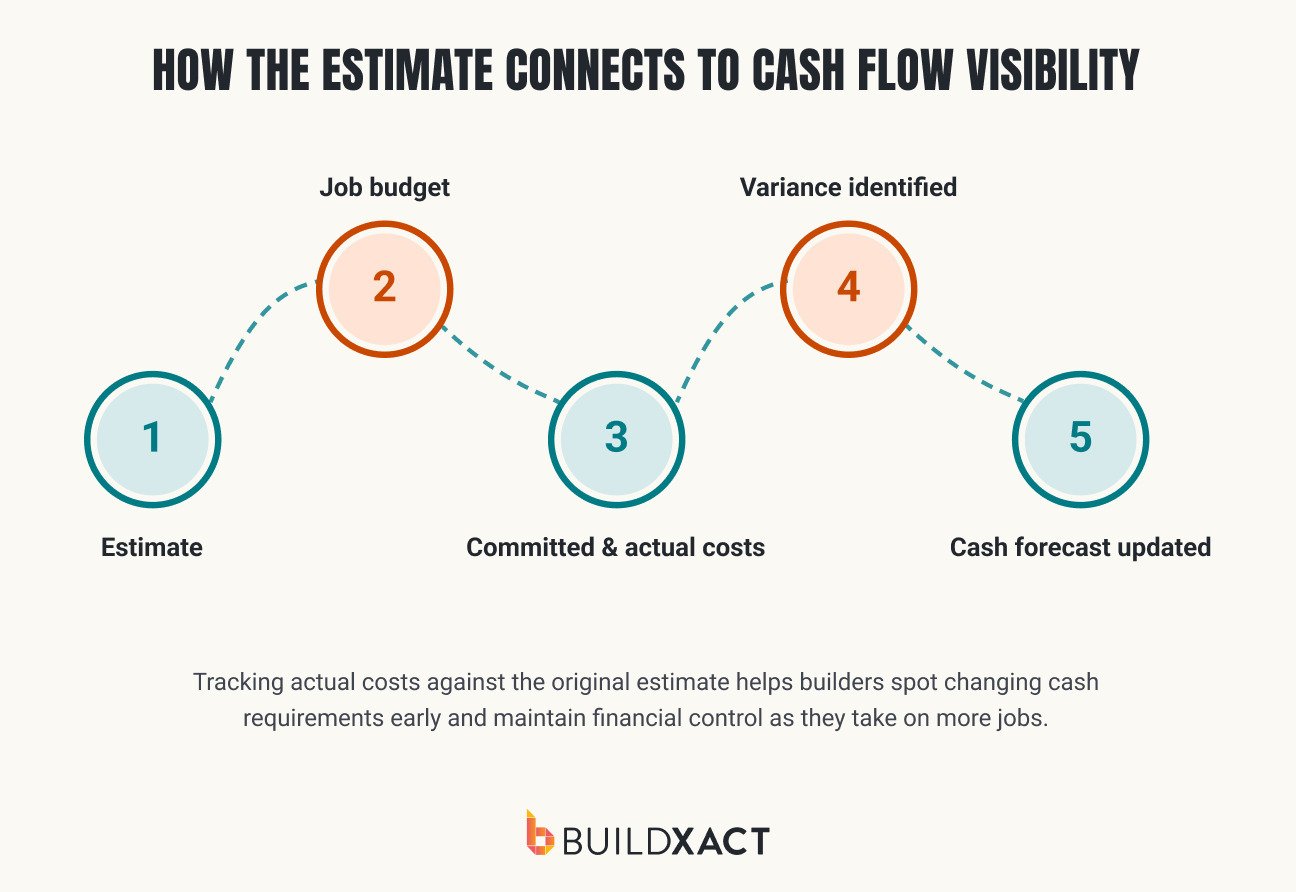
A cash forecast is based on what you expect each job to cost. As work progresses, compare those expectations with what you’re actually spending and what you’ve already committed to spend.
Track actual and committed costs against the original estimate regularly. Purchase orders and subcontractor commitments are particularly useful because they can show that a cost is heading over budget before the money has left your account.

Pay attention to:
- Materials costing more than estimated
- Labor or subcontractor costs running over
- Project stages moving beyond their allowances
- Remaining work that is now likely to cost more than planned
When any changes appear, update the remaining cost for that job and feed the new figure into your cash forecast. This gives you an earlier warning that the job will need more cash than expected and shows where your planned margin may be under pressure.
Using the estimate as the reference point throughout the job also gives you a consistent way to check performance across a growing workload. Instead of waiting until a job is complete to see where the numbers landed, you can identify problems while there’s still time to respond.
7. Maintain a cash buffer for timing gaps
Keep some working cash available for the normal delays and unexpected costs that come with residential builds.
A draw might take longer to approve, a client may pay a few days late or an expense may come up sooner than expected. A cash buffer can help you cover those short-term gaps without delaying work or immediately turning to financing.
Base the amount on your own payment cycles and upcoming commitments. As you take on more jobs, review whether the buffer still reflects the material, labor and subcontractor costs you may need to cover at the same time.
Putting these tips into practice across several jobs depends on having accurate, up-to-date numbers. Integrated job costing software can put those figures at your fingertips, giving you a clearer view of costs, payments and cash needs as work progresses.
How Connected Job Costing Software Can Improve Cash Flow Visibility
Construction job costing software can help you stay in control of your financials by ensuring information flows from estimating through purchasing, cost tracking and invoicing. Any changes made during the build are reflected in the numbers you use to manage the job.
For example, with construction management software like Buildxact, you can:
- Compare estimated and actual costs: Track costs against what you originally allowed for, so you can catch overruns early and see when your planned margin is under pressure.
- Keep job costs up to date: Record material, labor, subcontractor and other costs against the job as they come in.
- Create progress invoices: Use your estimate and project information to create invoices that match the agreed stages of the build.

- Stay on top of change orders: Keep approved changes connected to job costs and invoices, so extra work doesn’t get lost in the original contract.
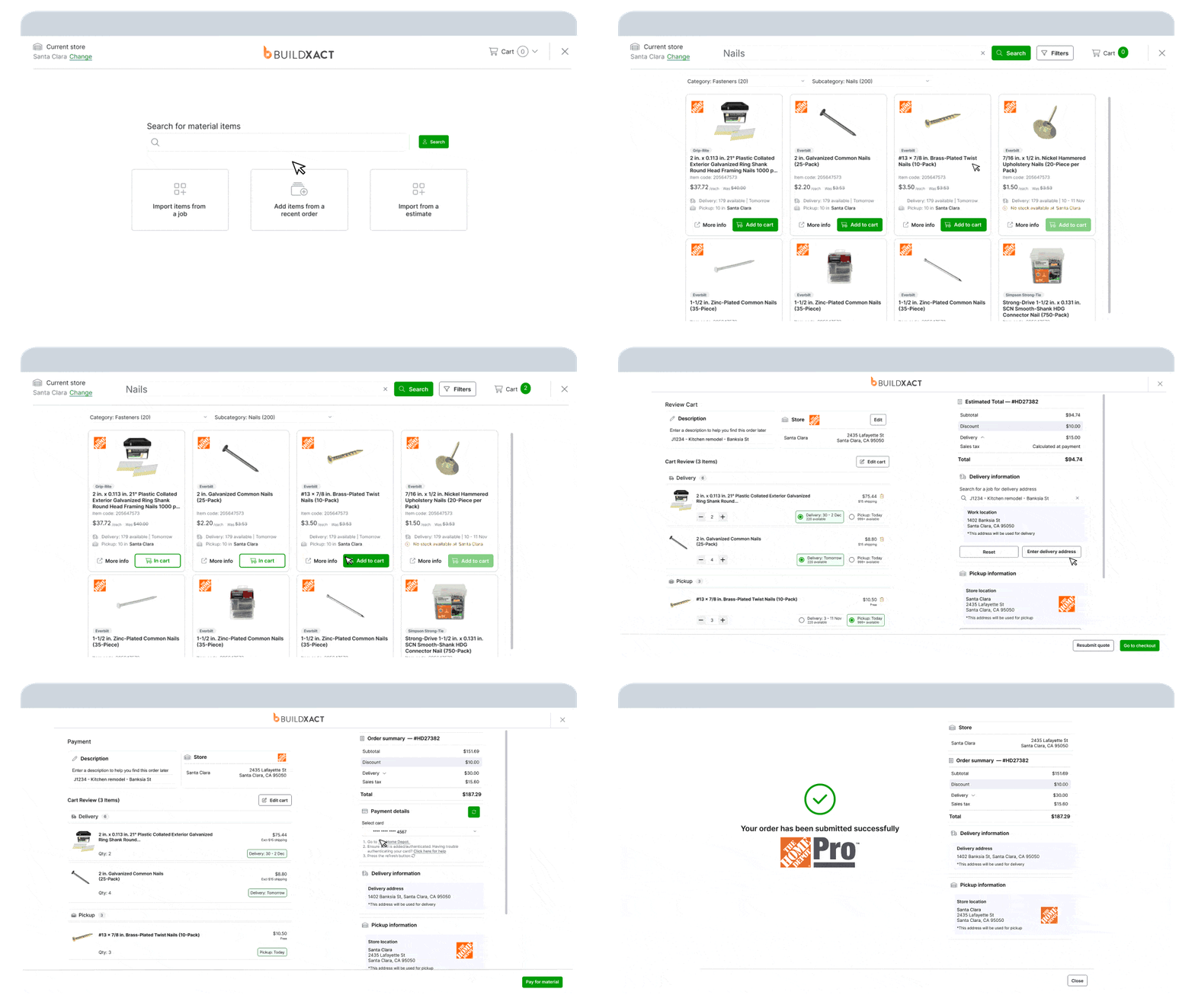
- Work with real-time material costs: Bring current dealer pricing, including from The Home Depot, into your estimates for a more accurate starting point.
- Connect with your accounting software: Integrate Buildxact with QuickBooks Online or Xero to reduce double entry and keep project and accounting records consistent.
At Precision Homes, better cost tracking from Buildxact uncovered expenses that had previously been easy to write off or overlook. With The Home Depot receipts flowing into Buildxact and costs allocated to individual jobs, owner Brian Yambor gets a more accurate picture of what each project is actually costing. That helps him catch overruns sooner, refine future estimates and keep his planned margin protected.
Keep Cash Flow and Margins on Track as You Grow
Taking on more work should strengthen your building business, not leave you wondering whether there’s enough cash to cover the next round of bills. The right processes give you the confidence to commit to new projects, knowing you can keep existing jobs moving and preserve the margins you priced for.
Buildxact gives growing residential builders the tools to manage the financial side of their jobs from the first quote through to final payment, without adding more admin as the workload increases.
Schedule a demo with Buildxact to see how you can protect your margins on every project.
Construction Cash Flow: FAQ
Why can a construction job be profitable but still run out of cash?
Profit measures what you earn after project costs are deducted. Cash flow depends on when money actually comes in and goes out. If you have to pay for materials, labor or subcontractors before receiving the next client payment, a profitable job can still leave you short of cash in the meantime.
How long does it usually take a residential builder to get paid?
Payment timing depends on the contract, billing schedule and client. Rather than relying on an industry-wide timeframe, set clear payment deadlines upfront and base your cash flow forecast on when each payment is realistically expected to arrive.
What is retainage, and how should builders plan for it?
Retainage is a percentage of a payment withheld until agreed work is completed, commonly around 5% to 10% in construction. Treat retained amounts as money you won’t have available during the job and account for the delayed payment when forecasting the cash needed to cover upcoming costs.