
If you’ve ever invoiced a job and been paid less than what you billed, you’ve already dealt with retainage.
You finish a stage, send through a $50K invoice, and $45K lands in your account. The rest is held back. Sometimes for months.
On paper, it’s standard practice. In reality, it creates a gap between the work you’ve completed and the cash you actually have in the bank.
And when that happens across multiple jobs, that gap adds up fast. Money you’ve earned is tied up, your cash flow tightens, and suddenly you’re funding projects out of your own pocket.
In this guide, we’ll break down how retainage really works, how it impacts your cash flow, and how to manage it without losing track of what you’re owed.
Construction Retainage Explained
Retainage (sometimes called retention) is a portion of a construction payment that’s held back until the project is completed. In most cases, it’s between 5% and 10% of each progress payment.
Instead of receiving the full amount you’ve invoiced, a percentage is withheld at every stage of the job. That retained amount accumulates throughout the construction project and is paid once the work is complete, approved, and any outstanding issues have been resolved.
For homeowners, retainage acts as a form of protection. It provides contractors with an incentive to finish the project, complete punch list items, and address defects before the final payment is released.
For builders, it creates a different reality. You’ve already paid for labor, materials, and subcontractors, but part of the money you’ve earned is still being held back.
Fixed vs. Variable Retainage
The two most common retainage structures are fixed retainage and variable retainage. The difference comes down to whether the percentage being withheld stays the same throughout the project or changes during the build.
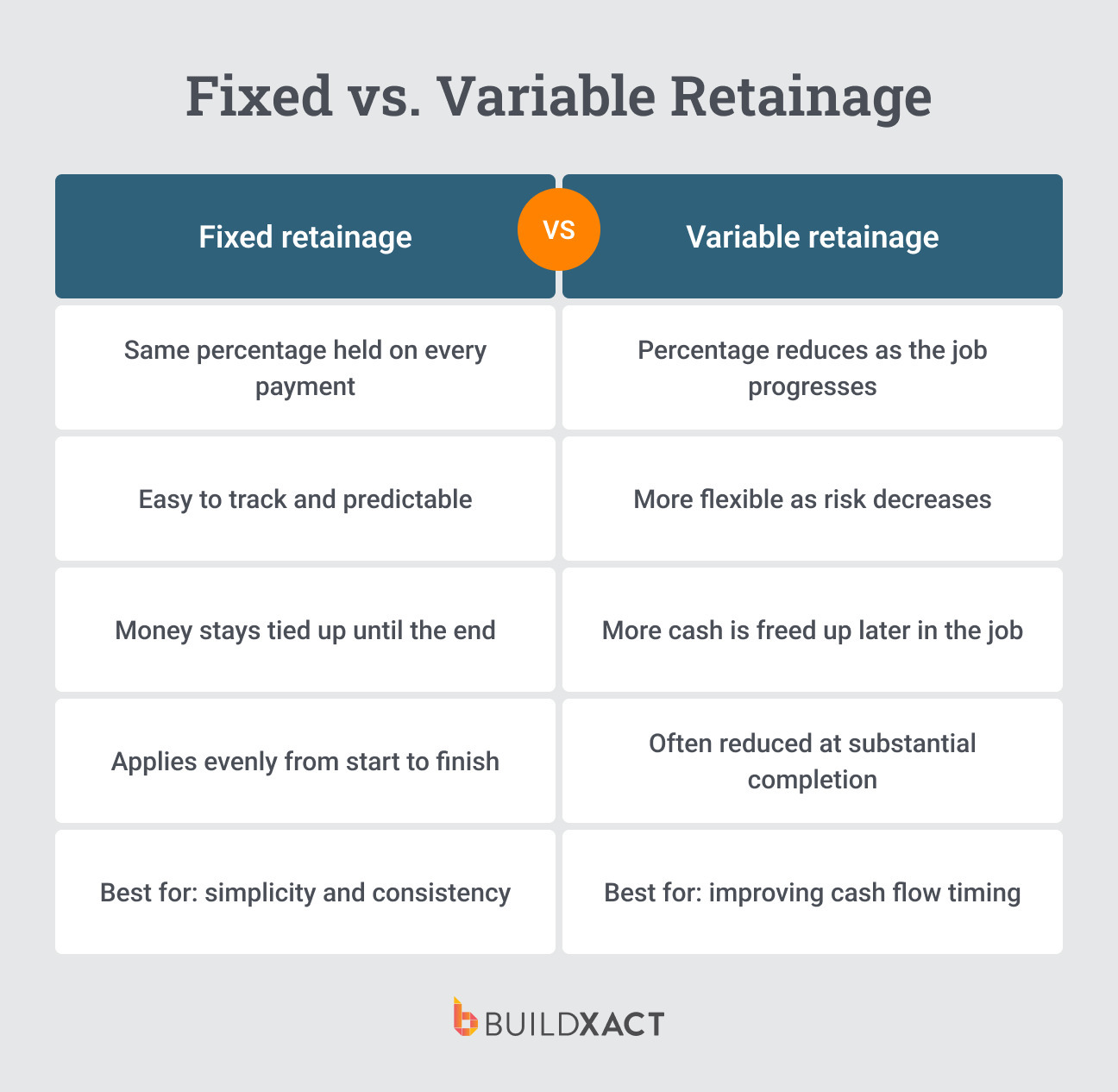
- Fixed retainage: A consistent percentage (typically 5–10%) is held back from every progress payment, right through to completion. The set amount means it’s predictable, but it also means the same amount is withheld even in later stages when most of the work is already done.
- Variable retainage: The percentage and amount being withheld change as key milestones are reached. A common approach is to hold back a higher percentage early in the project and then reduce it as most of the work is completed. For example, 10% might be held in early stages, then reduced to 5% or removed entirely once the project reaches substantial completion.
How Retainage Works on a Real Job
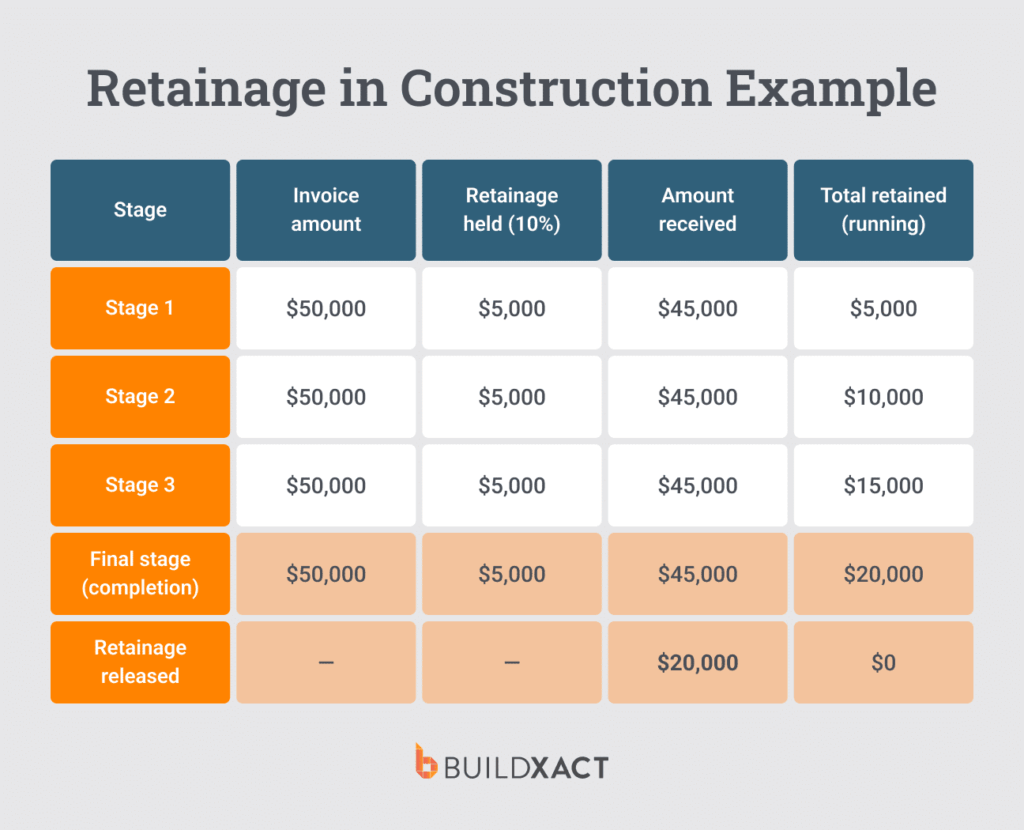
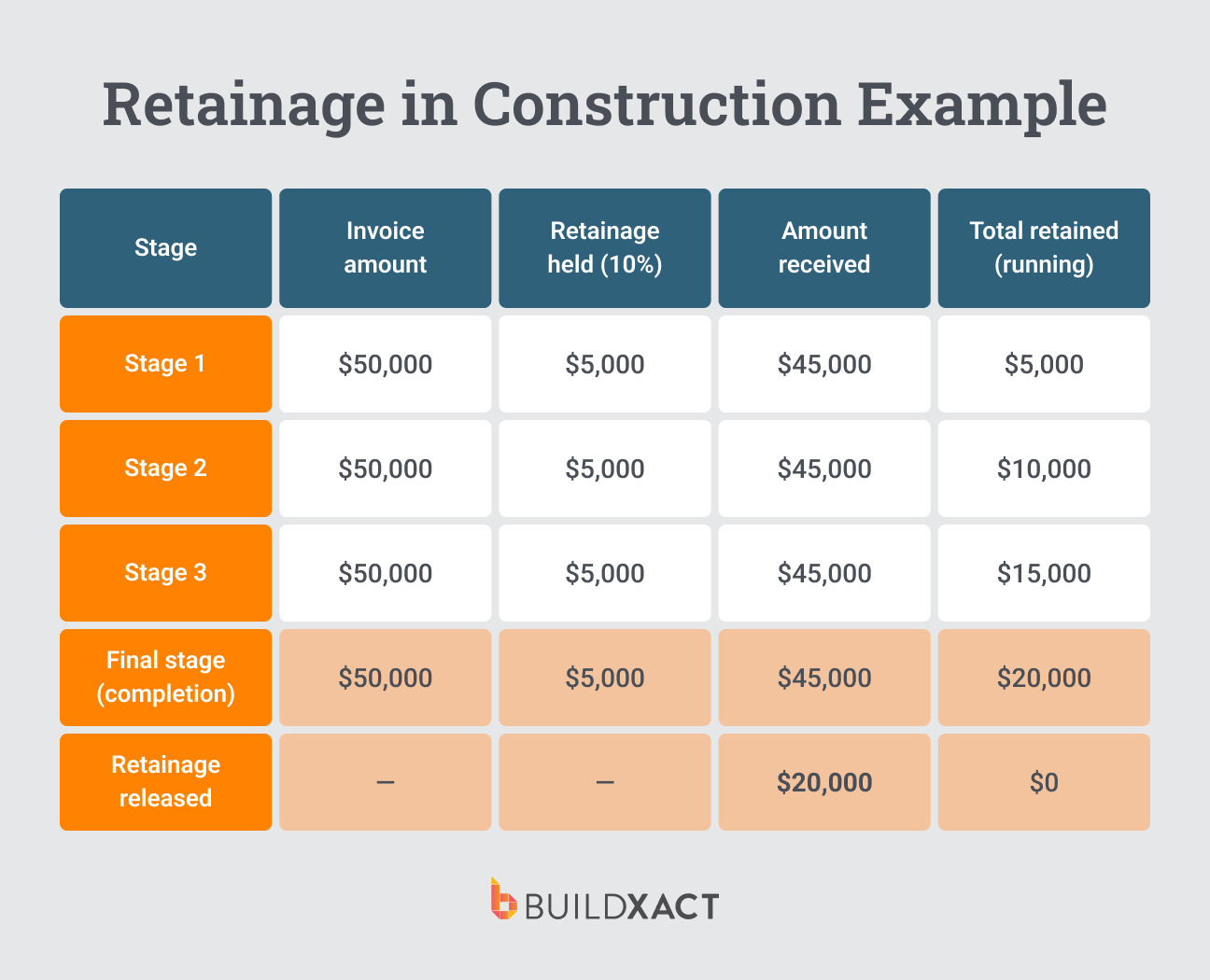
Let’s say you’re building a $200,000 custom home and the contract includes 10% retainage.
Stage 1: First progress payment
You complete the first stage of work and submit a $50,000 progress invoice. The owner approves the invoice, but 10% retainage applies, so $5,000 is withheld, and $45,000 is paid.
Stage 2: Second progress payment
A few weeks later, you submit another $50,000 invoice. Again, $5,000 (10%) is retained, and $45,000 is paid. The total retained amount is now $10,000.
Stage 3: Third progress payment
With the project moving into the next phase, you submit another $50,000 invoice. The same process repeats. Another $5,000 is retained, and another $45,000 is paid. At this point, you’ve billed $150,000 worth of work but have only received $135,000. The remaining $15,000 is sitting in retainage.
Final stage: Project completion
The home is finished, inspections are complete, and the owner signs off on the project. By now, a total of $20,000 has been retained across the job.
Once any remaining punch list items are resolved and the closeout paperwork is approved, the retained amount is released as your final payment. Depending on the project, that might happen a few weeks later or several months after you’ve effectively finished the job.
Where Retainage Sits in the Construction Workflow
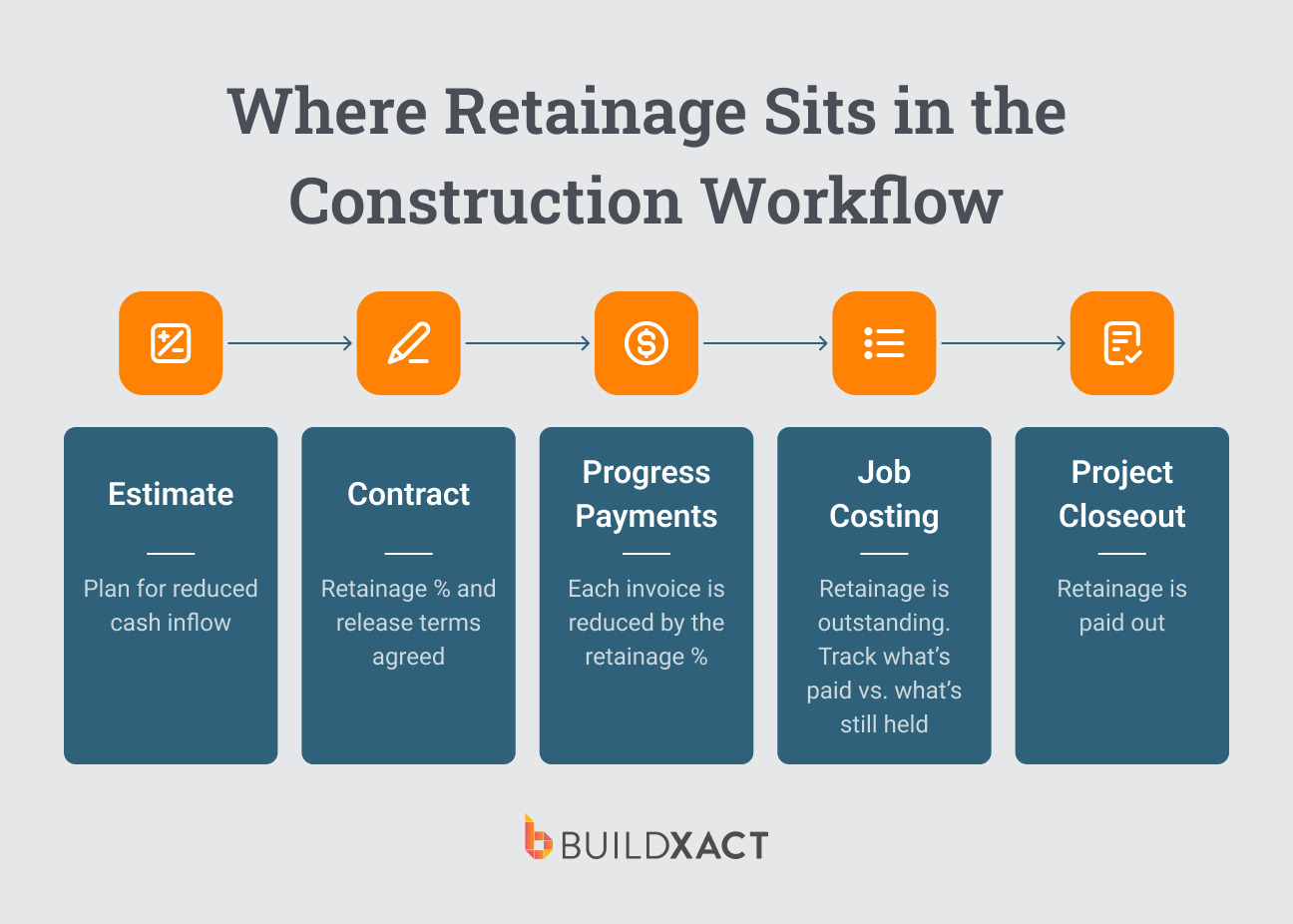
Retainage may start as a contract requirement, but it affects all stages of a construction job lifecycle.
Estimate
At the estimating stage of the build, you need to consider retainage because the timing of payments matters just as much as the job’s value. If 10% of each progress payment is held back, it affects the amount of cash available as the project progresses.
Contract
The contract defines the retainage percentage and the requirements for releasing the funds. The clearer these terms are upfront, the fewer surprises you’ll face at the end of the project.
Invoicing
With each invoice you send, retainage accumulates. Each payment is reduced by the agreed percentage, widening the gap between what you’ve billed and what you’ve received.
Job costing
Retainage creates a gap between revenue earned and cash received. Keeping track of that difference is important if you want an accurate picture of how the job is performing financially.
Project closeout
Project closeout is where retainage finally comes back into the business. Once the remaining work is signed off and release requirements have been met, the retained amount can be paid out, and the project can be financially closed.
How Retainage Affects Cash Flow
For many builders, retainage becomes a cash flow issue long before it becomes a final payment issue. As more money is held back, less cash is available for daily business operations.
Money stacks up across multiple jobs
On one project, retainage may only have a small impact on cash flow. The challenge starts when you’re running several jobs at the same time. As retained balances build up, more of your cash becomes tied to completed work and isn’t available to run the business.
You’re funding part of the project yourself
Part of your payment is being held back, but the bills don’t stop. Payroll still goes out, materials still need to be purchased, and subcontractors still need to be paid. In the meantime, you’re carrying part of the financial load until the retained funds are released.
Profit doesn’t equal cash in the bank
Your project reports may show a profitable job, but some of that profit is still sitting in retained balances. Until it’s released, those funds aren’t available, which can create pressure in other areas of your business. You may delay equipment purchases, hold off on hiring, or become more cautious about taking on new work while you wait for the money you’ve already earned.
How and When Retainage Is Released
The timing of your retainage release depends on the contract terms, but it typically occurs at one of two stages.
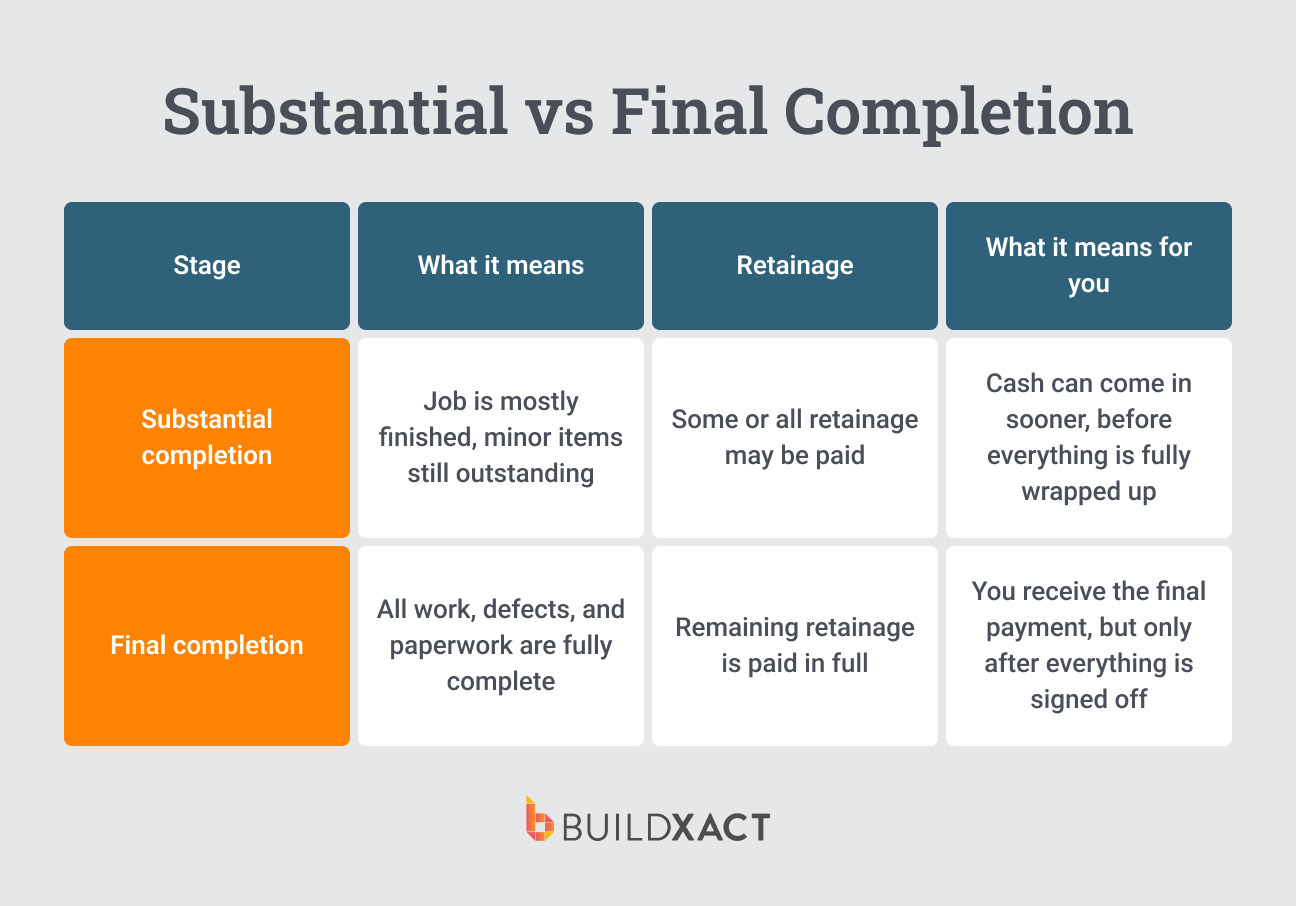
- Substantial completion: The project is essentially finished and can be used for its intended purpose. For example, the homeowner has moved in, but there might still be a few touch-ups left to complete.
Some construction contracts allow part or all of the retainage to be released at the substantial completion stage. For builders, that’s often the ideal outcome because it gets cash flowing back into the business sooner.
- Final completion: The entire project is wrapped up. The work is finished, and all contractual requirements have been met. Depending on the project, there can still be a delay between finishing the work and receiving the final payment.
What can delay retainage?
Even when the construction project is close to completion, issues can slow down the release process:
- Punch list items: Small repairs, touch-ups, or unfinished tasks can hold up the release of thousands of dollars.
- Disputes: Questions about workmanship, scope changes, or project expectations can delay approvals while they’re resolved.
- Administrative delays: Missing paperwork, unsigned documents, or incomplete inspection reports or compliance certificates can create bottlenecks even after the physical work is complete.
What you can do to avoid delays
The easiest way to speed up retainage release is to stay on top of closeout requirements throughout the project rather than scrambling at the end.
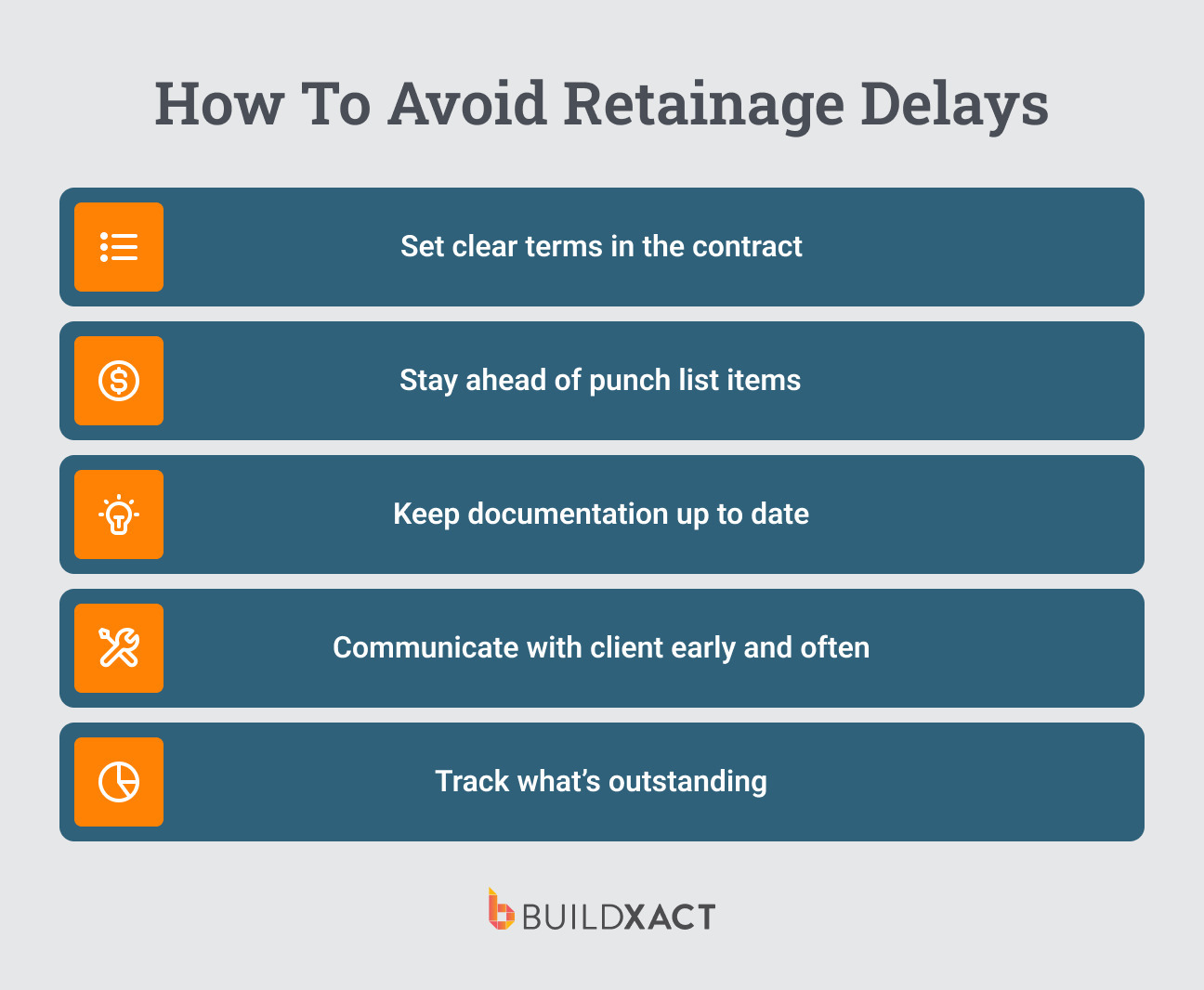
- Set clear terms from the start: Ensure the construction contract defines the retainage percentage and when it will be released.
- Stay ahead of punch list items: Don’t leave everything to the end. Keep track of small fixes throughout the project with a punch list.
- Keep documentation up to date: Make sure all required paperwork (certificates, approvals, compliance docs) is completed and submitted early.
- Communicate with clients early and often: Keep clients updated on progress, timelines, and any issues that could affect project completion.
- Track what’s outstanding: Know exactly how much retainage is tied to each job and what still needs to happen before it’s released.
Retainage Laws and Limits (Quick Overview)
Construction contracts play a major role in how retainage works, but they’re not the only factor. Depending on the project’s location, state regulations may also affect how retainage is handled.
Some states allow up to 10%, others reduce it mid-project, and in places like New Mexico, retainage isn’t used at all.
These rules are designed to create a fair balance between protecting property owners and ensuring contractors aren’t waiting unnecessarily long for payment. Examples include:
- Caps on retainage (often around 5–10%)
- Requirements to reduce retainage at substantial completion
- Timeframes for releasing retainage after final completion
- Restrictions on withholding retainage once a project reaches a certain stage
In some states, retainage is becoming more tightly regulated. For example, New York caps retainage at 5% and requires it to be released within 30 days of final approval, although contractors may be able to invoice for it earlier at substantial completion.
Why this matters for your contract
Even if you’re working in a state with clear rules, the contract still controls how retainage plays out on your job.
That’s why it’s important to:
- Check local requirements before signing
- Make sure the retainage percentage and release terms are clearly defined
- Understand when retainage can be reduced or must be paid out
If the terms aren’t clear upfront, it can lead to confusion or delays later, especially when the project wraps up.
Common Retainage Mistakes Builders Make
Retainage is a standard part of construction, but that doesn’t mean it’s always easy to manage. Most retainage problems come from losing track of the numbers and dates along the way.
Not accounting for retainage in cash flow planning
Many builders estimate a job’s profitability correctly but underestimate how much of the revenue will be tied up in retainage. Planning around expected payments rather than actual cash received can create pressure later in the project.
Agreeing to unclear release terms
Retainage should never be a surprise at the end of a job. The contract should clearly define the amount withheld, when it will be released, and the conditions that must be met first. If those details aren’t clear upfront, collecting retainage can become much harder at the end of the project.
Relying on disconnected tracking tools
Retainage often gets tracked separately from the rest of the project’s financials. Information ends up spread across spreadsheets, emails, invoices, and accounting systems. The more places the information lives, the more likely it is that balances, release dates, and payment status will fall out of sync.
Chasing payments too late
When retainage isn’t tracked closely during the job, it often only gets attention at the end. By that point, delays are harder to avoid, and payments take longer to come through. Staying on top of retainage throughout the job makes it easier to keep the release process moving.
How to Track Retainage Across Multiple Jobs With Construction Software
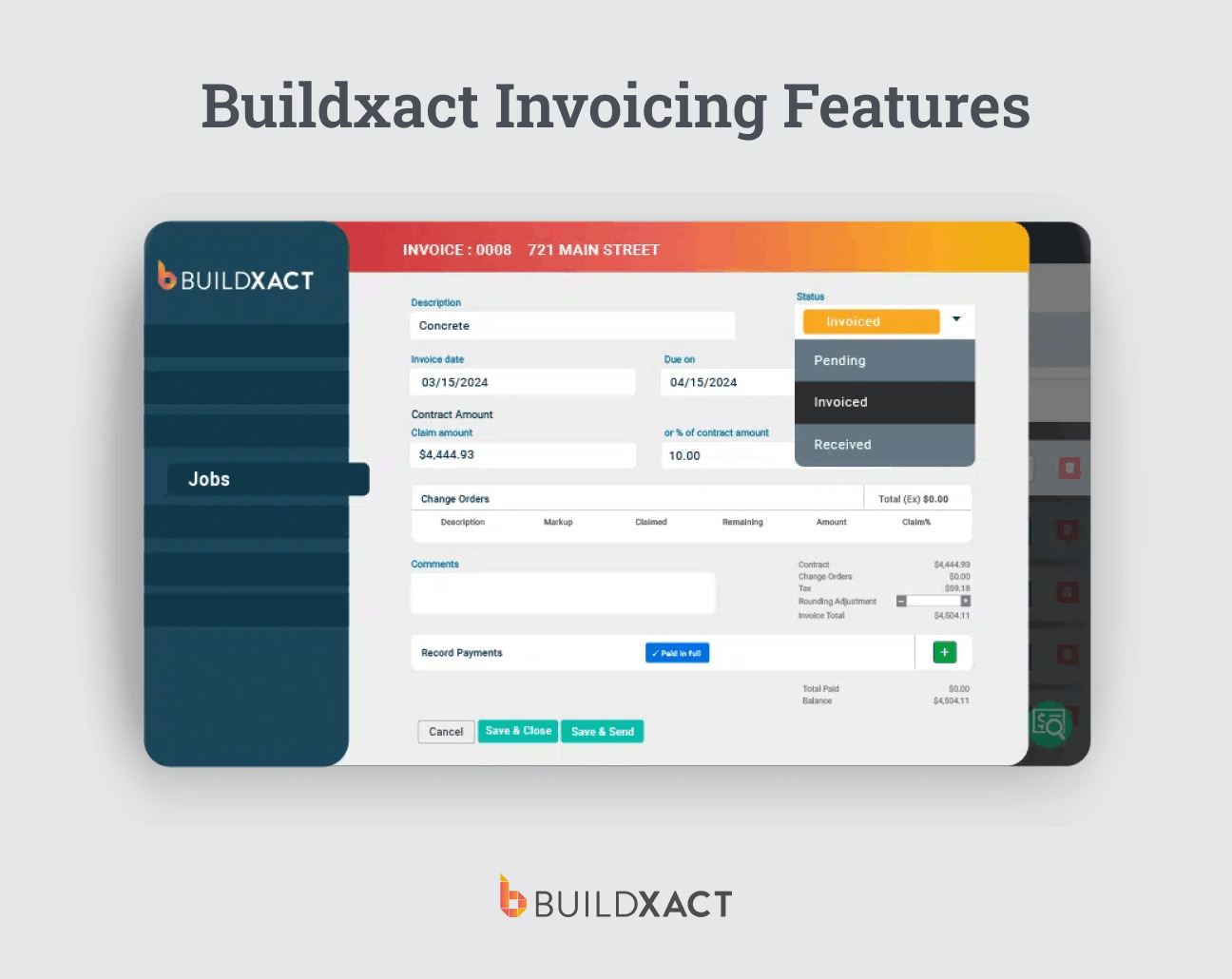
Every project tells a slightly different story. One retained balance might be due next month, another might still be awaiting sign-off, and a third might already be overdue. Buildxact helps bring that information together, so it’s easier to see what’s outstanding and what money is still expected to come back into the business.
Track retained amounts alongside your invoices
Retainage starts with invoicing, so that’s where you first need visibility. Buildxact lets you create invoices, track customer payments, and monitor outstanding amounts from the same system. Instead of manually reconciling invoices against separate retainage records, you can see what has been invoiced, what has been paid, and what is still expected to be paid.
Keep payment tracking connected to your accounting software
Buildxact integrates with accounting platforms such as QuickBooks and Xero, helping keep invoice and payment information synchronized across your financial systems. This reduces double-handling and gives you a more accurate picture of outstanding payments without constantly updating multiple systems.
Understand how retainage affects job profitability
One of the biggest challenges with retainage is that project performance and available cash don’t always align.
Because Buildxact tracks invoices, job costs, and project financials together, you can see how each job is performing while maintaining visibility into money that has not yet been received. Job cost reporting and financial tracking help connect retained balances back to the project they belong to.
Take Control of Retainage Across Your Jobs
Retainage is a standard part of construction, but it shouldn’t become a guessing game. The more visibility you have into retained balances and outstanding payments, the easier it becomes to manage cash flow and keep projects moving forward.
With Buildxact, invoices, payments, and project financials stay connected, helping you stay on top of retainage and maintain control of your business finances.
Start for free or book a demo to see how our award-winning software can help you stay on top of retainage.