

Everyone is talking about AI in construction right now. But not everyone is saying the same thing.
Some are pushing the “adopt-or-die” narrative. Others are writing it off as hype.
Meanwhile, only 27% of construction firms use AI for automation, problem-solving, or decision-making in 2026. And fewer than 2% use it across more than one process.
So, which AI trends are worth adopting, and which are noise?
For residential builders, the place to focus is on the AI capabilities that actually save time on the parts of the job already eating hours every week.
This guide covers six AI trends changing how builders estimate, measure, review, and bid in 2026, and where a builder’s judgment still has to close the loop.
1. AI Estimating Going Mainstream

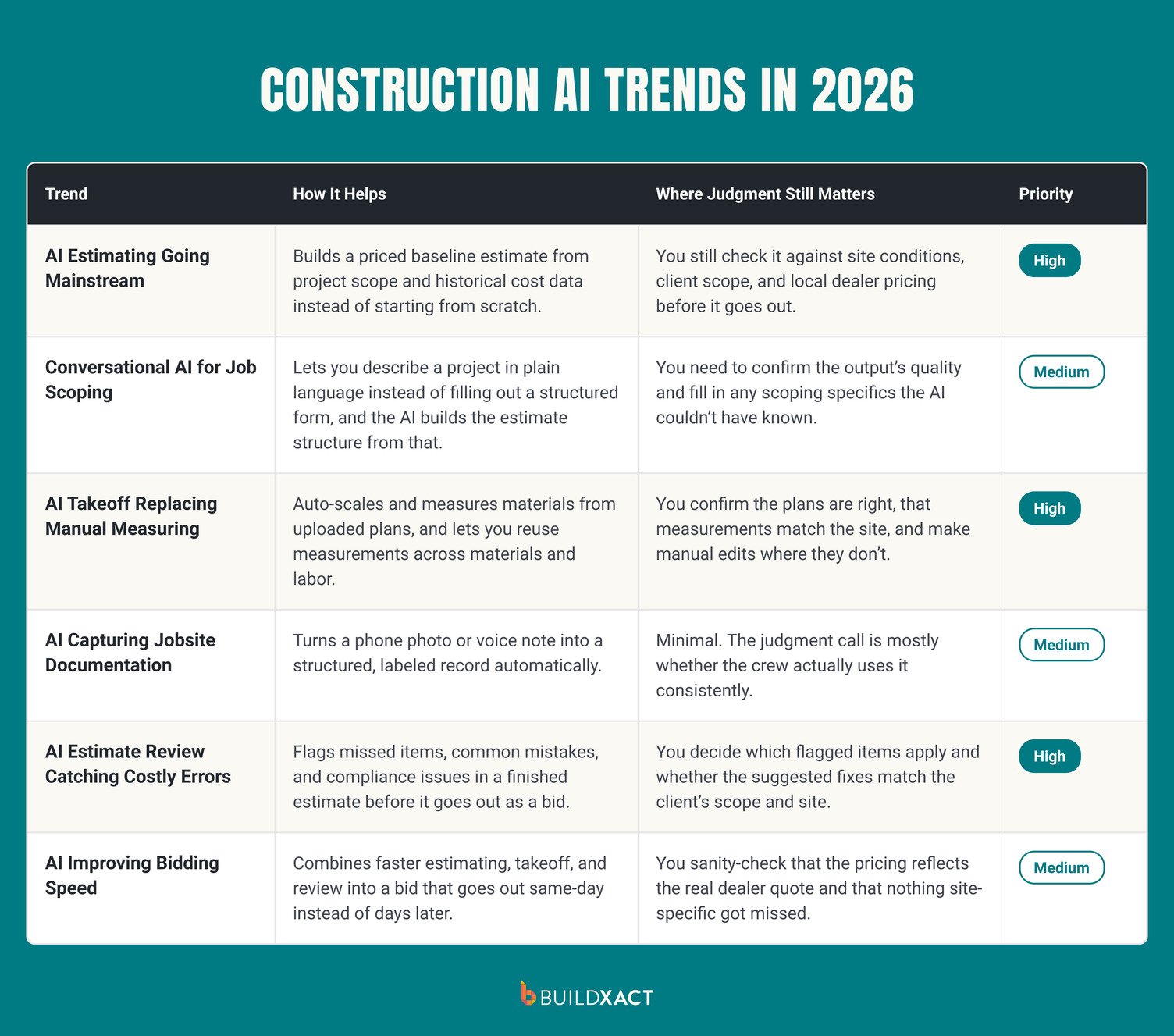
AI-assisted estimating creates a priced estimate from project scope and historical cost data, so you don’t have to build each one from scratch.
Its biggest strength is speed.
AI-assisted estimating software pulls from historical job data and current pricing to assemble a baseline estimate fast, cutting the hours spent building a bid from scratch for every job.
The builder still needs to be in the loop, though. You still need to check the estimate against the actual site conditions, the client’s specific scope, and local dealer pricing before it goes out the door.
Buildxact’s Estimate Generator, powered by Blu, your AI construction assistant, is a great example of how this AI trend plays out in the real world.
Blu starts from the project type and location you enter, then builds a complete, editable estimate powered by local labor, material, and service pricing. You’re still the one filling in project specifics and editing the output before it goes anywhere; Blu is just your copilot that gets more reliable the more you use it.
2. Conversational AI Assistants Making Job Scoping Easier
Conversational AI assistants have the power to change how builders interact with construction management tools completely.
Say, you’re building an estimate.
Rather than filling out a structured form, you can give a plain-language description (text or audio) of the project type, description, and key parameters. The AI assistant takes that and begins building an estimate structure, without you having to create it by hand.
This AI trend needs careful attention from the builder, still, as you need to confirm the reliability and quality of what comes back. The more you use it, and the more feedback you give the AI assistant on the estimates it produces, the better its response will become over time.
You’ll also need to fill in any scoping gaps. Incomplete scoping in means incomplete scoping out, so you’ll still need to review and fill in any specifics the AI couldn’t have known from your source material.
Blu supports conversational estimate building, and it works best if you treat it like any of your other team members. The more information you give an estimator about project scope, required materials, or custom additions, the more accurate the estimate it creates will be.
3. AI Takeoff Replacing Manual Measuring

AI-assisted takeoff scales, measures, and counts materials from uploaded digital plans instead of having to do the whole thing manually.
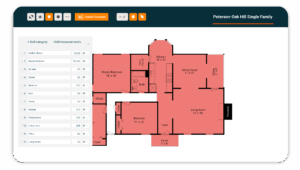
Today, it auto-scales and auto-measures uploaded plans, names pages and rooms based on project areas, and lets the builder reuse measurements across materials and labor costs.
It’s not completely autonomous, though. You still have to upload the right plans, confirm the auto-generated measurements match the actual site, and make manual point-and-click edits where the plan doesn’t match reality.
With Blu’s Takeoff Assistant, takeoffs are done in three steps:
- You upload the plan
- Blu auto-scales, auto-measures, and names pages based on project areas
- You review and edit as required
4. AI Capturing Jobsite Documentation On The Go
Site-based access has been an integral part of modern construction management software for a while.
This AI trend sits on top of those mobile apps, processing what the site crew captures on a phone (like a photo or a voice note) and automatically turning it into something structured, such as a labeled record or a written summary.
The obvious benefit is speed: it’s easier to grab a photo of something or record a quick voice message than to manually type a note.
The real impact is on daily site logging compliance.
Site crews are much more likely to log when a delivery arrives or when weather causes a delay if doing so is easy. With AI, it is.
5. AI Estimate Review Catching Costly Errors

AI-assisted estimate review checks a completed estimate for missed items, common mistakes, and compliance gaps before it goes out as a bid.
Right now, it’s good at flagging missing items. It doesn’t go ahead and actually resolve them; that’s still a builder’s responsibility.
You’ll need to decide which flagged items actually apply to the job and whether the suggested fixes match the client’s scope and site conditions. That’s the part where your expertise is truly valuable, and where your time should be spent.
In Buildxact, Blu’s Estimate Reviewer checks a finished estimate against compliance, insurance, and commonly missed items. It can also provide tailored tips based on details you enter, like room types or environmental factors.
You then review and apply the necessary changes to the estimate.
6. AI Improving Bidding Speed
The combined effect of all of these AI trends is speed. Faster estimating, takeoff, and review all mean one thing:
Less time between a lead coming in and a bid going out.
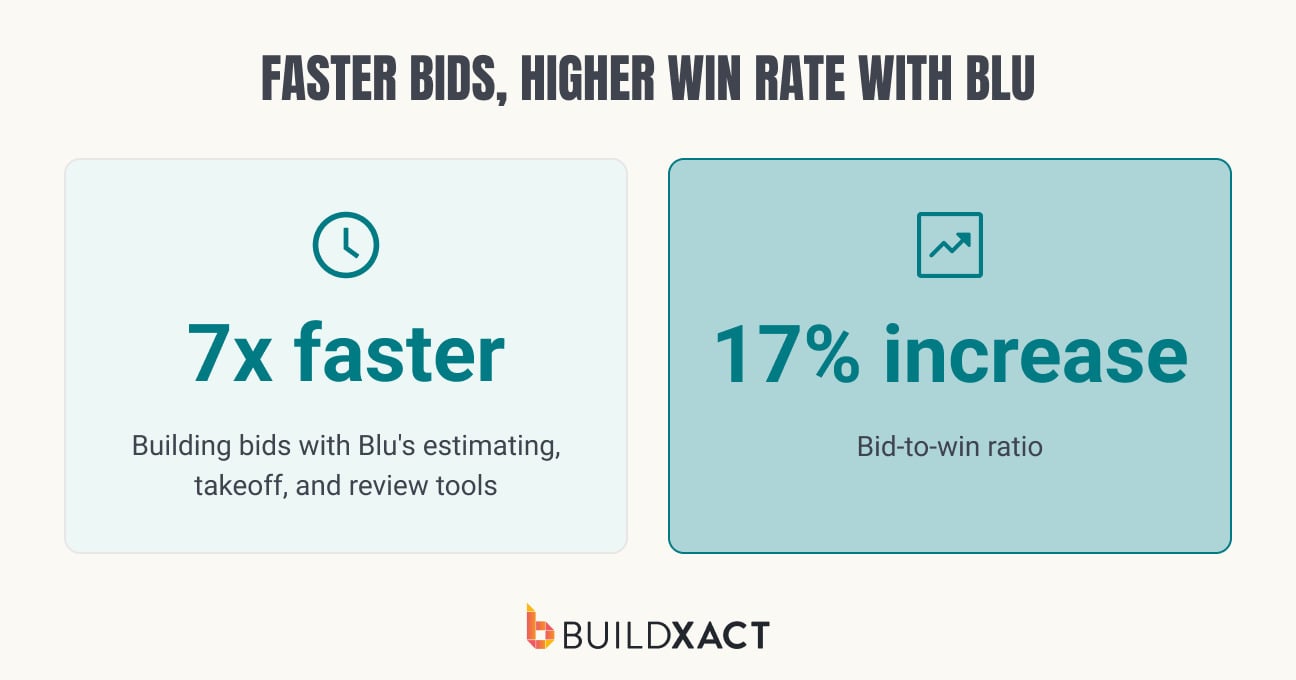
Today’s AI residential construction software tools collapse a process that used to take days of manual measuring, pricing, and double-checking into something a builder can turn around in the same day. Builders using Blu’s estimating, takeoff, and review tools together build bids 7x faster and see a 17% increase in bid-to-win ratio.
That becomes a competitive advantage against firms that are still working off paper plans and a calculator.
Good builder judgment still has to close the loop, though. A faster bid is only a win if the number underneath it is right.
For example, you still need to sanity-check that automated pricing reflects the actual dealer quote and that nothing site-specific got missed in the rush to turn it around fast. If a bid goes out fast, but with the wrong numbers, it might end up being a job you win but go backward on.
Which AI Construction Trends Should You Pay Attention To In 2026?
For growing residential construction firms, the trends that matter probably aren’t the ones getting the most attention industry-wide.
They’re the ones that save real hours on the parts of the job a builder already does every week: estimating, takeoff, review, and getting a bid out the door.
When AI is used here, it still doesn’t remove the builder’s judgment from the process. Each use case still depends on the builder checking the output against the actual job in front of them.
Blu brings several of these trends into one place for a builder already running Buildxact, from generating an estimate to reviewing it to speeding up how fast a bid goes out.
Book a demo to see Blu and Buildxact in action.