

In residential construction, profit is often won or lost long before the crew arrives on site. It starts with the numbers behind your estimate.
When material quantities are inaccurate, it impacts everything that comes next. Costs get missed, budgets come under pressure, and margins that were slim to begin with start to disappear.
A few overlooked items here and there might not seem significant during estimating, but they can quickly turn into expensive material shortages and rushed purchases, not to mention unexpected costs once work is underway.
That’s why material takeoffs play such an important role in residential construction. A well-executed takeoff gives you a clear picture of what a project will actually require, helping you build more accurate estimates and protect profitability from the outset.
In this guide, you’ll learn what a material takeoff actually includes, how it fits into your bid, and how to make it work for your business.
What is a Material Takeoff?
A material takeoff quantifies and lists all the materials needed for a construction project. Home builders use material takeoffs to determine the precise quantities of materials required. This includes everything from concrete, steel, and lumber, to nails, screw,s and other small components.
Accurate takeoffs help prevent material shortages and job site delays, keeping projects on schedule and within budget. They also make it easier to compare prices from different dealers, so you can select the most cost-effective option.
By ensuring only the right quantities are ordered, a detailed takeoff minimizes waste and supports a more sustainable construction process.
Key components of the material takeoff
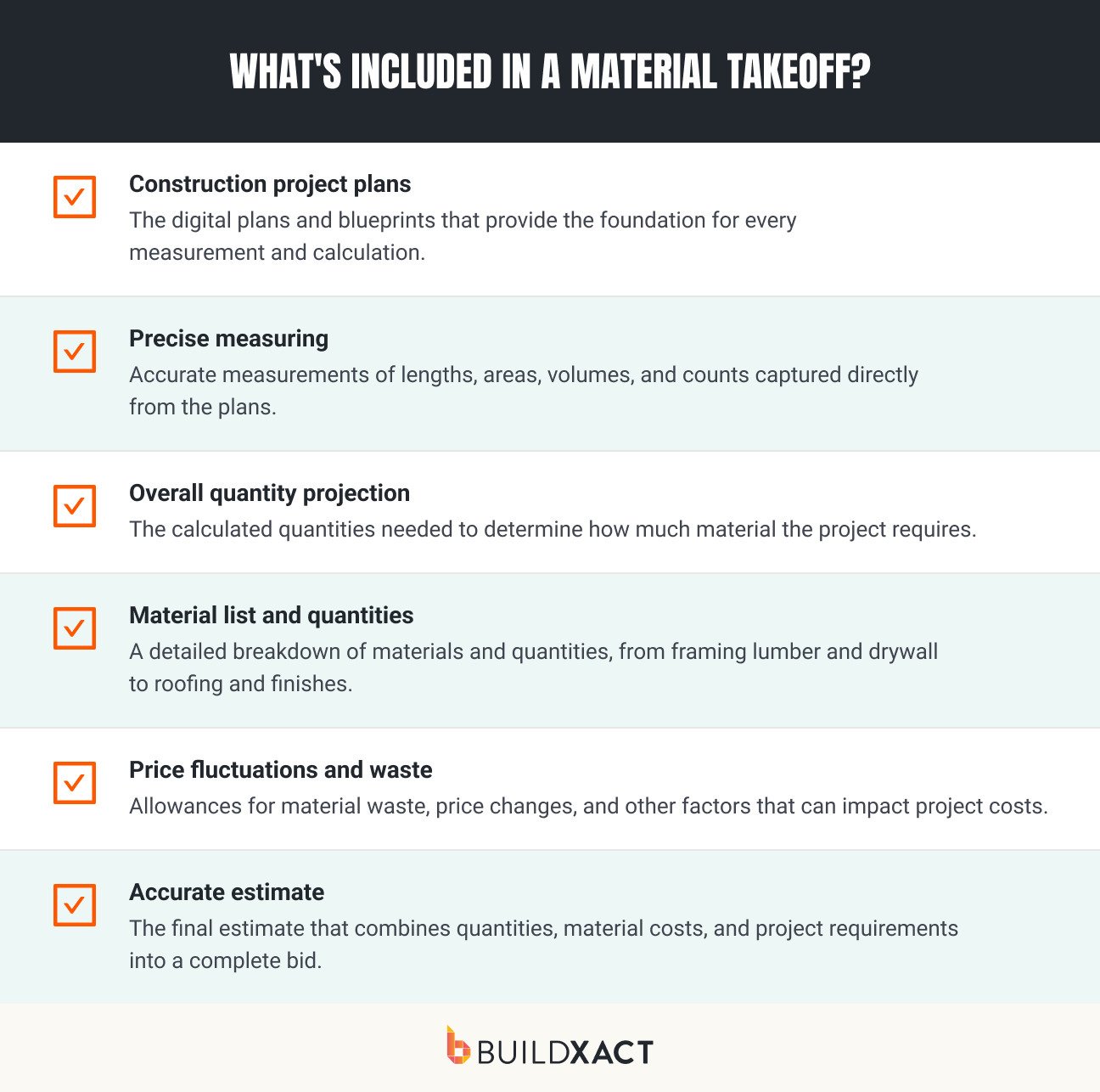
The goal of a material takeoff is to create a detailed inventory of all required materials for a home construction project. A complete material takeoff includes the following components:
- Construction project plans: Digital plans or blueprints compatible with modern digital takeoff software ensure accurate measurements.
- Precise measuring: Digital tools and automated measurements prevent over- or underestimations.
- Overall quantity projection: Simple point-and-click commands measure areas, lengths, and volumes to form the basis for material counts.
- Material list and quantities: Construction takeoff software generates accurate material lists, detailing counts such as board feet of lumber and drywall square footage.
- Price fluctuations and waste: As digital takeoffs are faster, builders can factor in potential price changes and material waste earlier, allowing more lead time for purchasing.
- Accurate estimate: Materials and costs are assigned to project phases, completing the overall estimate.
But identifying what’s included in a material takeoff is only half the equation. To build a takeoff that’s accurate, usable, and easy to scale across projects, you need a process that connects those components in a logical flow, from viewing plans to assigning final costs.
How to Perform a Material Takeoff in Residential Construction: A Step-By-Step Guide
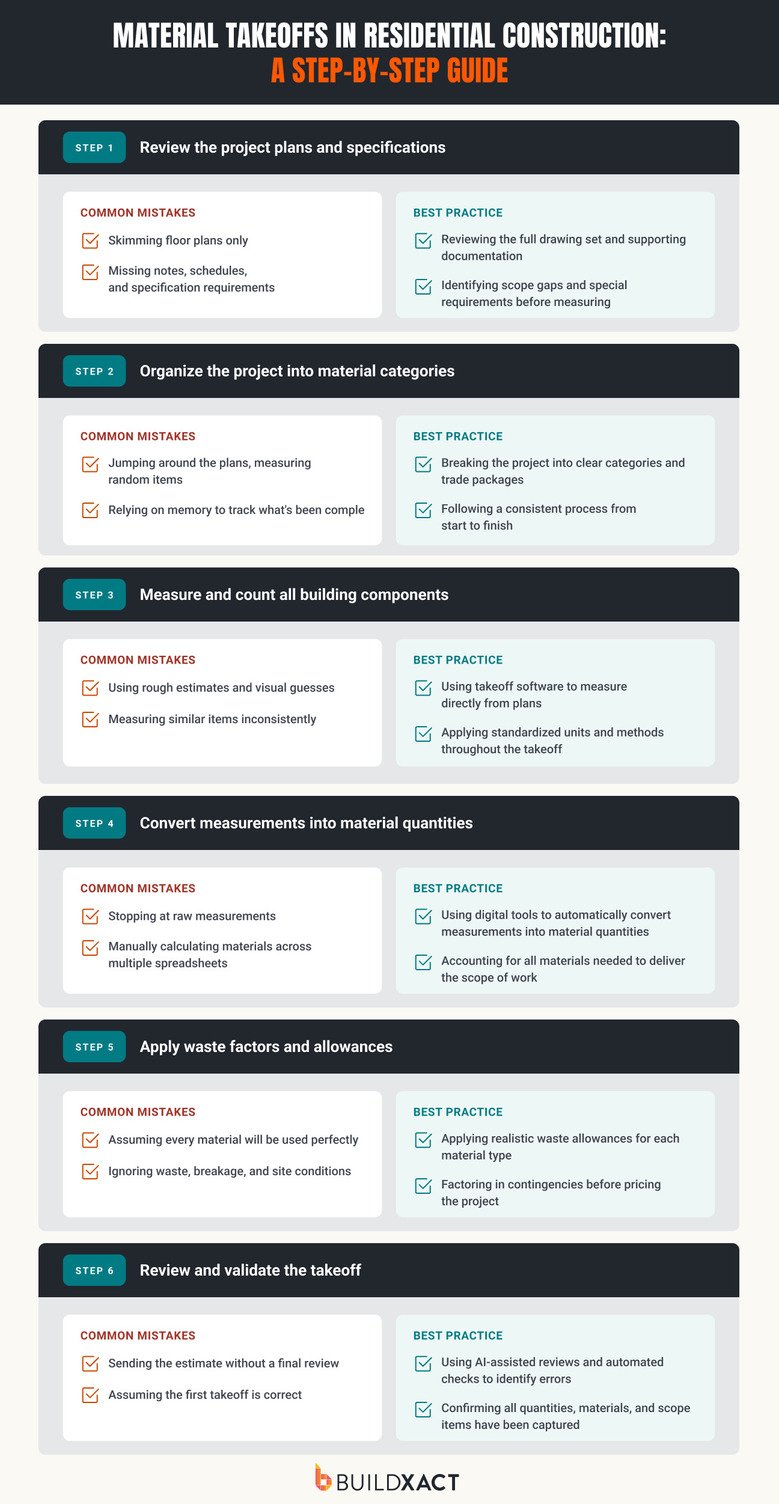
A structured takeoff process helps ensure every quantity is captured, every material is accounted for, and every estimate starts with accurate information.
Follow these six steps to create a complete, reliable takeoff that supports accurate estimates and stronger margins.
1. Review the project plans and specifications
Every accurate material takeoff starts with a thorough review of the project documentation. So, before measuring anything, examine the drawings, schedules, specifications, and notes to understand the full scope of work.
Putting in the time at this stage to identify missing details, special requirements, or inconsistencies can help you avoid costly mistakes later in the estimating process.
2. Organize the project into material categories
Once you understand the scope, divide the project into logical sections such as:
- Sitework
- Foundations
- Framing
- Roofing
- Finishes
Breaking the job into smaller categories creates a more structured workflow and makes it easier to track progress. It also reduces the risk of overlooking materials that could impact your estimate and profitability.
3. Measure and count all building components
Next, measure and count every component shown on the plans using the appropriate units, whether that’s square feet, linear feet, cubic yards, or item counts.
Accuracy is critical at this stage, as every quantity will end up in your estimate, material orders, and project budget. Even small measurement errors can quickly spiral out of control on a residential build.
4. Convert measurements into material quantities
After completing your measurements, convert them into the materials needed to complete the work. For example:
Wall measurements = framing lumber, sheathing, insulation, and drywall quantities.
This step transforms raw takeoff data into a practical material list that can be used for estimating, purchasing, and project planning.
5. Apply waste factors and allowances
Material quantities rarely match the exact amount you’ll need on site. Add realistic allowances for offcuts, breakage, installation waste, and project-specific conditions.
Factoring these into your takeoff can prevent material shortages, reduce the likelihood of rushed reorders, and protect your margins from avoidable cost overruns during construction.
6. Review and validate the takeoff
Before using your takeoff for estimating or purchasing, perform a final review. Check that quantities, units, material categories, and plan references are accurate and complete.
A systematic validation process helps catch omissions and calculation errors before they make their way into your bid or your budget.
Completing a thorough material takeoff takes time, but the payoff extends far beyond the estimating stage. From controlling costs to reducing waste and improving planning, material takeoffs play an important role in protecting your profits.
Beat Budget Overruns: Why Material Takeoffs Matter in Residential Construction
Accurate takeoffs are the foundation of every successful build. They directly affect budgeting, procurement, and scheduling, and can make the difference between a smooth project and one plagued by delays or cost blowouts.
When you know exactly what materials you need, in the right amounts, at the right time, you can order efficiently, avoid shortages, and keep jobs on track.
Here are some of the key benefits of ensuring your material takeoffs are performed correctly:
- More accurate estimates: Accurate quantities create a stronger basis for pricing labor and materials.
- Reduced material waste: Ordering the right amounts helps minimize excess materials and avoid unnecessary spending.
- Fewer costly omissions and errors: A thorough takeoff reduces the risk of missed items that can lead to rework, delays, or change orders.
- Better budget and cost control: Knowing material requirements upfront makes it easier to track costs and stay within budget.
- Faster bidding and quoting: A complete material list speeds up estimating and helps you respond to opportunities more quickly.
- More efficient material ordering: Clear quantities simplify purchasing and help ensure materials arrive when they’re needed.
- Improved project planning and scheduling: Accurate takeoffs support better coordination between procurement, scheduling, and jobsite activities.
- Stronger profit margins: Fewer surprises, fewer errors, and better cost visibility help protect margins throughout the build.
Detailed takeoffs also improve communication and coordination among the project team. By providing a clear, shared materials list, everyone involved (architects, engineers, contractors, and dealers) understands what is needed and when. That means fewer misunderstandings and less time spent chasing updates.
To ensure your takeoffs (and everything that comes after) run smoothly, you need to be prepared for the potential issues that can sometimes arise within this crucial process.
Common Takeoff Challenges (and How Material Takeoff Software Can Help)
While manual takeoffs are still common in construction estimating, they’re one of the most notorious sources of inefficiency and mistakes. From missed materials to hours lost on admin, manual methods make it hard to stay accurate and on budget.
The traditional approach involves working with physical blueprints and manual calculations. Estimators use rulers and scales to measure dimensions from paper plans, recording quantities manually on spreadsheets or takeoff sheets. While this approach may feel familiar, it leaves too much room for error and eats into valuable time that could be spent on-site or with clients.
Below are some of the typical challenges builders encounter when performing takeoffs manually. In the next section, we’ll explore how these challenges can be overcome with automated takeoff software like Buildxact.
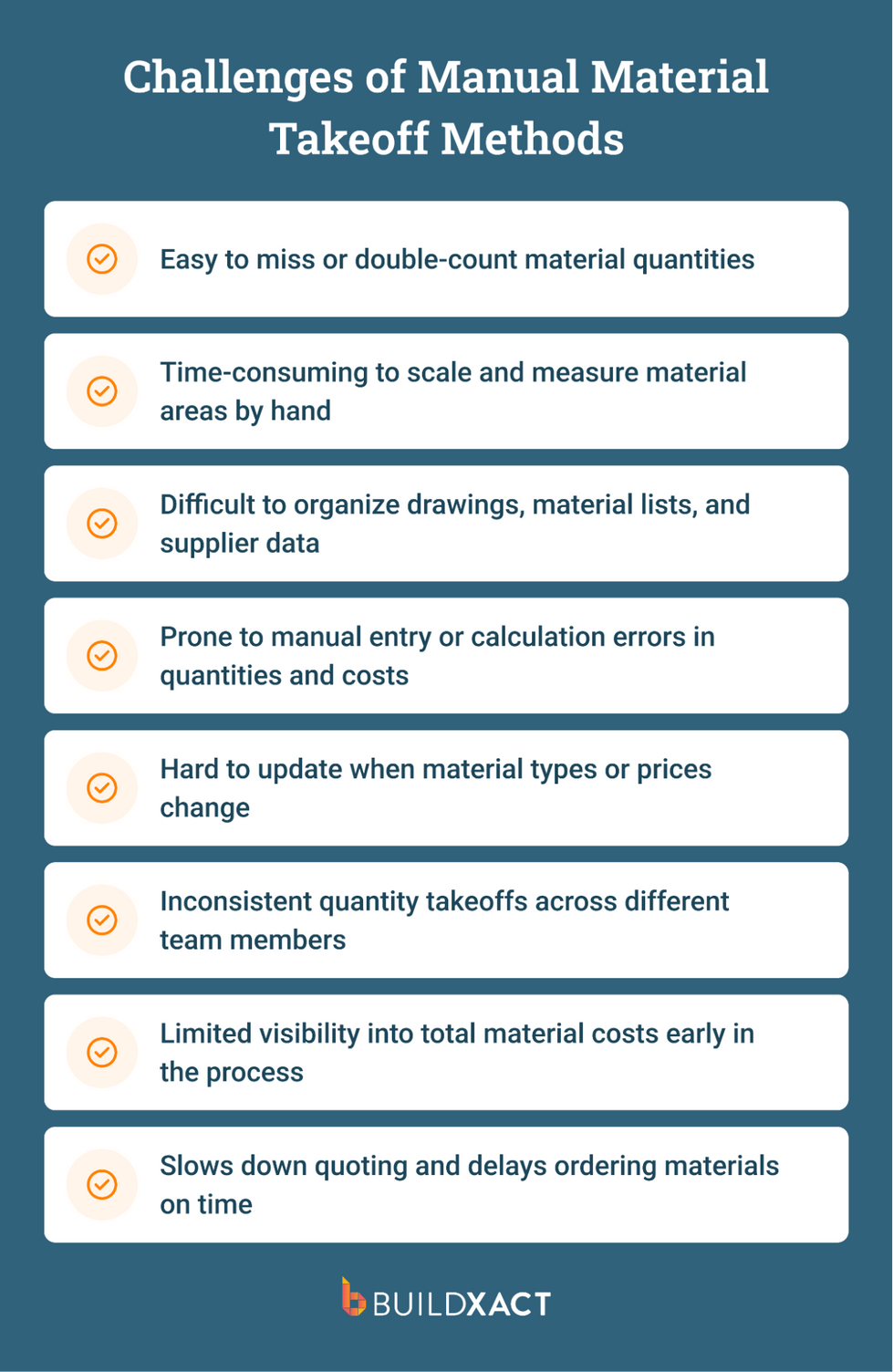
- Missed or double-counted quantities: Manually marking up blueprints, drawings, and specifications can lead to overlooking items or counting the same material twice, resulting in inaccurate totals.
- Time-consuming measuring: Scaling and calculating material areas by hand can take hours, especially for large or complex plans.
- Disorganized data and limited visibility: When material lists and dealer data are scattered across spreadsheets and folders, it’s hard to see the whole picture or track updates in real time.
- Manual entry and calculation errors: Entering figures by hand introduces the risk of small mistakes that can have significant cost implications.
- Difficult to update: When material prices change or designs are revised, every figure must be adjusted manually, which is both time-consuming and error-prone.
- Inconsistent results across estimators: Different people use different methods, leading to change orders in quantity counts and cost accuracy.
- Delays to quoting and ordering: Manual takeoffs slow down estimate preparation and purchasing, pushing back schedules and affecting job start dates.
“Industry research affirms that digital tools notably enhance cost estimation, forecasting, and project planning—plus progress tracking—which are vital for SMB builders managing slim margins”
— Digitalization in Construction Report 2024, Royal Institution of Chartered Surveyors (RICS)
Software platforms like Buildxact automate calculations, reduce errors, and speed up the takeoff process. These tools also enhance collaboration by allowing real-time updates and data sharing, improving project coordination and reducing communication gaps.
Faster Takeoffs That Win More Work: Why the Right Software Can Transform Your Material Takeoffs
We’ve seen the many frustrations caused by manual takeoffs. Now, let’s examine how digital tools and automated software can help builders overcome the challenges of manual takeoff processes.
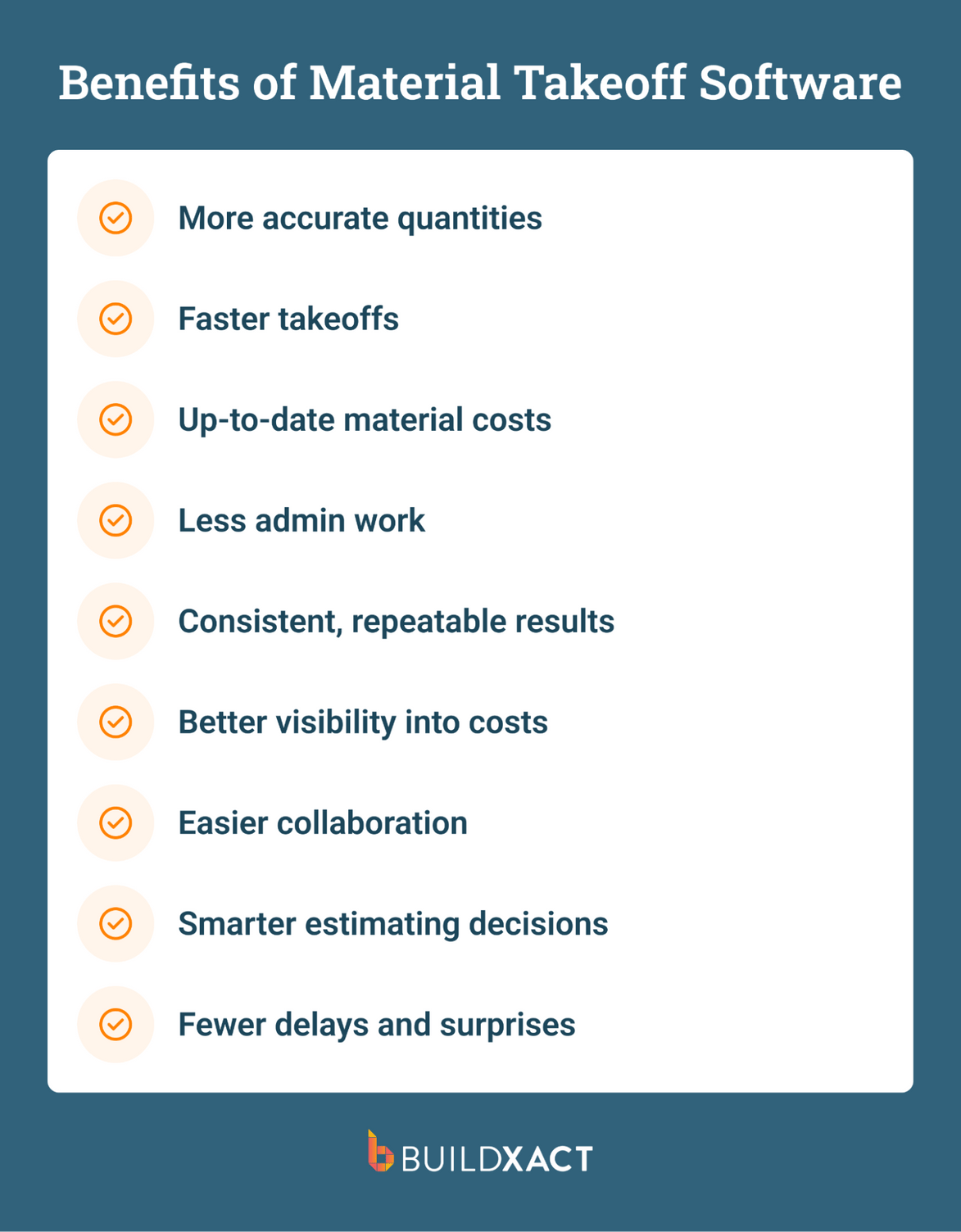
More accurate quantities
Digital takeoff tools measure directly from construction plans, reducing human error and preventing the miscounting of materials. To further enhance this efficiency, tools that leverage AI, such as Buildxact’s digital takeoff assistant, Blu, deploy advanced technology to flag errors, ensuring every quantity is precise and nothing slips through the cracks.

Faster takeoffs, less admin
Replacing manual scaling with point-and-click tools lets builders complete takeoffs in minutes instead of hours. Faster takeoffs mean you can bid more jobs and have time to focus on other activities. For example, an automated platform like Buildxact cuts takeoff time by up to 50% with its AI-driven takeoffs.
“AI-enabled automation and digital tools can augment workforce productivity byhelping workers focus on high-value tasks.”
— 2025 Engineering and Construction Industry Outlook, Deloitte
Up-to-date material costs
Software that connects with real-time dealer pricing ensures your estimates always reflect the latest material costs. Accurate pricing protects margins and prevents you from losing out on jobs due to error-strewn proposals.

Consistent, repeatable results
Standardized digital templates enable the consistent application of the same measurement and costing process across all projects. This ensures each job is estimated consistently, regardless of who completes the takeoff, and maintains a reliable baseline for future estimates.
Better visibility into costs
Real-time takeoff data gives you an instant view of total material quantities and spend. Linked dashboards and reporting tools enable builders to see how each item affects overall job budgets, thereby improving cost control from the project’s inception.
Easier collaboration
Cloud-based takeoff software centralizes measurements and plans, allowing everyone involved in the project to access the same accurate information. And with mobile tools like Buildxact’s Onsite construction app, you can access those files from anywhere, at any time. This reduces version chaos and keeps everyone aligned on current quantities and costs.
Fewer delays and surprises
Accurate digital takeoffs help ensure the right materials are ordered on time and in the correct quantities. With connected workflows, builders can anticipate material needs earlier, reducing delivery delays and avoiding costly on-site shortages.
Smarter estimating decisions
When takeoffs connect directly with estimates, builders gain clearer insights into cost drivers and profit margins. In Buildxact, quantities flow seamlessly into the estimating tool, allowing more confident quoting and faster, data-backed decision-making.
Clearly, the right takeoff software can work wonders for the way you perform takeoffs. But to truly realize the benefits of digital takeoff tools, you need to know which features are most important for residential builders
Which features do you (really) need from your construction takeoff software?
Different types of construction businesses will have different needs from their takeoff software. For example, a takeoff for a large-scale commercial project will naturally be more complex than one for a small residential build.
This makes choosing the right platform essential if you want to maximize the benefits and returns of your investment. Intelligent takeoff software like Buildxact is purpose-built for small to mid-sized residential builders, meaning every feature is designed to support the workflows you actually use.
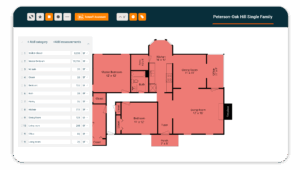
- Digital plans: Upload and scale digital blueprints to measure directly from drawings, replacing paper plans and manual rulers with accurate, on-screen takeoffs that save time and reduce errors.
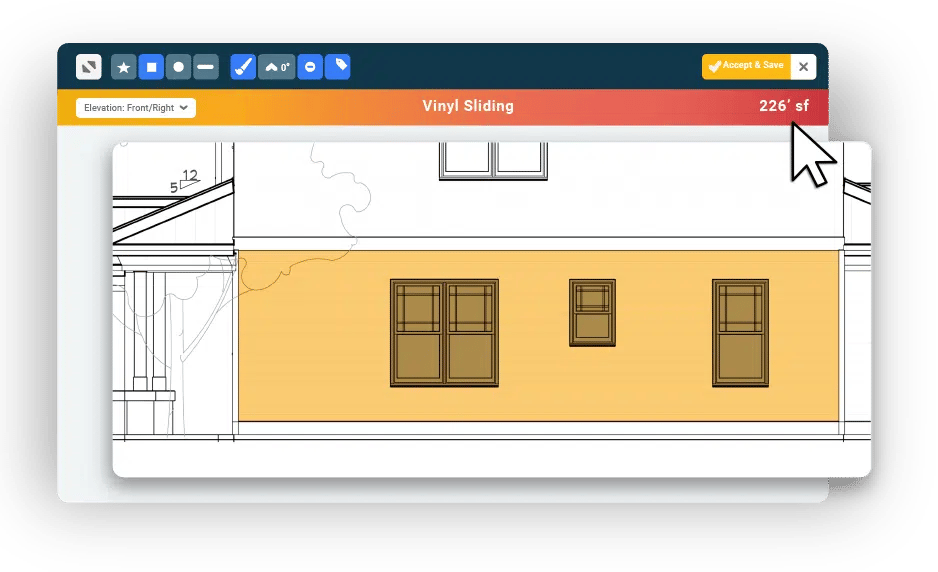
- AI-automated material calculations: AI-powered tools automatically identify areas, lengths, and volumes, turning plan measurements into precise material quantities that speed up the estimating process.
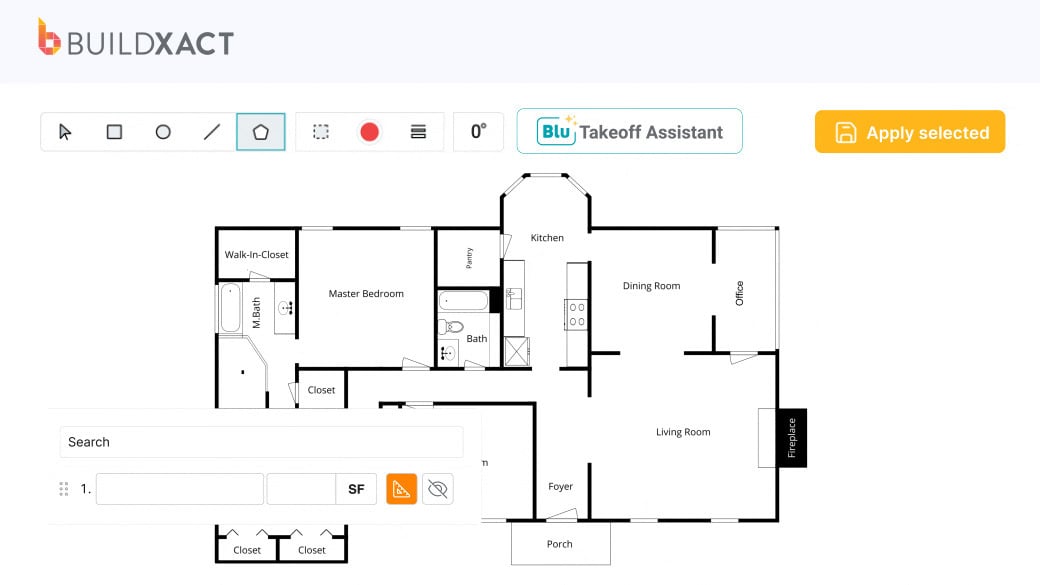
- Error-checking functionality: Automated review tools flag missing or duplicated items, ensuring every component is counted once and reducing costly mistakes before estimates are finalized.
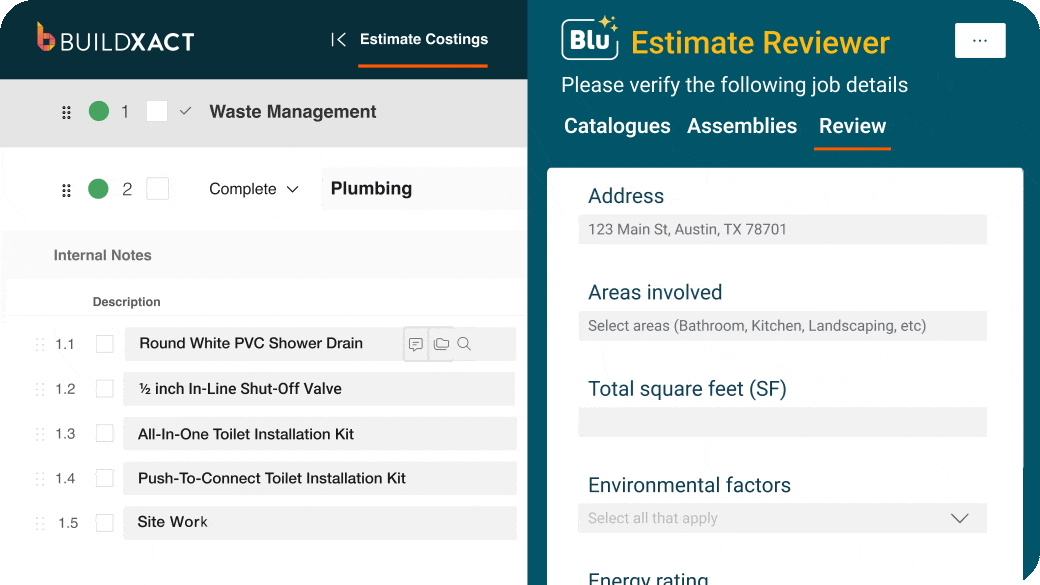
- Assemblies and templates: Pre-built job templates let builders reuse common tasks and material groupings, improving consistency, accuracy, and efficiency across every takeoff and estimate.
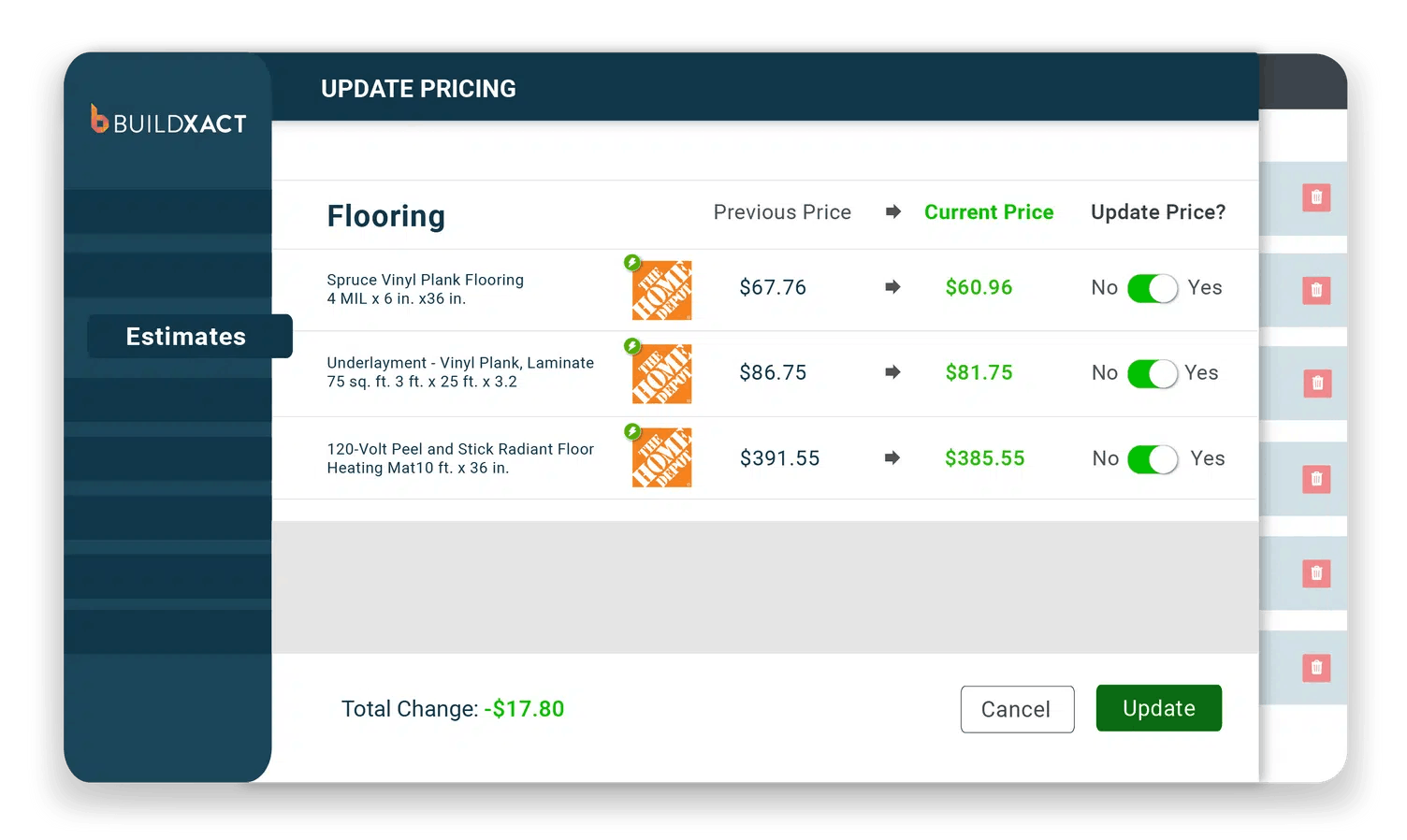
- Real-time pricing integration: Connections with dealer databases provide live material pricing, so estimates stay current as costs change, keeping bids accurate and protecting profit margins.
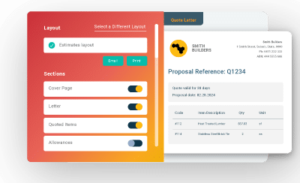
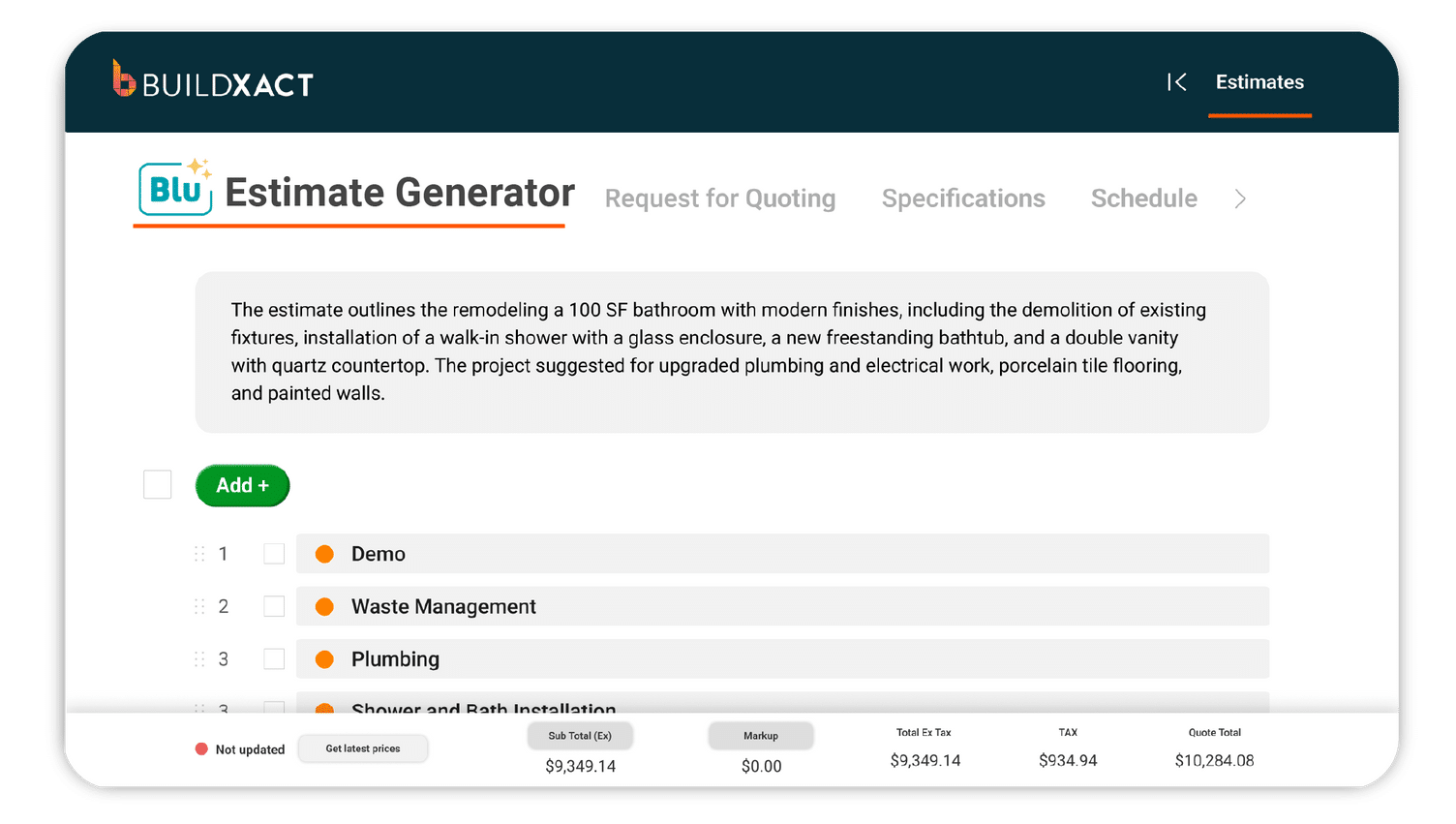
- Customizable estimate generation: Takeoff data links directly into editable estimate templates, enabling tailored, professional bids that match project scope and client requirements.
- Reusable material libraries: Save frequently used materials, categories, and cost data in digital libraries for quick access, ensuring standardization and accuracy across all future projects.
- Dealer collaboration tools: Cloud-based sharing features let builders send takeoffs or material lists directly to dealers for pricing or validation, streamlining communication and reducing ordering errors.
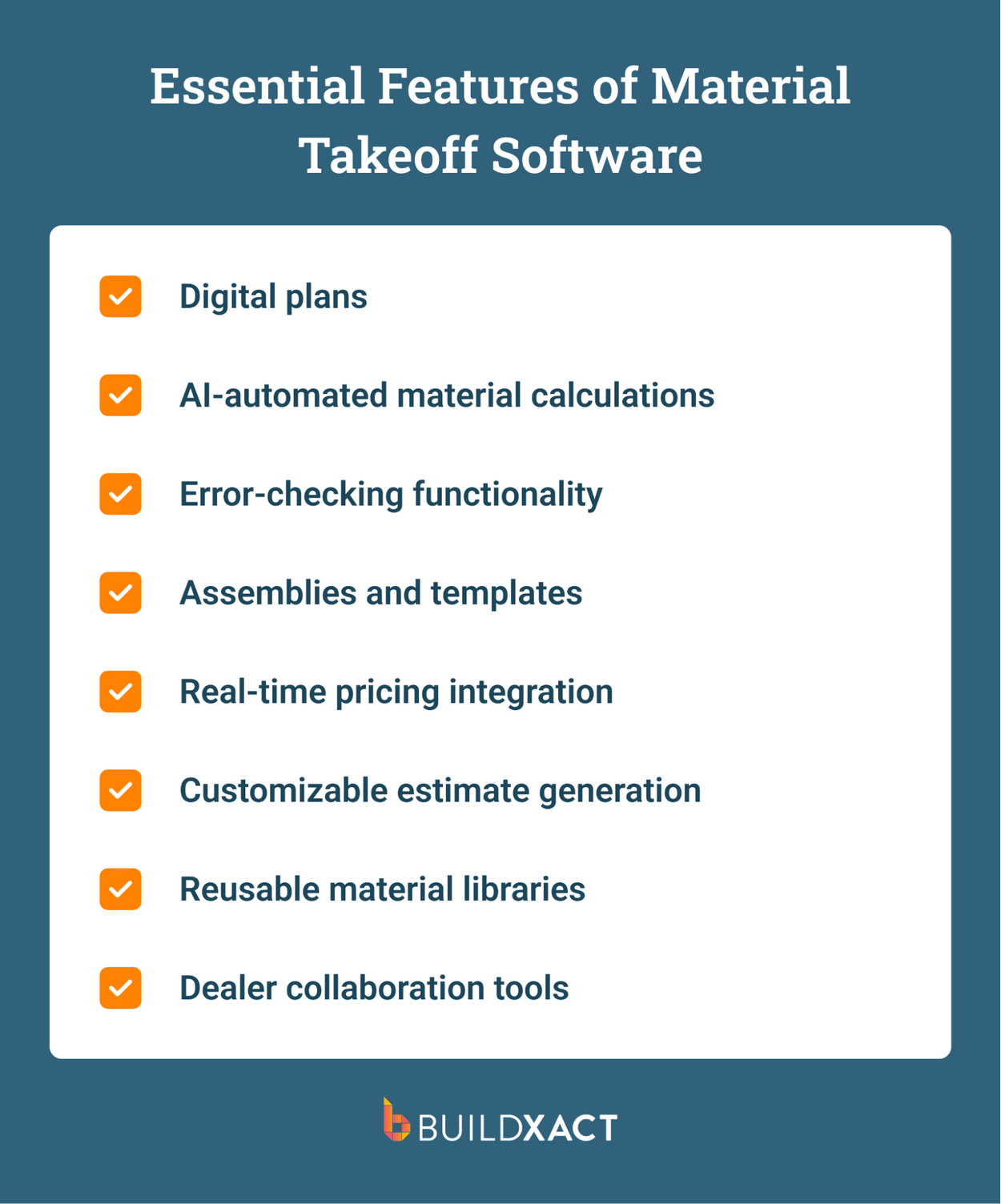
The features above are a helpful starting point when choosing a takeoff platform for residential construction. For more in-depth insights, check out our comprehensive guide to the Best Takeoff Software Options for Builders.
Case Study: How a Texas Builder Improved Takeoff Efficiency With Buildxact
For Dustin Ballew, owner of Blue Bexar in Texas, estimating was one of the most important, yet time-consuming, parts of running his residential construction business. A tedious process often involved manually calculating measurements and quantities, which slowed him down and made it difficult to scale as the company grew.
After adopting Buildxact, Dustin was able to complete digital takeoffs directly from PDF plans and save that information for future use. This eliminated repetitive manual calculations and made it easier to update estimates when material prices changed.
“It’s been a big time saver,” says Dustin. “Buildxact fits the bill for me because it provides everything I need to run my construction company without the extras I don’t need.”
Today, Blue Bexar benefits from faster takeoffs, more accurate estimates, and professional bids that help win work. With project information stored in one place and integrated with QuickBooks, Buildxact has streamlined takeoffs and estimating, and given Dustin the tools he needs to run his business more efficiently.
His advice to other builders? “Reinvest in tools that make you better at what you do.”
The Future of Material Takeoffs: How AI and New Technology are Changing the Takeoff Game
Advancements in construction technology are enabling a more integrated, data-driven, and collaborative approach to material takeoffs, designed to improve processes and enhance project outcomes.
AI and automation have completely reshaped the way digital material takeoffs are conducted. AI tools analyze complex project data, automatically identify and measure materials, and predict potential waste or cost overruns. This kind of innovation is evident in tools like Buildxact’s AI-powered takeoff and estimating assistant, Blu, which delivers precise, error-free takeoffs in half the time.
Other technological innovations, such as augmented reality, drones, and robotics, promise to increase accuracy and efficiency in material takeoffs further, leading to more sustainable construction practices.
“Software solutions that incorporate AI and ML capabilities can provide builders with valuable insights, allowing them to make data-driven decisions and optimize project outcomes.”
— Home Builder Software Market, Data Intelo
Material Takeoff: FAQs
What is a material takeoff?
A material takeoff is the process of identifying, measuring, and calculating all the materials required to complete a construction project. Builders use material takeoffs to determine quantities, estimate costs, order materials, and prepare accurate bids. A complete takeoff forms the foundation of successful estimating and project planning.
What’s the difference between a material takeoff and a quantity takeoff?
A quantity takeoff measures the quantities of all project components, including materials, labor, and equipment. A material takeoff focuses specifically on the materials required to complete the work. In residential construction, material takeoffs are often part of the broader quantity takeoff and estimating process used to prepare bids.
What is a material takeoff sheet?
A material takeoff sheet is a document that lists the materials needed for a construction project, along with their quantities and units of measurement. It serves as a reference for estimating, purchasing, and project planning. Modern takeoff software automatically generates digital takeoff sheets from project plans and measurements.
Can AI help with material takeoffs?
Yes. AI-powered takeoff software can automate measurements, identify quantities from digital plans, and help review estimates for common omissions or errors. This reduces manual work and improves consistency. For residential builders managing multiple projects, AI can speed up takeoffs while helping maintain accuracy throughout the estimating process.
What is the best material takeoff software for residential builders?
The best material takeoff software depends on your business needs, project types, and workflow requirements. Residential builders should look for software that combines digital takeoffs, estimating, live dealer pricing, scheduling, and job management in a single platform. Solutions designed specifically for residential construction, like Buildxact, typically deliver the greatest efficiency and ease of use.
Swap Inaccurate Manual Takeoffs With Precise Bids That Win More Jobs
Manual takeoffs make it harder to compete. Each delay or missed detail reduces accuracy, extends quoting time, and limits the number of jobs you can pursue.
Buildxact takeoff software simplifies the process through AI-driven automation and accurate digital measurements. Every takeoff is completed faster and with clear, consistent results that protect your margins and strengthen client confidence.
Experience faster, more accurate estimating and submit bids that help you secure more of the right work. Check out Buildxact’s industry-leading digital takeoff tool and start your free trial to discover the Buildxact difference for yourself.